Yes, spiders can eat birds, but it's rare, depends heavily on spider size and species, and the mechanism is almost never what you'd picture. Most documented cases aren't a spider pouncing on a bird. They're a small bird flying into a large web, getting tangled, and dying before it can free itself, at which point the spider treats it as prey. True active predation by a spider on a living, free bird does happen, but only with a handful of very large spider species, and only against the smallest, most vulnerable birds. The phrase “spider that can eat a bird” usually refers to these rare entrapment cases or, in a few species, true active predation.
Can a Spider Eat a Bird? What Usually Happens

Maya Bennett
27 May 2026
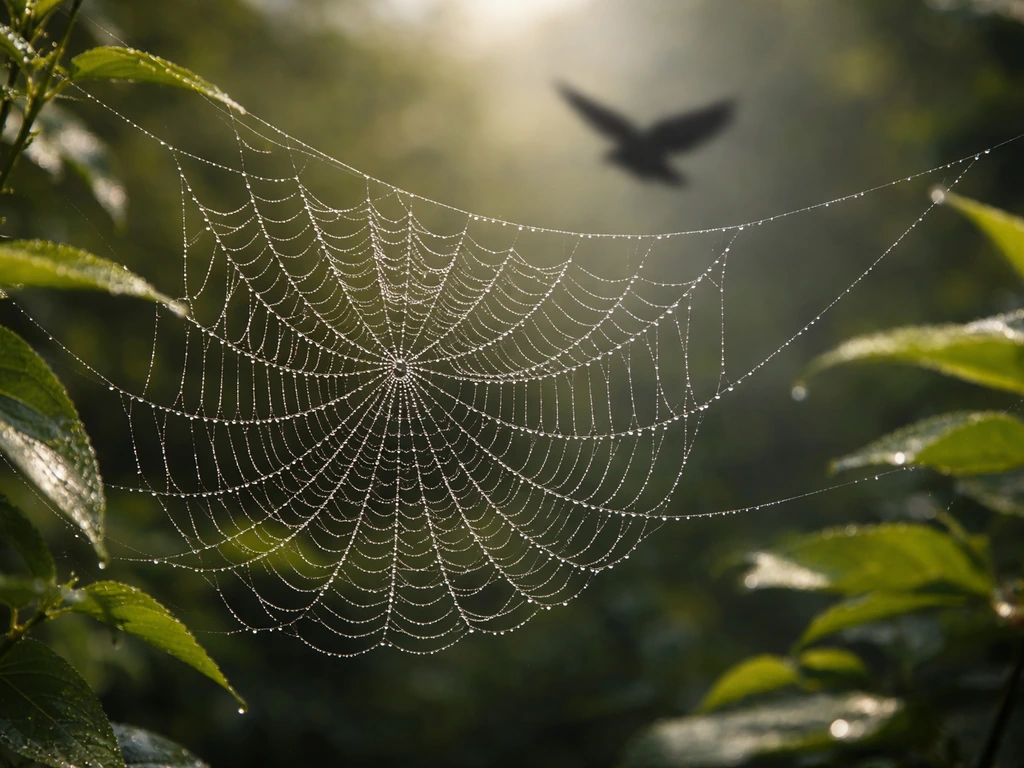
When spiders can and can't eat birds
The short version is this: web-building spiders can kill small birds by entrapment, and a handful of giant hunting spiders can actively subdue and eat a small bird. For the vast majority of spiders you'll encounter anywhere in North America or Europe, eating a bird is physically impossible. A common garden spider or a wolf spider simply doesn't have the body mass, web strength, or venom potency to take down even the smallest bird.
The cases that are scientifically documented include a Tennessee Warbler dying after its tarsus (leg) became caught in the mooring thread of a golden silk orb-weaver web, and a Costa's hummingbird found suspended head-down and wrapped in an orb-web. Both are real. Both are also unusual enough that researchers considered them worth publishing. A goliath bird-eating tarantula (Theraphosa blondi) in the Brazilian Amazon was documented catching and eating a Common Scale-backed Antbird, which is a genuine active predation event, not an entanglement.
So the honest answer is: spiders eating birds happens, it's documented in the scientific literature, but it is not a routine backyard threat. If you're a backyard birder in the continental US, the realistic risk is a small bird getting tangled in a large orb-weaver web near a feeder or garden, not a spider hunting your birds.
Web builders vs hunters: which spider types actually matter
There are two completely different hunting strategies at play here, and they produce two very different risk profiles for birds.
Web-building spiders
Large orb-weavers are the spiders most commonly documented trapping birds. Families like Nephilidae (golden silk orb-weavers) and Araneidae build webs that are structurally strong enough to hold a small bird that flies into them. The bird doesn't get eaten by an attacking spider. It gets immobilized by sticky silk, exhausts itself struggling, and the spider wraps and bites it. The Wilson Journal of Ornithology's synthesis of bird entrapment cases confirms that orb-weavers can function as opportunistic predators when birds are trapped. It's passive predation: the web does the catching, the spider responds.
Some orb-weavers even decorate their webs in ways that inadvertently attract birds. Species like Cyclosa ginnaga create web decorations that can affect how other animals perceive the web, which helps explain why a bird that should avoid a web might not detect it in time.
Active hunters
Tarantulas and some large huntsman spiders (family Sparassidae) are active hunters that don't rely on webs. Theraphosids like the goliath bird-eating tarantula are the main documented predators in this category. These spiders can reach leg spans of 10 to 12 inches and are capable of overpowering a small vertebrate directly. Cases of tarantulas eating birds, bats, frogs, and lizards are recorded in the scientific literature, mostly from South American tropical habitats. If you're in North America, the tarantulas you might encounter are considerably smaller than Theraphosa blondi and are not a realistic threat to birds.
| Spider type | Hunting method | Bird risk | Where found |
|---|---|---|---|
| Golden silk orb-weaver (Trichonephila clavipes) | Passive web trap | Moderate: small birds can get caught | Southeastern US, Central/South America |
| Large araneид orb-weavers | Passive web trap | Low to moderate: rarely strong enough for birds | Widespread globally |
| Goliath bird-eating tarantula (Theraphosa blondi) | Active ambush | Real but rare: documented bird predation | South American tropics only |
| Huntsman spiders (Sparassidae) | Active pursuit | Very low: occasional small vertebrate predation documented | Tropics and subtropics |
| Common garden spiders, wolf spiders | Web or chase | Negligible: too small to capture any bird | Widespread globally |
Bird size and vulnerability: the factors that actually change the outcome
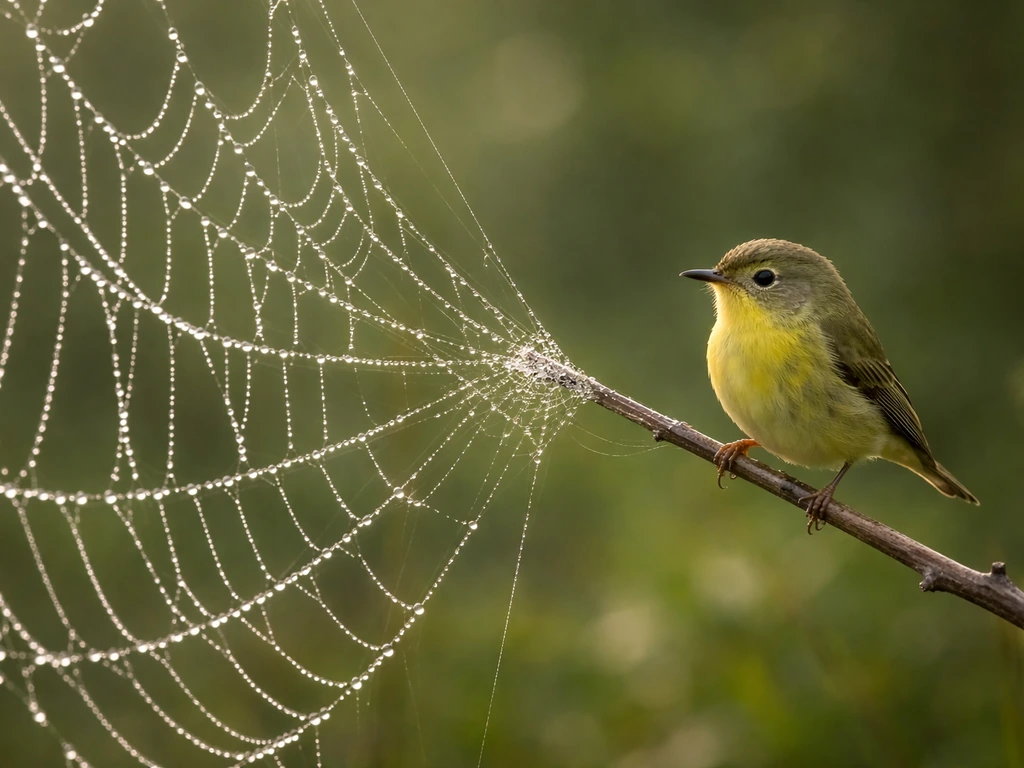
Size is the most important variable. The birds that end up as spider prey are almost always tiny. Hummingbirds, warblers, and small finches are the species that appear in documented entrapment cases. A Tennessee Warbler weighs about 9 grams. A Costa's hummingbird weighs around 3 grams. These are birds light enough for orb-weaver silk to hold. Robins, jays, or any medium-to-large songbird are simply too heavy and strong to be retained by any web, and no spider outside a handful of tropical giants would attempt to tackle one actively.
Fledglings and juveniles add another layer of risk. Young birds that haven't developed full flight strength or spatial awareness are more likely to fly into webs and less able to extract themselves. If you're watching a feeder where fledglings are active in late spring and summer, and there's a large orb-weaver web nearby, that's a combination worth paying attention to.
Injured or already-dead birds present a different scenario entirely. A spider encountering a dead bird near its web may investigate or even begin consuming it opportunistically. This is scavenging, not predation, and it's important to distinguish between the two when interpreting what you see.
Real predation, entanglement, or scavenging: how to tell what you're actually seeing
This is where a lot of people get confused, and honestly, even researchers flag the ambiguity. A Web Ecology paper specifically notes that some reported spider predation events show no clear sign of interference by the spider, meaning it's genuinely hard to tell predation from scavenging without direct observation. Here's a practical framework for reading the situation.
- Bird is alive and struggling in a web: this is entrapment. The spider may or may not engage. Your window to intervene is now.
- Bird is dead and wrapped in silk inside or near a web: this is most likely true spider predation following entrapment, especially if the web is intact and the bird is small.
- Bird is dead near a web but not wrapped or inside it: ambiguous. Could be scavenging, could be a bird that died from another cause and the spider is just present.
- Spider is feeding on a dead bird that shows no web silk: almost certainly scavenging. The spider found a food opportunity, not a captured prey item.
- You see a large web with no bird but lots of debris and feather fragments: the web has been used for bird predation before, or is trapping insects that birds normally eat.
The key diagnostic is silk wrapping. If a dead bird is tightly wrapped in silk, the spider actively consumed it after entrapment. If there's no silk involvement, you're looking at a scavenging situation, which carries no real risk to other birds and is a normal part of ecosystem nutrient cycling.
What to do if you find a bird caught in a web
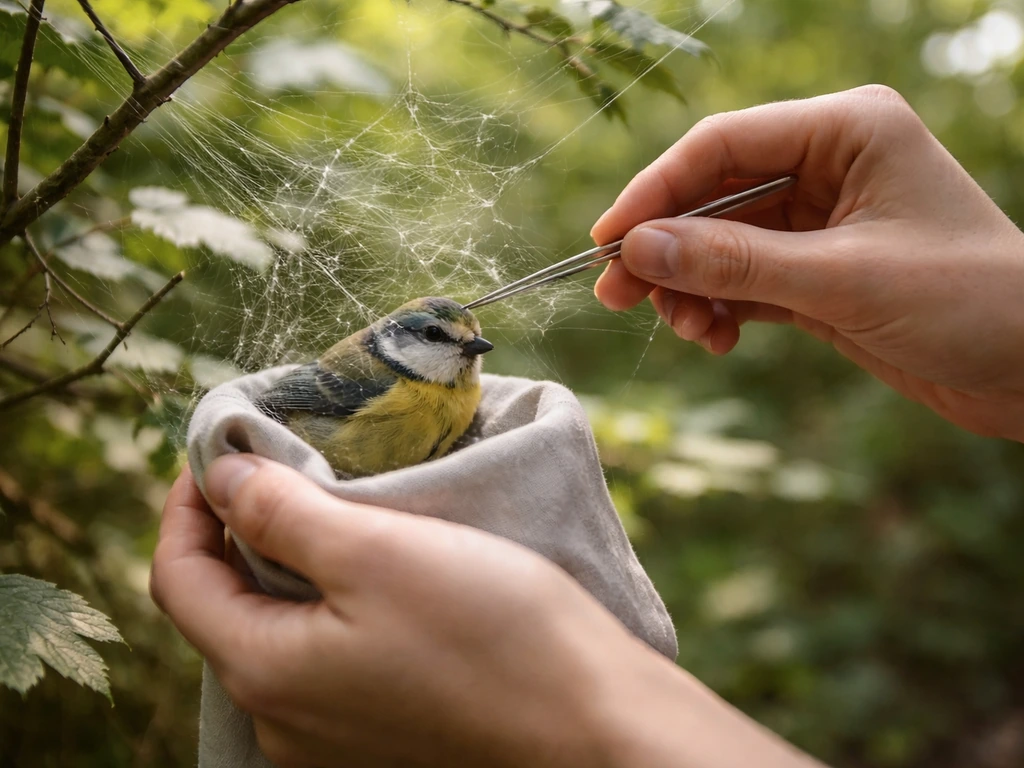
Finding a live bird trapped in a web is a time-sensitive situation. The bird is burning energy struggling and can go into shock quickly. Here's what to do, in order.
- Don't panic or rush. Moving too quickly toward a panicked, trapped bird can cause it to injure itself worse while struggling.
- Assess the situation first. Is the bird alive? Is it actively struggling or still? Is the spider present and in contact with the bird?
- If the spider is actively biting or wrapping the bird, gently brush or lift the spider away with a stick before touching the bird. Don't crush the spider.
- To free the bird, carefully use your fingers or small scissors to cut or peel the silk threads away from the bird's body, working from the outer threads inward. Silk is strong but can be cut. Work slowly to avoid breaking the bird's legs or wing feathers.
- If the bird is free and appears uninjured, hold it gently in cupped hands in a quiet spot for a few minutes. If it's alert and strong, it may fly off on its own.
- If the bird is injured, bleeding, lethargic, or unable to stand, place it in a ventilated cardboard box lined with a paper towel and put it somewhere dark and quiet. Do not give it food or water.
- Contact a licensed wildlife rehabilitator immediately. The OWL Rehab and Wildlife Center of North Georgia both recommend this as the right next step for entangled or injured wildlife.
- If you are unsure whether to intervene, the USFWS guidance is to leave the animal alone unless it shows visible injury, bleeding, shivering, or has a deceased parent nearby. For web entrapment, visible struggle is your cue to act.
One thing to avoid: glue traps anywhere near bird areas. The Wildlife Center of Virginia treats birds like Carolina Wrens that get stuck to glue traps, and an MSPCA-Angell study found two-thirds of licensed wildlife rehabilitators had treated animals caught in glue traps. Glue traps set to control insects near feeders are a real and documented hazard to small birds.
Keeping feeders safe: managing webs, placement, cleaning, and seed storage
If you maintain a backyard feeder, a few practical habits will dramatically reduce the chance of a bird getting tangled in a nearby web, and will also keep your setup healthier overall.
Web management and feeder placement
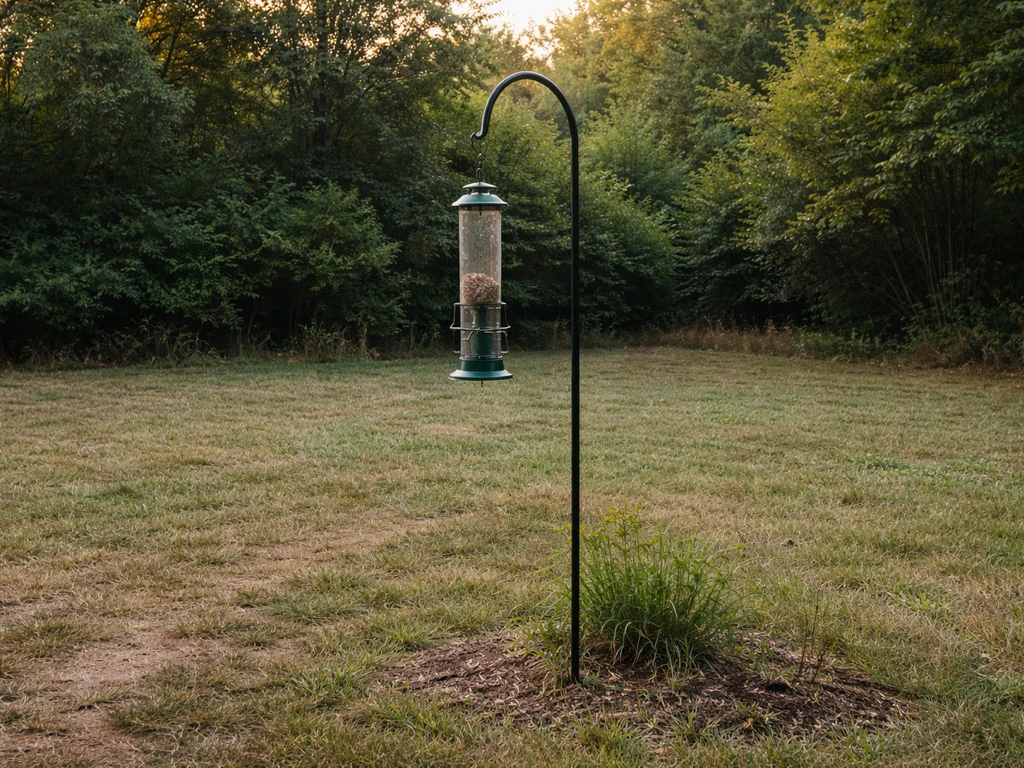
The main concern is large orb-weaver webs built in flight paths that birds use to approach your feeder. Walk the approach routes to your feeder at dawn and dusk in late summer and fall when orb-weavers are at their largest. If you find a large web in a direct flight path, relocate the web by moving the anchor points (not by destroying the spider) or by temporarily shifting the feeder position. You don't need to kill or remove the spider; you just need to break the overlap between its hunting zone and where small birds fly.
Feeder placement on open poles away from dense shrubs reduces the number of anchor points available for large webs to form. Feeders hung from single thin wires give spiders fewer structural options to build across the flight path.
Cleaning and seed storage
Clean your feeders about every two weeks under normal conditions, and more often during wet weather or heavy use periods. All About Birds recommends this schedule specifically because mold, bacteria, and debris buildup can sicken birds independently of any predator risk. Wet or spoiled seed clumps can also attract insects that in turn attract spiders to build nearby.
Scattered seed on the ground under feeders attracts rodents. Rodents attract larger predators. Keeping the ground under feeders clean is good practice for the whole food chain, not just for spider management.
Store seed in sealed, airtight containers off the ground. Moisture causes mold, which makes seed toxic to birds. This is a separate issue from spider risk but it's part of the same safe-feeder mindset.
What not to use near feeders
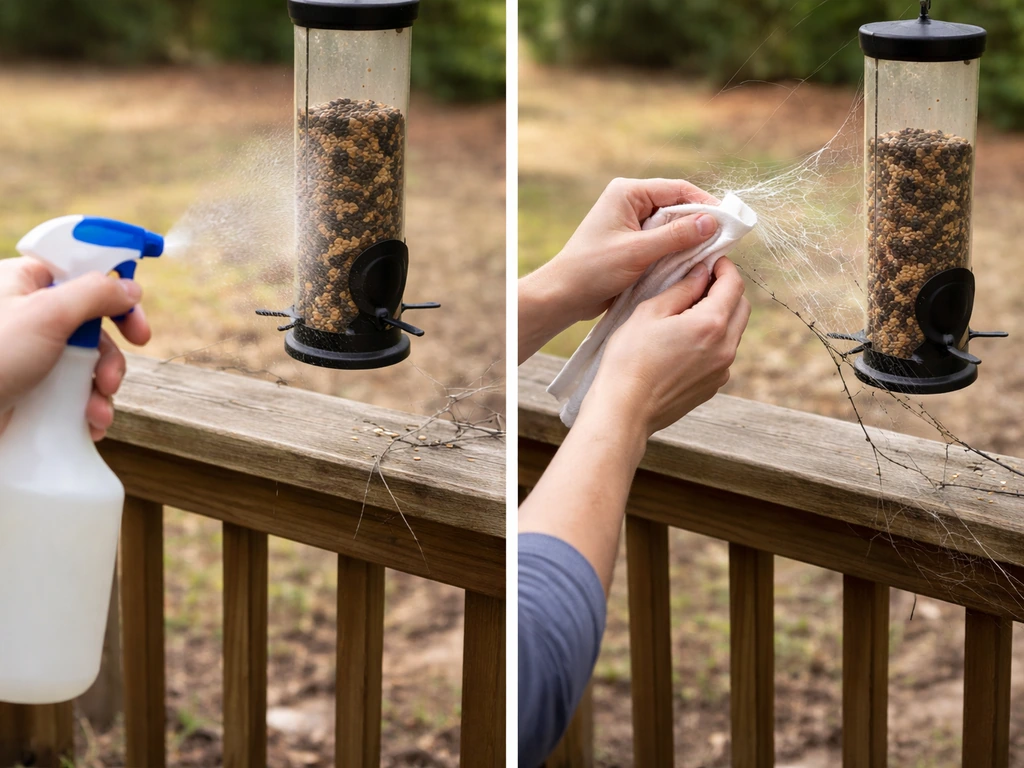
blank" rel="noopener noreferrer">Do not spray insecticides or pesticides near your feeders to control spiders or other insects. Both Greenwood Wildlife and Virginia DWR explicitly advise against using pesticides or herbicides near bird feeders. Beyond direct toxicity to birds, neonicotinoids and other pesticide classes can harm birds through ingested contaminated food and water contact. The EPA and Cornell's Center for Wildlife Health both flag neonicotinoids as a wildlife hazard. Spraying to kill spiders is not a safe trade-off.
- Do clear large webs from active bird flight paths manually, not chemically.
- Do check feeder surroundings at dawn and dusk in late summer when orb-weavers are largest.
- Do clean feeders every two weeks and after rain.
- Do store seed in sealed containers away from moisture.
- Don't use glue traps anywhere near feeders or bird activity areas.
- Don't spray insecticides or pesticides near feeders to manage spiders.
- Don't disturb a spider web just because it's there: only relocate if it's directly in a bird flight path.
The bigger picture: rare but real
Spider predation on birds sits in the same category as praying mantis predation on small birds: it genuinely happens, it's documented, and it's fascinating. But it's not a routine threat to your backyard bird population. The birds most at risk are the tiniest species, particularly hummingbirds and small warblers, and the risk is highest near large, structurally strong orb-weaver webs during peak spider season in late summer and fall. Understanding which spider species are large enough to matter, what true entrapment looks like versus scavenging, and how to respond quickly if you find a bird in a web will cover nearly every realistic scenario you'll encounter.
If you're curious about the spider species themselves, the goliath bird-eating spider and other large theraphosids are genuinely remarkable animals. If you want a clear idea of what a bird-eating spider looks like, check out photos and descriptions of goliath bird-eating tarantulas and similar large species what does a bird eating spider look like. If you are comparing a camel spider vs bird eating spider, this is the type of large active hunter people usually mean by “bird-eating,” unlike most spiders in your backyard goliath bird-eating spider. Understanding what they look like and how large they actually get puts the backyard risk in much clearer perspective.
FAQ
Can a spider really eat a bird alive if the bird is already on the ground?
True predation on a free, struggling bird is very rare and usually involves large spiders. In most backyard situations, if a bird is on the ground, the more common issue is entanglement in a web nearby or the spider investigating a weakened or dead bird. If you see a bird struggling near a web, treat it as entrapment, not normal feeding.
Are hummingbirds at higher risk than other backyard birds?
They can be, but mostly because they are tiny, high-energy birds that may fly directly into a web and get trapped. The risk spikes near large orb-weavers during late summer and fall when webs are big and birds are still active around feeders.
If I see a spider near my feeder, does that mean it will catch birds?
Not necessarily. Spiders are usually there because there are insects for them to eat. Bird captures are typically linked to a large, flight-path-crossing orb-web or to a small bird tangling in it. Look for an actual web stretching across approach routes, not just a spider sitting nearby.
How can I tell the difference between a spider killing a bird and scavenging?
A key sign is silk wrapping. If the bird is tightly wrapped or suspended in silk, that points to entrapment followed by consumption. If there is little or no silk involvement and you find an isolated body, it may be scavenging (a different situation with essentially no threat to living birds).
What should I do immediately if I find a live bird trapped in a web?
Act fast and safely. Minimize handling time, avoid sudden movements that could injure the bird further, and gently free it by cutting or peeling away web strands rather than pulling hard. Then contact a local wildlife rehabilitator for guidance, especially if the bird is bleeding, weak, or tangled near sensitive areas.
Will removing the web or moving the feeder harm the spider or the ecosystem?
You usually do not need to kill the spider. The least disruptive approach is to break the overlap between the spider’s web location and the bird flight path by relocating the web anchor points or temporarily shifting the feeder. That changes the risk profile without destroying the animal or the local insect web.
What’s the safest way to relocate a large orb-weaver web from a feeder area?
Use timing and tools that reduce damage. Move the web early in the day when bird activity is lower, and relocate rather than destroy if possible by changing anchor points or removing only the web structure. Keep fingers and face away from sticky strands, and wear gloves if you have to handle web material.
Do glue traps increase the risk beyond spiders eating birds?
Yes, significantly. Glue traps can injure or kill small birds that stumble into them, even when the target is supposedly insects. If you use any traps near bird areas, consider switching to non-sticky methods or professional wildlife-approved controls.
If a web is not in the direct flight path, is bird risk still possible?
It is lower, but not zero. Birds can change routes at feeders, especially in wind, shade, or when birds jostle each other. The biggest risk remains a web that lines up with how birds approach from a consistent direction, so watch approach patterns at dawn and dusk.
Does using insecticides to reduce insects also reduce spider activity near feeders?
It can backfire. Spraying near feeders can harm birds directly through contaminated food and water, and some pesticides can affect wildlife beyond the intended targets. Safer alternatives are improving feeder cleanliness, adjusting placement, and reducing attraction for insects and spiders without chemical spraying.
Why do webs seem to appear near feeders after heavy rain or wet weather?
Wet conditions change what birds, insects, and microbes gather around. Spoiled seed and debris can attract insects, which draw spiders to hunt there, and moldy seed can sicken birds regardless of predation risk. More frequent feeder cleaning during wet spells helps reduce both insect and bird health problems.
Could a tarantula or large huntsman spider in my region eat a bird?
In most places, the spiders you encounter are too small for bird predation. Large active hunters are most commonly documented in tropical settings, so a realistic risk in North America is mainly entrapment by large orb-weavers, not giant huntsman or theraphosids.
Next Articles
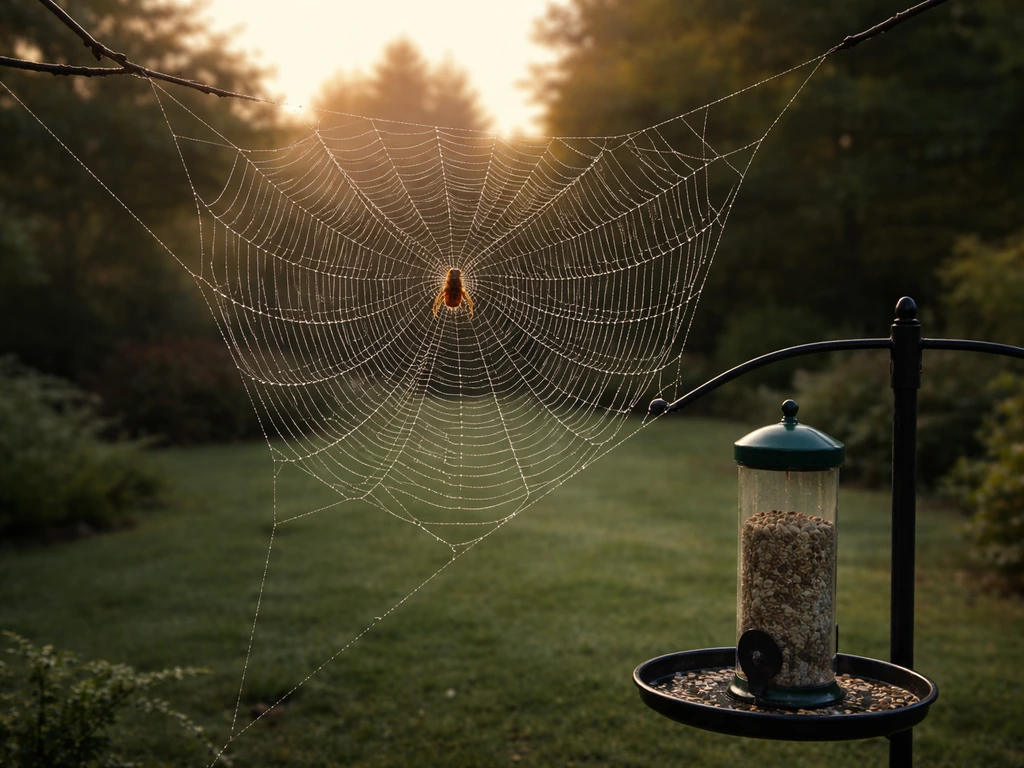
Spider That Can Eat a Bird: How to Identify It and Protect Birds
Identify spiders that may take small birds, separate myth from reality, and protect backyard birds with safe feeder step
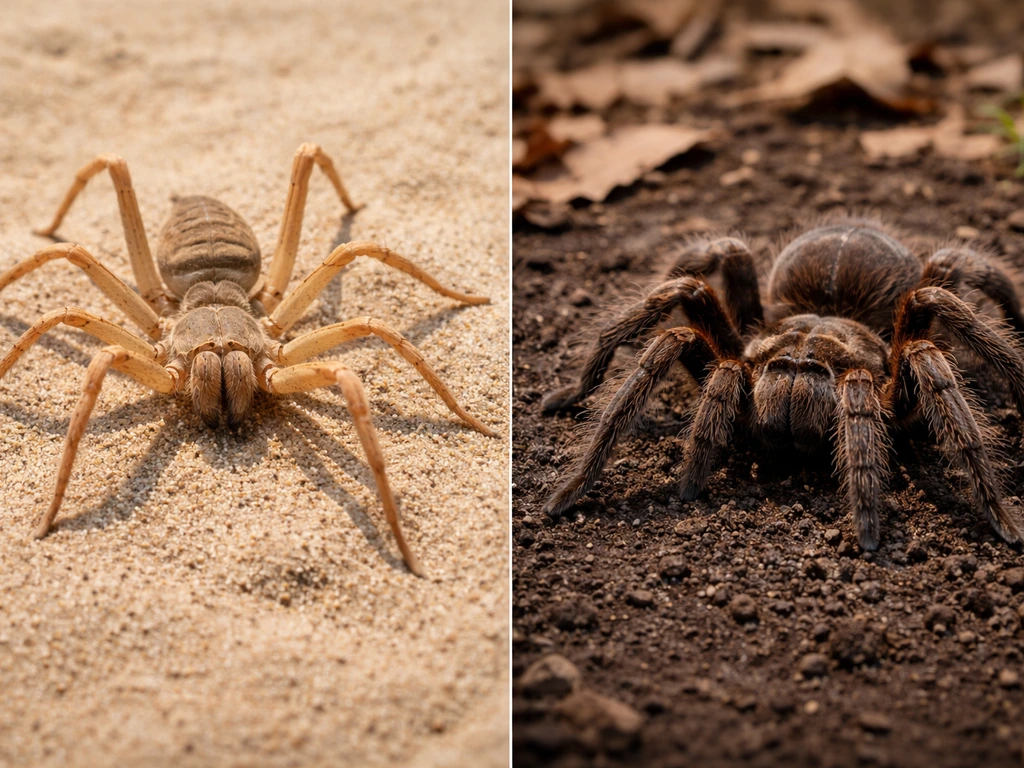
Camel Spider vs Bird Eating Spider: How to Tell Them Apart
Tell camel spider vs bird-eating spider apart fast using traits, habitat, hunting habits, and backyard bird risk.
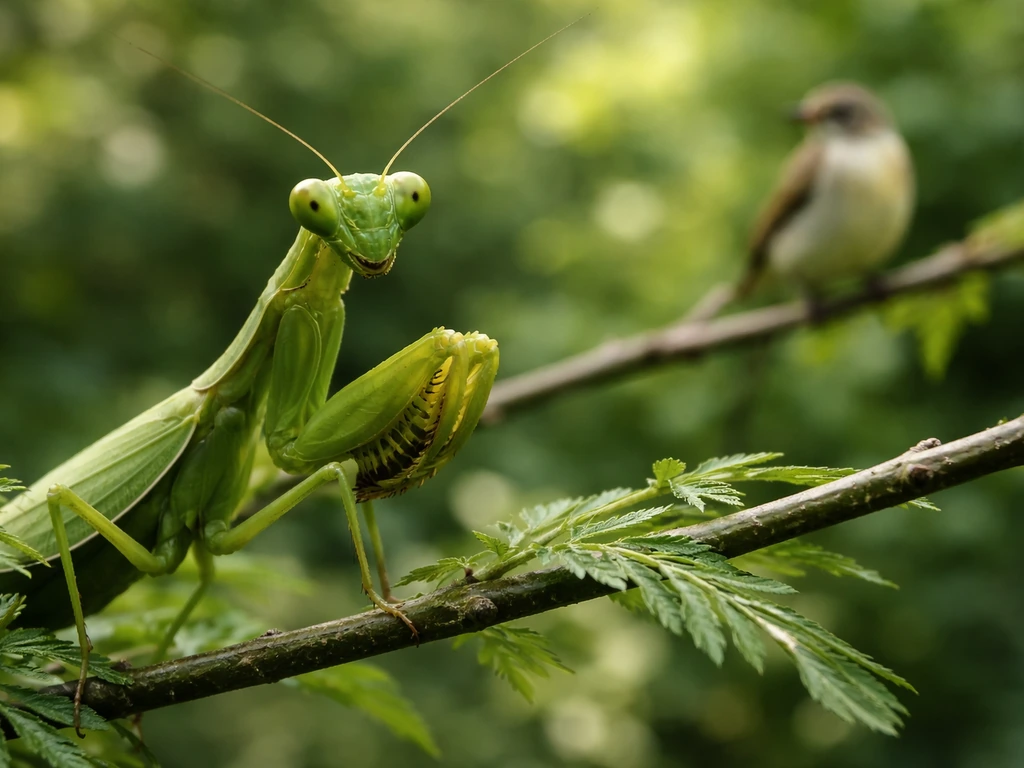
Can a Praying Mantis Eat a Bird? What Happens in the Wild
Can a praying mantis kill a bird? Learn how mantises hunt and why most backyard birds are safe at feeders.