No, you should not eat killdeer eggs. It is illegal under federal law to collect or disturb them, the health risks from eating wild bird eggs are real and serious, and there is no way to tell by looking at an egg whether it is contaminated. If you found one outdoors, the right move is to leave it alone, back away, and let the parents return.
Can You Eat Killdeer Bird Eggs? Risks, Legality, Next Steps

Maya Bennett
28 May 2026
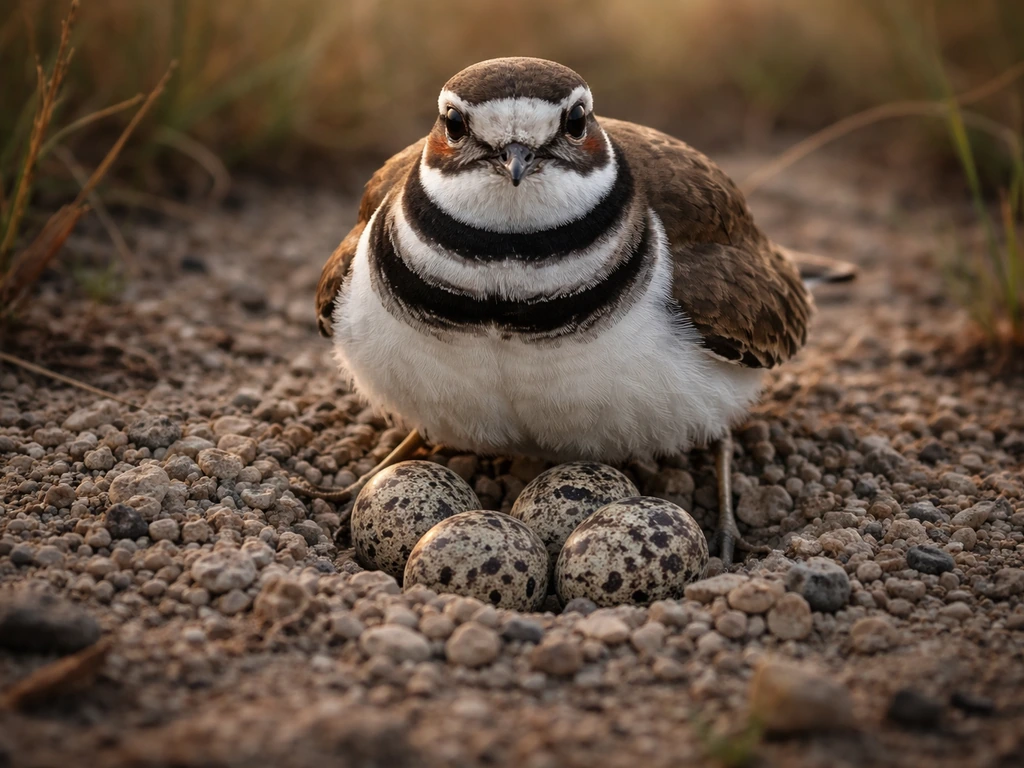
What killdeer eggs actually are (and whether they're edible in any practical sense)
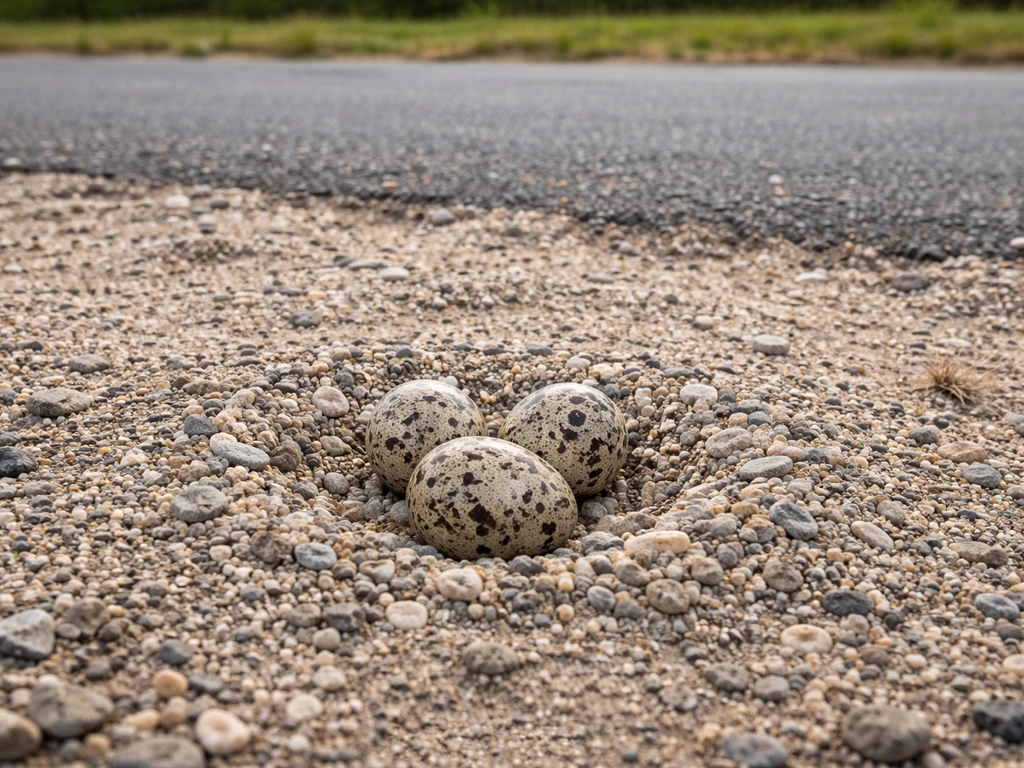
Killdeer (Charadrius vociferus) are shorebirds, though you will find them just as often in gravel parking lots, athletic fields, and farm edges as anywhere near water. They are ground-nesters, laying a clutch of typically four eggs directly on bare dirt or gravel with almost no nest structure at all. The eggs are tan to buff-colored with dark brown and black splotches, beautifully camouflaged to blend into the ground. They are roughly the size of a large marble, about 1.5 inches long.
Technically, bird eggs contain the same basic nutritional components as any other egg: protein, fat, and yolk. So in a purely biological sense, killdeer eggs are not poisonous by default. But "edible" and "safe" are two very different things, and in every practical sense that matters, eating a killdeer egg found in the wild fails both tests.
For the same reasons, you should not eat other wild bird eggs either, including kiwi bird eggs eating a killdeer egg found in the wild. The egg is too small to be worth the trouble, it is almost certainly contaminated in ways you cannot see or smell, and collecting it is a federal offense. There is no good-faith scenario in which eating one makes sense.
The real health risks of eating wild bird eggs
Wild bird eggs are not subject to any of the safety processes that commercial eggs go through: no flock monitoring, no refrigeration chain, no washing or sanitization, no grading. The shell surface of a wild egg that has been sitting on bare ground is exposed to soil bacteria, animal droppings, insects, and whatever runoff is in the surrounding environment. Salmonella is the big one.
Public health agencies are clear that eggs can carry dangerous bacteria and that contamination is not detectable by appearance, smell, or shell integrity. FoodSafety. gov likewise notes that wild bird eggs can be contaminated with foodborne germs and should be handled as unsafe unless sourced through controlled food-safety processes [Public health agencies are clear that eggs can carry dangerous bacteria](https://www. foodsafety.
gov/blog/salmonella-and-eggs). The FDA notes that symptoms of contaminated egg consumption typically appear within one to three days, meaning you will feel fine right up until you do not.
Beyond Salmonella, wild bird eggs can carry Campylobacter, E. coli strains, and various parasites depending on the bird's foraging environment. Killdeer nest in some of the most microbe-rich environments around: agricultural fields, drainage edges, and disturbed soil near livestock. That nesting habitat is not reassuring from a food-safety standpoint. And because these eggs are incubated outdoors on the ground rather than in controlled conditions, there is no reliable way to assess how long they have been there or what developmental stage they are in, which adds its own unpleasantness.
- Salmonella: the most common risk; causes fever, diarrhea, and cramping within 1 to 3 days
- Campylobacter: frequently found in shorebird environments near water or agriculture
- E. coli: possible, especially near livestock pasture edges where killdeer often nest
- Parasites: internal parasites from the adult bird's gut can be present in or on the egg
- Unknown incubation time: no way to tell how long the egg has been sitting outdoors
The egg also gives you no visual cue that anything is wrong. A contaminated egg can look completely normal. This is a point food-safety guidance hammers home specifically because people assume they can judge egg safety by cracking it open and checking the smell or color. You cannot. Do not try.
It is also illegal, full stop
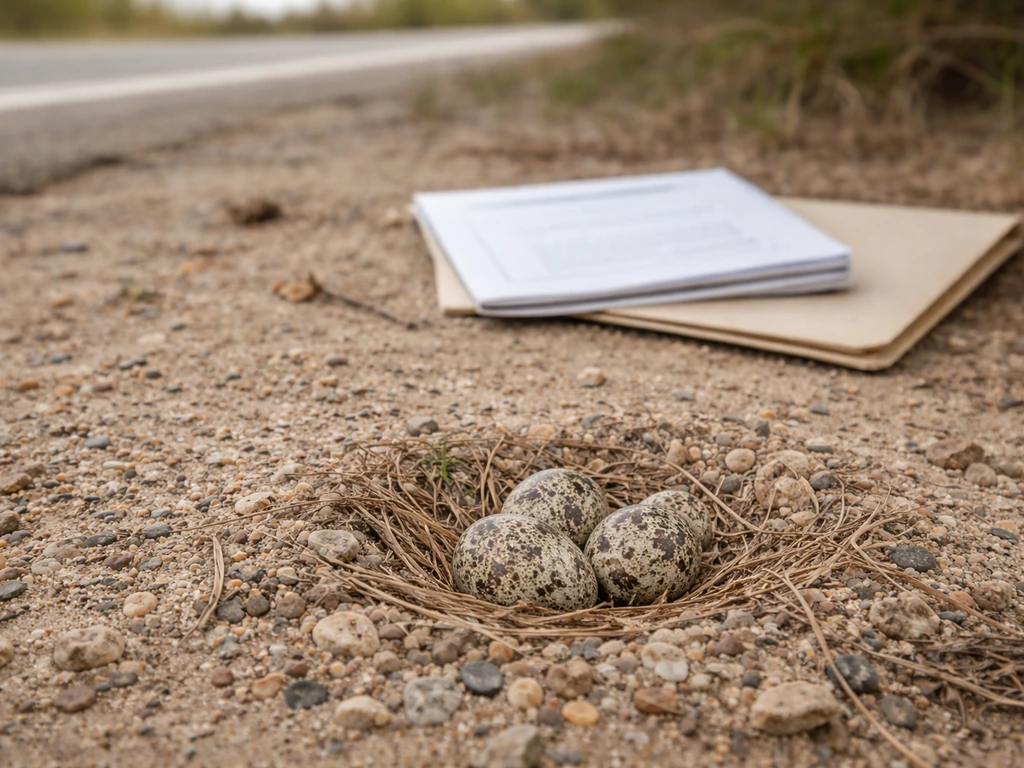
Killdeer are protected under the Migratory Bird Treaty Act (MBTA), a federal law that has been in place since 1918. The MBTA makes it illegal to take, possess, purchase, sell, or otherwise harm any migratory bird, its eggs, or its nest without a federal permit. Killdeer are explicitly covered. Collecting a killdeer egg, even if you found it and even if it appears abandoned, is a federal offense that can result in fines of up to $15,000 and potential imprisonment for serious violations.
"But I just found it" is not a legal defense. Possession itself is the issue. The same applies to the nest. You cannot legally move, destroy, or collect a killdeer nest either, even if it is in an inconvenient location like a gravel driveway or a ball field. Many property owners have had to work around active killdeer nests precisely because of this protection. Ethically, the argument is just as clear: these birds are not in decline because people eat their eggs, but that does not make it appropriate. Ground-nesting shorebirds face enough pressure from habitat loss, vehicle traffic, and predation without adding human egg collection to the list.
How killdeer forage, and why their diet makes the contamination concern worse
Understanding what killdeer actually eat gives you useful context here. Killdeer are visual hunters, picking insects, worms, snails, crayfish, and other invertebrates off the surface of bare or short-grass ground. They are especially common around plowed fields, irrigated turf, drainage ditches, and the edges of muddy areas, which puts them in regular contact with agricultural runoff, pesticide-treated soil, and animal waste. They do not filter their foraging area for contaminants. They eat what is there.
This matters for egg safety because whatever the parent bird ingests can influence the microbial and chemical environment of the egg. A killdeer foraging in a pesticide-treated field or near a livestock operation is living in a contamination-rich zone. The nest itself, scratched into bare ground in these same areas, sits directly in that environment. So the contamination concern is not just theoretical, it is grounded in where these birds actually live and what they actually eat. Their diet clues make the case for leaving the eggs alone even stronger.
What to do right now if you found a killdeer nest or egg
If you are standing next to a killdeer nest right now, here is what to do. Back away quietly. Killdeer are famous for their broken-wing distraction display, where they drag a wing along the ground to lure you away from the nest. If you see this behavior, you are near a nest even if you cannot see it yet. Follow the bird's lead and move in the opposite direction.
- Stop moving toward the nest immediately and take several steps back
- Do not touch the eggs or move them; the parents will return when you leave
- Mark the area mentally or with a gentle visual marker (like a small flag nearby, not on the nest) to avoid accidentally disturbing it again
- Keep pets leashed and away from the area until the nest is vacated, which typically takes about 25 to 28 days from the last egg laid
- If the nest is in a high-traffic area like a parking lot or construction zone, contact your state wildlife agency or a licensed wildlife rehabilitator for guidance on protective measures
- Do not attempt to relocate the nest yourself; even well-intentioned relocation is federally prohibited without a permit
If an egg appears cracked or an adult has not returned to the nest for more than 24 hours, contact a licensed wildlife rehabilitator in your area. They can assess whether intervention is appropriate. The Cornell Lab of Ornithology's website and the National Wildlife Rehabilitators Association both have locator tools to find someone near you. Do not try to incubate the egg yourself or bring it indoors, even with good intentions.
What you probably actually want (and safer ways to get it)
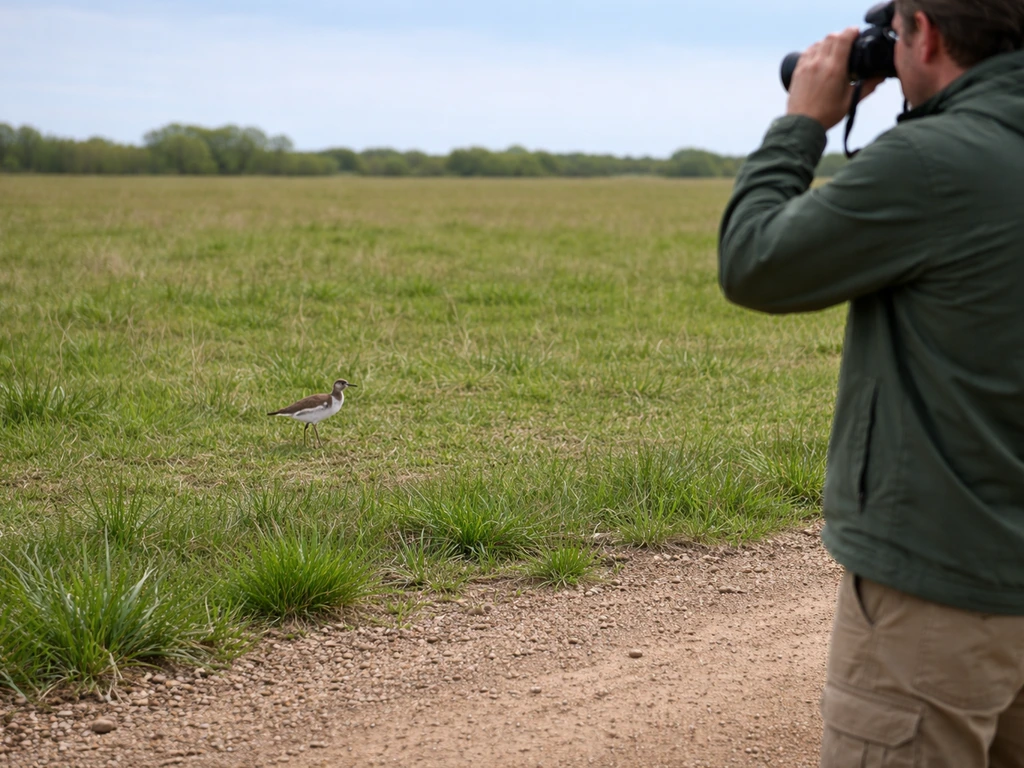
Most people who search this question are not actually planning to eat a wild bird egg. They found something interesting outdoors, they are curious, and they want to know what they are looking at and what they should do. That is a great instinct. Here is how to channel it productively.
Observing a killdeer nest from a respectful distance is genuinely one of the more rewarding backyard wildlife experiences you can have. Set up a lawn chair about 30 to 40 feet away, stay quiet, and watch. The parents will return, take turns incubating, and eventually you will see the chicks, which hatch as precocial young, meaning they are fluffy and mobile within hours. Binoculars make the experience far better without putting you any closer.
If your broader interest is in supporting birds safely, focus on feeder hygiene, appropriate seed selection, and keeping cats indoors during nesting season. Ground-feeding birds like killdeer do not come to feeders, but the principles carry over: what you put out should not harm the wildlife you are trying to help. This is a theme that applies across species. Questions about whether unusual items are safe to eat (for birds or by people, like eggs from wild species) usually have the same answer: leave it alone, and work with what is known to be safe. That same caution applies if you are wondering, can a kiwi bird eat a kiwi fruit whether unusual items are safe to eat.
If you enjoy learning about which birds are actually edible or which eggs are commercially viable, that curiosity is worth pursuing through food-safety and wildlife-education channels rather than wild collection. Similar questions come up around other species like peacocks and cuckoos, and the legal and health framework tends to be consistent: wild birds and their eggs are protected for good reasons, and the risk-to-reward ratio of eating wild-collected eggs is never in your favor. Eating a peacock bird or its eggs is also unsafe and is not something you should attempt peacocks.
Quick reference: what to do vs. what to avoid
| Situation | Do This | Avoid This |
|---|---|---|
| Found a killdeer nest in your yard | Back away, mark the area, watch from 30+ feet | Touching, moving, or photographing up close with flash |
| Egg looks cracked or abandoned (24+ hours) | Contact a licensed wildlife rehabilitator | Bringing it inside or attempting to incubate it |
| Nest is in a dangerous location (parking lot, construction) | Call your state wildlife agency for guidance on temporary barriers | Relocating the nest yourself |
| Curious about the eggs | Watch from a distance with binoculars | Collecting, handling, or consuming the eggs |
| Pet got too close to the nest | Remove the pet calmly, leash and keep away | Letting the pet investigate further or returning repeatedly |
FAQ
What should I do if I touched or picked up a killdeer egg by mistake?
If you accidentally picked up an egg (even briefly), do not rinse it or try to cook it. Put your hands back off, place it back exactly where you found it (without moving nest material), and contact a licensed wildlife rehabilitator for guidance on the next step and whether any reporting is needed in your area.
How can I tell whether a killdeer egg is actually abandoned versus temporarily unattended?
It can be hard to know if an egg is truly abandoned. Ground-nesting birds may leave the nest temporarily when they feel threatened, so treat any absence longer than a few moments as “possibly incubating” and keep your distance until a wildlife professional can assess.
Is a cracked killdeer egg safer to handle or cook than an intact one?
Cracked does not mean safe. A crack can increase exposure to soil bacteria and insects, which raises the risk of contamination. Treat a cracked egg the same as an intact one: leave it alone and contact a wildlife rehabilitator if it is near people or pets.
What’s the safest way to protect a killdeer nest that’s in the middle of my yard or a busy area?
If you find a nest in a high-traffic spot (driveway, walkway, sports field), the best option is to make the area safe for the birds rather than relocate them yourself. Create a temporary barrier to keep people and pets away, then contact a wildlife rehabilitator or local wildlife agency about permitted ways to protect the nest during the nesting period.
Can I wash, disinfect, or thoroughly cook a killdeer egg to make it safe?
No. Even if you plan to disinfect it, cooking does not reliably eliminate all parasites and does not fix toxins or chemical contamination that may be present. Also, possession and disturbance are the main problems legally, so “sanitizing at home” is not a workable decision.
If I find eggs that seem unlikely to hatch, can I incubate them myself to help the chicks?
Do not take it indoors for incubation or “to hatch it later.” Incubating eggs without the right permits and conditions can cause suffering and can put the adult birds at risk if the nest is left unattended. A rehabilitator can advise whether intervention is appropriate for the specific situation.
What if the nest is causing disruption or risk to people, can I move the nest to solve the problem?
Killing and removing the nest is different from providing protection. The article recommends distance and professional help because nest relocation or destruction is not permitted without authorization. If you need immediate relief from disruption, the practical step is controlled exclusion (barriers, signage, leash rules for pets) while you wait for a professional.
I’m worried because I already cracked or sampled one. What should I do now?
Yes, some people feel an urge to “check” safety by cracking it. That increases your exposure to bacteria and does not provide trustworthy reassurance, since contamination can be invisible. If you are worried for health reasons, focus on avoiding contact and get advice from a healthcare professional if ingestion occurred.
Next Articles
Can You Eat Kiwi Bird or Eggs? Safety, Laws, Risks
Answer whether you can eat kiwi birds or eggs, with health risks and legality, plus safe alternatives.
What Bird of Prey Eats Pigeons: Common Raptors & ID Tips
Which raptors eat pigeons: peregrine, Cooper’s, goshawk, merlin, red-tailed, kestrels, owls; ID tips, risks and how to保护
Which Bird Eats Mice? How to Identify Mouse Predators
Identify which birds eat mice using hunting cues, time of day, calls, and perch habits, plus safe yard steps.