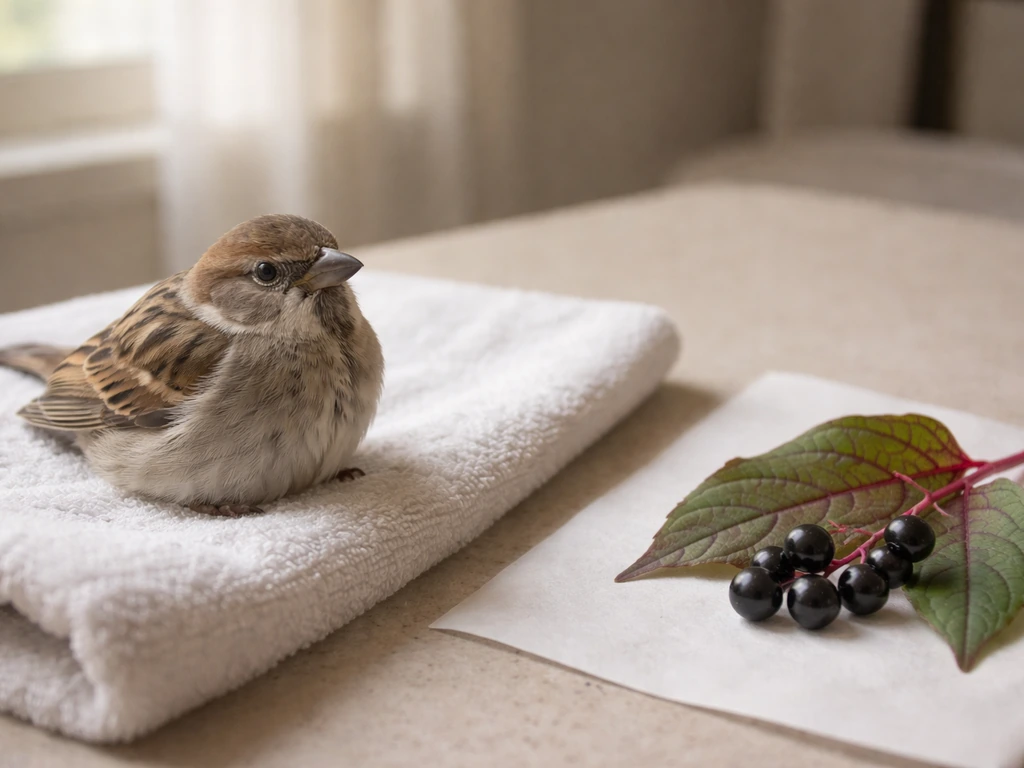
If you find a bird that has eaten a poisonous plant, move it to a quiet, warm, dark box right now, do not give it food or water unless directed by a professional, and call a licensed wildlife rehabilitator or avian vet immediately. Those three steps cover the first five minutes. Everything else, like documenting the plant, keeping the bird calm, and preventing it from happening again, builds on that foundation.
What to Do If a Bird Eats a Poisonous Plant: Emergency Steps
Maya Bennett
2 Jul 2026
Make the scene safe first, then decide if it's an emergency
Before you touch the bird, take ten seconds to look at the scene. Is the plant still accessible? Are cats, dogs, or other animals nearby? Your first job is to remove the hazard, not just the bird. If the bird is still sitting near or on the plant, gently herd or guide it away before handling it. If you have pets in the yard, bring them inside immediately. Some toxic plants, like foxglove, oleander, or yew berries, can also be harmful to cats and dogs if they chew on the same vegetation or pick up a sick bird in their mouth.
Now ask yourself honestly: is this bird showing active distress right now? Seizures, inability to stand, labored breathing, or complete unresponsiveness are full emergencies. Do not wait to see if the bird improves. Contact a wildlife rehabber or an avian emergency clinic right now. If the bird is alert, upright, and breathing normally but seems "off," you have a little more time to gather information before transporting it, but you should still make that call within the hour.
What poisoning actually looks like vs. other problems
Plant poisoning in birds does not always look dramatic, and that is part of what makes it tricky. If you are wondering what happens if a bird eats Alka-Seltzer, it is still treated like poisoning because the ingredients can be harmful and symptoms can escalate quickly Plant poisoning in birds. A lot of people who find a bird on the ground assume it hit a window or was clipped by a cat. Those are far more common. But if you saw the bird actively eating berries, seeds, or leaves, or if there is plant material nearby that the bird was clearly pecking at, poisoning moves up the list.
Neurological signs are the biggest red flag for plant toxins. Watch for head tremors, loss of balance, walking in circles, or seizures. Gastrointestinal signs like regurgitation or visible drooling also matter, though birds do not vomit as obviously as mammals. Weakness in the legs or wings without an obvious impact injury, labored or open-mouth breathing, and unusual color changes around the beak or eye area all warrant serious concern. A bird that is simply stunned from a window strike will usually recover its posture and eye focus within 20 to 30 minutes. A poisoned bird tends to deteriorate or stay flat rather than improve.
| Sign | More Likely Poisoning | More Likely Injury/Stress |
|---|---|---|
| Posture | Limp, unable to right itself, tremors | Upright but dazed, recovers posture over minutes |
| Eyes | Half-closed, dilated, unresponsive | Alert and tracking movement |
| Breathing | Open-mouth, labored, clicking sounds | Fast but regular, slows as bird calms |
| Limbs | Weakness without obvious wound | Held awkwardly, possible visible trauma |
| Time course | Stable or worsening over 30+ minutes | Improving within 20-30 minutes |
| GI signs | Drooling, regurgitation, green-tinged droppings | Normal or stress-loose droppings |
| History | Seen eating plant material, berries, seeds | Found near window, road, or cat attack site |
What to do right now: the short do/don't checklist
Do these things
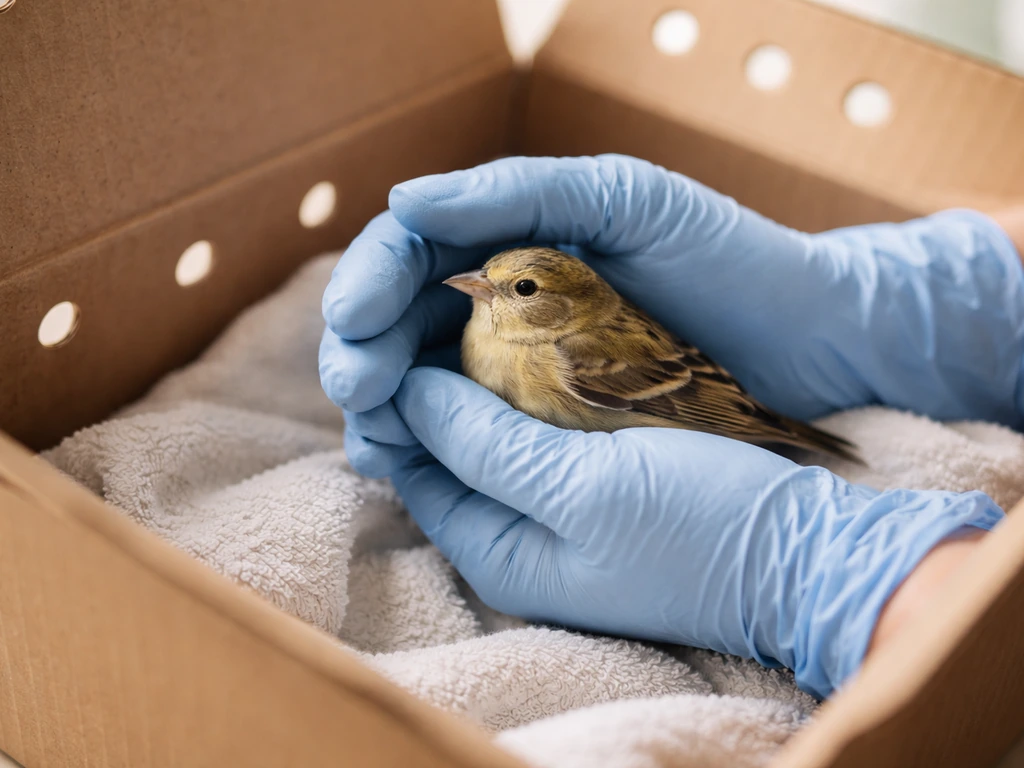
- Put on gloves before handling the bird. Wild birds can carry salmonella and other pathogens, and you also want to minimize stress on the bird from bare-hand warmth and scent.
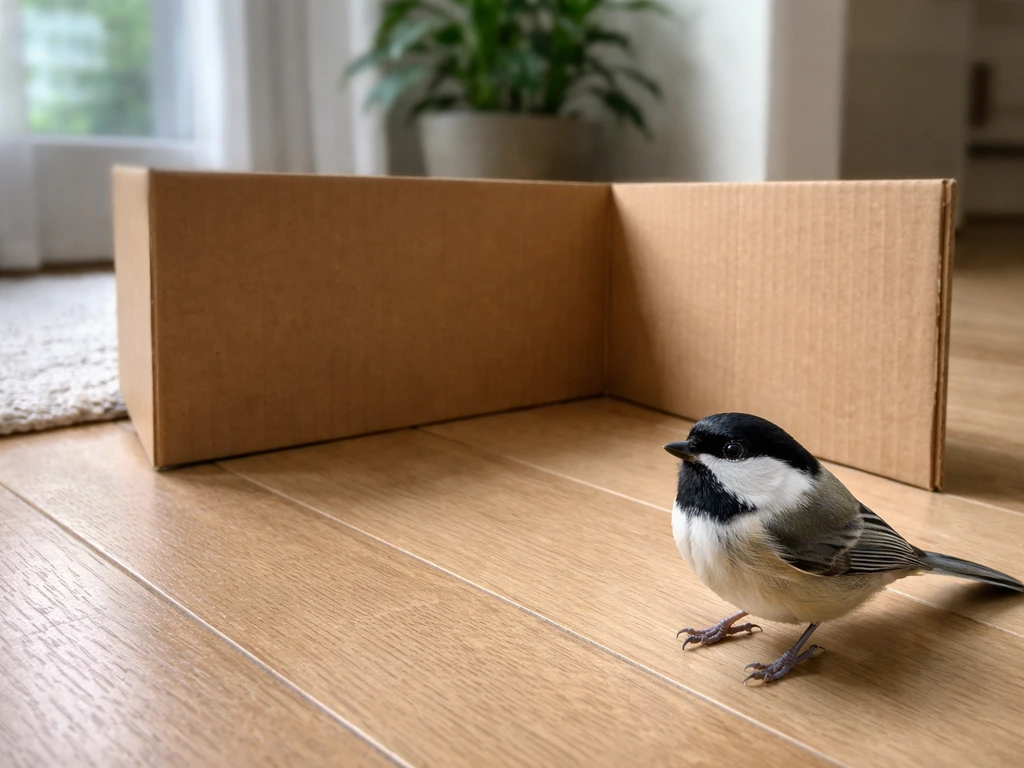
- Place the bird in a cardboard box with air holes. Line the bottom with a clean non-fluffy cloth or paper towel so the bird has traction.
- Keep one end of the box warm. Set the box so one half sits over a heating pad on low, or tuck a warm (not hot) water bottle wrapped in a towel under one side. The bird can move toward or away from the heat source.
- Put the box somewhere quiet, dark, and away from household noise, pets, and children.
- Call a licensed wildlife rehabilitator or avian vet immediately. In the US, you can find a local rehabber via the National Wildlife Rehabilitators Association directory or by calling your state's fish and wildlife agency.
- Take photos of the plant you suspect and, if safe, collect a small sample (leaf, berry, or seed in a zip-lock bag) to bring with the bird.
Do not do these things
- Do not give the bird food or water unless a rehabber specifically tells you to. Forcing fluids into a bird with a compromised gag reflex can cause aspiration. A shallow dish may be placed in the box, but do not hold the bird over it or try to get it to drink.
- Do not give any human medications, including activated charcoal from your medicine cabinet, without professional guidance. Dosing is extremely difficult with small birds and the wrong move can kill faster than the toxin.
- Do not use home remedies like vinegar, milk, olive oil, or bread to "neutralize" the poison. These do not work and several will make things worse.
- Do not try to make the bird vomit. Birds do not have a functional vomiting reflex the way mammals do, so this is both useless and stressful.
- Do not keep handling the bird to check on it. Stress alone can kill a bird that is already compromised. Look in once every 15 to 20 minutes maximum.
- Do not put the bird outside "to let it rest in nature." A sick bird on the ground is prey.
Document everything before you call
Wildlife rehabbers and avian vets work much faster when you arrive with good information. You do not need to have all of this, but the more you can gather in the first 15 minutes, the better the outcome is likely to be.
- Species of bird if you can identify it, or a photo if you cannot. Size, coloring, and beak shape are all useful.
- Approximate time of ingestion or when you first noticed the bird acting strangely.
- Photos of the plant, ideally showing leaves, berries, seeds, and the whole plant in context. If you can collect a small physical sample safely, do it.
- The exact symptoms you observed and in what order they appeared.
- Whether the bird is a wild bird or a pet. If it is a pet bird, bring its feeding history, any supplements it takes, and any recent changes to its environment.
- Whether there are feeders nearby and what feed is in them. Spoiled or moldy seed can cause illness that mimics some poisoning symptoms, and the vet will want to rule that out.
- Any other animals in the yard that may have been exposed to the same plant.
Safe temporary housing while you get help
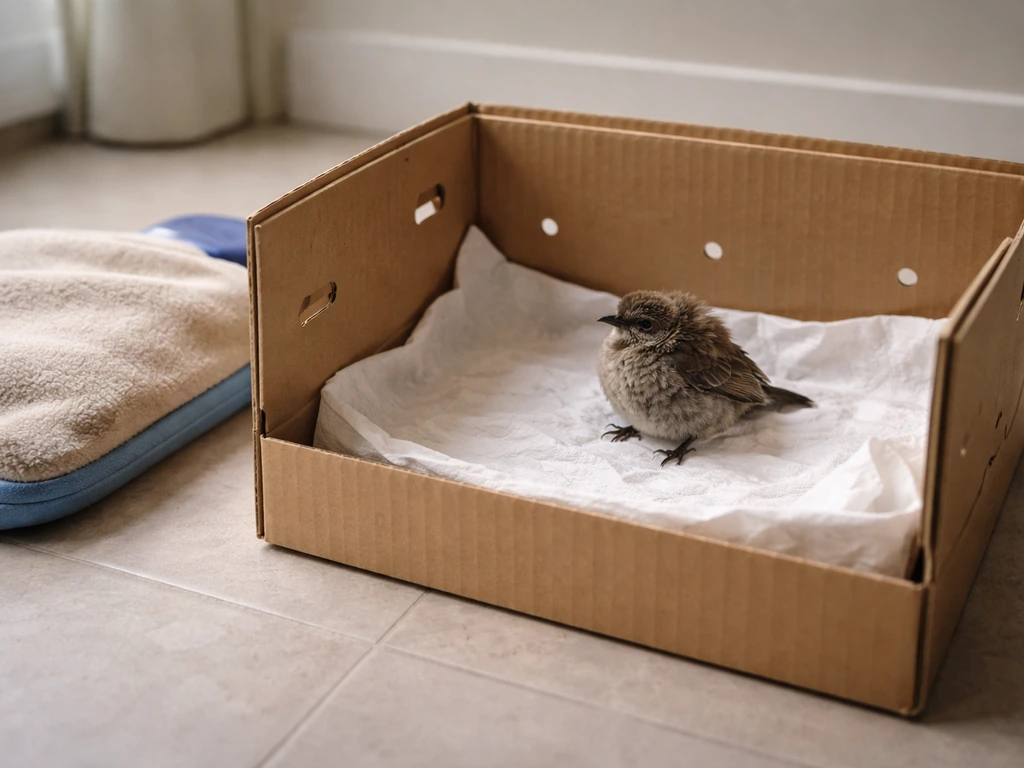
The cardboard box method sounds simple, but the details matter. Use a box that is big enough for the bird to stand up in but not so large that it can flap around and injure itself further. A shoebox works well for most songbirds. Poke several small holes in the sides and lid for ventilation, but keep it dim inside. Darkness reduces stress hormones and helps the bird stay calm.
Temperature regulation is critical. Birds lose body heat fast when they are sick or in shock. The goal is to keep the box interior around 85 to 90 degrees Fahrenheit for most small songbirds. A heating pad on low under one half of the box achieves this without risk of overheating. If the bird is cold, provide warmth by putting one end of the shoebox on a towel over a heating pad set on low, or use a warm water bottle wrapped in a towel. If you do not have a heating pad, a small water bottle filled with warm tap water and wrapped in a cloth works in a pinch. Check it every 20 minutes and rewarm as needed.
Do not offer food. Even if the bird looks hungry or is moving around, food can cause additional problems while a toxin is still being absorbed. A shallow bottle cap of clean water in the box is acceptable for an alert bird, but never hold the bird's beak to the water or try to drip water into its mouth. Mass Audubon also advises using only a shallow water dish and not forcing the bird to drink do not force the bird to drink. If the bird is too weak to drink on its own, it needs IV or subcutaneous fluids from a professional, not hand-watering from you.
Remove the risk from your yard for good
Once the immediate crisis is handled, it is worth doing a real audit of your yard. Many common ornamentals are genuinely toxic to birds, and most people have no idea. The plants below are among the most frequently planted in North American gardens and the most commonly associated with bird poisoning incidents.
| Plant | Toxic Parts | Risk Level for Birds |
|---|---|---|
| Yew (Taxus spp.) | Berries and seeds (arils), leaves | Very high - cardiac and neurological effects |
| Oleander (Nerium oleander) | All parts | Very high - cardiac glycosides |
| Foxglove (Digitalis spp.) | All parts, especially leaves and seeds | Very high - cardiac glycosides |
| Lantana (Lantana camara) | Unripe green berries | High - liver damage |
| Nightshade (Solanum spp.) | Unripe berries and leaves | Moderate to high |
| Wisteria | Seeds and pods | Moderate |
| Lily of the Valley (Convallaria majalis) | All parts | High - cardiac glycosides |
| Virginia Creeper | Berries | Moderate - oxalate crystals |
You do not necessarily have to remove every potentially risky plant, especially mature trees or large shrubs, but you can manage the risk. Cut off berry clusters before they ripen on high-risk plants like lantana and wisteria. Add physical barriers around yew or oleander to prevent ground-foraging birds from accessing fallen berries. Replace high-risk ornamentals with bird-safe native alternatives like serviceberry, native viburnums, or coneflowers, which provide food and cover without the toxicity risk.
Weedy plants matter too. Pokeweed is a common volunteer in eastern North American yards and its ripe berries are attractive to many birds, but the unripe green berries are toxic. Learn to identify it and pull it before it berries. The same goes for horse nettle and some wild members of the nightshade family that can spread from neighboring lots.
Feeder and feed safety: do not let this be the second problem
If a bird is already stressed or recovering from a plant toxin, the last thing it needs is spoiled or inappropriate feed on top of it. Moldy seed is one of the most overlooked hazards at backyard feeders. Aflatoxins from Aspergillus mold, which grows readily on wet or old sunflower seeds and corn, can cause liver damage and neurological symptoms that look a lot like plant poisoning. If you are trying to document a case for a vet and your feeders are full of clumped or discolored seed, clean them out and tell the vet.
- Empty and scrub feeders with a 10 percent bleach solution at least once a month, more often in humid summer weather.
- Store seed in sealed, dry containers away from heat. Garage heat in summer can accelerate mold growth significantly.
- Avoid bread, rice, and kitchen scraps at feeders. Bread offers almost no nutritional value and can cause digestive issues. Rice (cooked or uncooked) is not poisonous to birds in small amounts, but it displaces real nutrition and attracts rats.
- Never put out spoiled fruit or fermented feed. Fermented sugar sources can cause intoxication in birds, particularly waxwings and robins that eat fruit.
- Keep ground feeding areas raked clean. Seed hulls build up, get wet, and become a mold substrate fast.
Pet owners need to think about feeder placement too. If you have cats or dogs that spend time in the yard, a bird that is already weakened by plant exposure becomes extremely easy prey. Feeders positioned so that birds must land on open ground to feed are particularly dangerous. Mount feeders at least five feet off the ground and use baffles. If you have a cat that goes outside, consider keeping it in during peak feeding hours in the early morning.
Common myths worth clearing up quickly
Will bread or rice help absorb the toxin?
No. Neither bread nor rice has any binding or absorptive effect on plant toxins in a bird's digestive tract. Giving a sick bird bread can actually worsen its condition by adding fermentable carbohydrates to a compromised gut. Leave the feeding decisions to the professionals.
Could a spider or insect in the yard have caused this instead of a plant?
It is possible but uncommon. Most spiders that birds encounter in a typical backyard are not dangerous to birds, which are far larger than the spider's intended prey. If you found the bird near a plant it was pecking at, plant ingestion is a much more likely explanation than envenomation. However, if there is no plant material evidence at all and the bird has localized swelling around the beak or face, it is worth mentioning to the rehabber.
What about chocolate or other human foods?
Chocolate is genuinely toxic to birds. Theobromine and caffeine both affect the avian nervous system and heart. If you suspect a bird got into chocolate, treat it exactly the same as a plant poisoning: box it, keep it warm, call a professional immediately. The same logic applies to avocado, onion, and several other common kitchen items. The approach does not change based on the source of the toxin, which makes the core steps here broadly useful beyond just plant exposures.
Should I worry about my pets getting sick from the same exposure?
Yes, and it is worth taking seriously. If a dog or cat ate berries or chewed on leaves from the same plant, or if a cat caught and ate the sick bird, call your vet. What happens next can depend on how much the bird was affected, so tell your vet you suspect your cat ate a bird with possible plant toxin exposure a cat caught and ate the sick bird. Some plant toxins, particularly cardiac glycosides in oleander and foxglove, are highly dangerous to mammals too. Do not assume a small exposure is fine just because your pet seems okay. Symptoms in cats and dogs can be delayed by hours.
When to call immediately versus when to watch briefly
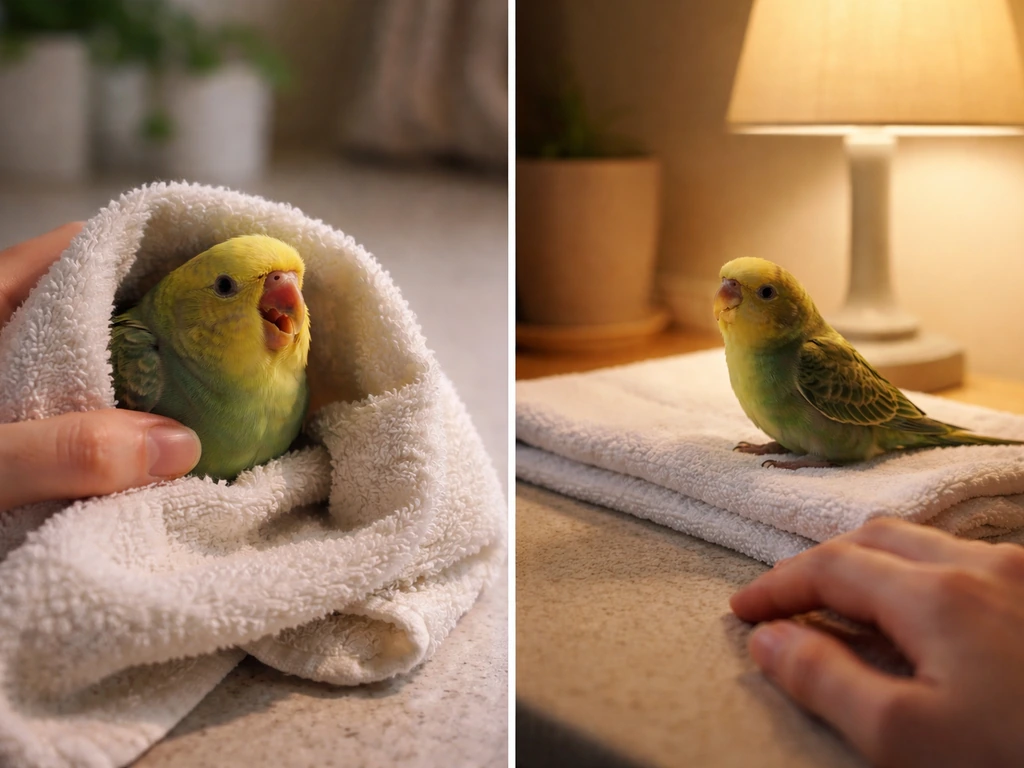
Call immediately if the bird is seizing, completely non-responsive, breathing with an open beak and labored effort, or showing rapid deterioration in the first few minutes after you find it. These signs mean the toxin load is high and time matters. In some cases, a bird can also suffer after ingesting plastic, so it helps to tell the rehabber if you suspect that exposure too what happens if a bird eats plastic.
You can watch briefly (20 to 30 minutes maximum) if the bird is alert, can hold its head up, is breathing normally, and you are not certain it actually ingested anything. Sometimes a bird near a toxic plant simply got startled and landed there. But if symptoms appear or worsen at all during that window, stop watching and start driving. Do not wait for the bird to get worse to confirm your suspicion. With toxin cases, earlier is always better. Chocolate can also be dangerous to birds, so it helps to know the warning signs if they’ve eaten any.
FAQ
What if I do not know which poisonous plant the bird ate?
Yes. If the bird is actively seizing, unable to stand, breathing with an open mouth, or completely unresponsive, assume a high toxin load and contact an avian emergency clinic or wildlife rehabilitator immediately, even if you are not sure which plant it was. In your call, describe the plant you saw (berries, leaves, and where it was on the bird’s body) and what time you found the bird.
Can I give the bird water or force it to drink to “flush out” the toxin?
Do not. Holding or restraining a bird’s beak to offer water can cause aspiration (inhalation into the lungs), which is dangerous when a toxin is affecting coordination and swallowing. If the bird is alert, you can provide a shallow water source it can access on its own, otherwise rely on the professional for fluids.
What should I do if I cannot reach a wildlife rehabilitator or avian vet immediately?
If you cannot reach a licensed rehabber or avian vet right away, keep the bird in the warm, dark ventilated box, away from pets, and call an animal poison hotline or an emergency veterinary line for immediate triage. Keep notes on symptom timing (when you noticed tremors, drooling, weakness, breathing changes) so the clinician can guide the next steps.
Should I check for injuries first, or focus only on plant poisoning?
Do a quick check, but keep it brief. Look for obvious external trauma first (bleeding, broken wings, entanglement). Then focus on the toxin pattern, neurological signs, and breathing. If you suspect ingestion, do not delay transport to “treat” an injury at home, because the crisis is often internal and progresses as the bird’s condition declines.
How much should I handle the bird while waiting for help?
Limit handling to what is necessary to move it to the box and prevent further access to the plant. Longer contact increases stress and can worsen breathing effort in sick birds. If you must handle it, use gentle support under the chest and keep the bird dim and contained during the trip.
What if the bird can keep pecking the plant or other birds might get to it too?
Yes. If the bird is found outdoors near the plant, remove the plant hazard first and bring pets inside right away. Also rinse or bag any fallen berries or leaves you see so other wildlife cannot peck them later. This reduces repeated exposure, which can happen when birds return to the same feeding spot.
Is it safe to wash the bird or remove plant sap from its feathers?
Do not clean the bird with any soaps, essential oils, or chemicals. If there is visible plant debris on the feathers or beak, gently remove only loose material with clean, dry fingertips or a slightly damp (water-only) cloth, then return the bird to the warm box. Any stronger cleaning products can irritate skin and airways.
How long can I wait if the bird looks “okay” at first?
Often, yes. Some birds show more severe symptoms as time passes, so treat deterioration during the first hour as a reason to transport immediately. Also watch for subtle worsening, such as losing balance, staying curled or flat, increased weakness, or changes in head control even if breathing seems okay at first.
What details should I collect to tell the vet or rehabber?
If you have a clear suspect exposure, keep that info consistent for the professional. For example, if it was a berry cluster, note whether it was ripe, partly eaten, or still on the plant. If you saw the bird actively eat, tell them that too. Do not guess, but any observation helps them prioritize likely toxin classes and treatment urgency.
If my pet was near the incident, do I still need to call a vet even if the pet seems normal?
Yes, and you should. If a cat or dog chewed the same plant, or if a cat caught and mouthed the bird, treat it as a separate emergency for the pet even if the pet seems fine, because symptoms can be delayed by hours. Tell the vet you suspect possible plant toxin exposure and, if known, which plant or which berries were involved.
Can I give bread, rice, or other home remedies to help the bird recover?
No. Do not give bread, rice, or similar foods. They can add fermentable carbohydrates and worsen gut function when the toxin is already affecting the bird’s digestion and coordination. Focus on warmth, darkness, and prompt professional care.
If symptoms are mild, is it still an emergency?
No specific time is “safe,” but if the bird is not actively improving while you are in the box, treat that as a sign it needs urgent care. Even if symptoms seem mild, toxins that affect the nervous system or heart can escalate. When in doubt, follow the same emergency path: box it, keep it warm, and call immediately.