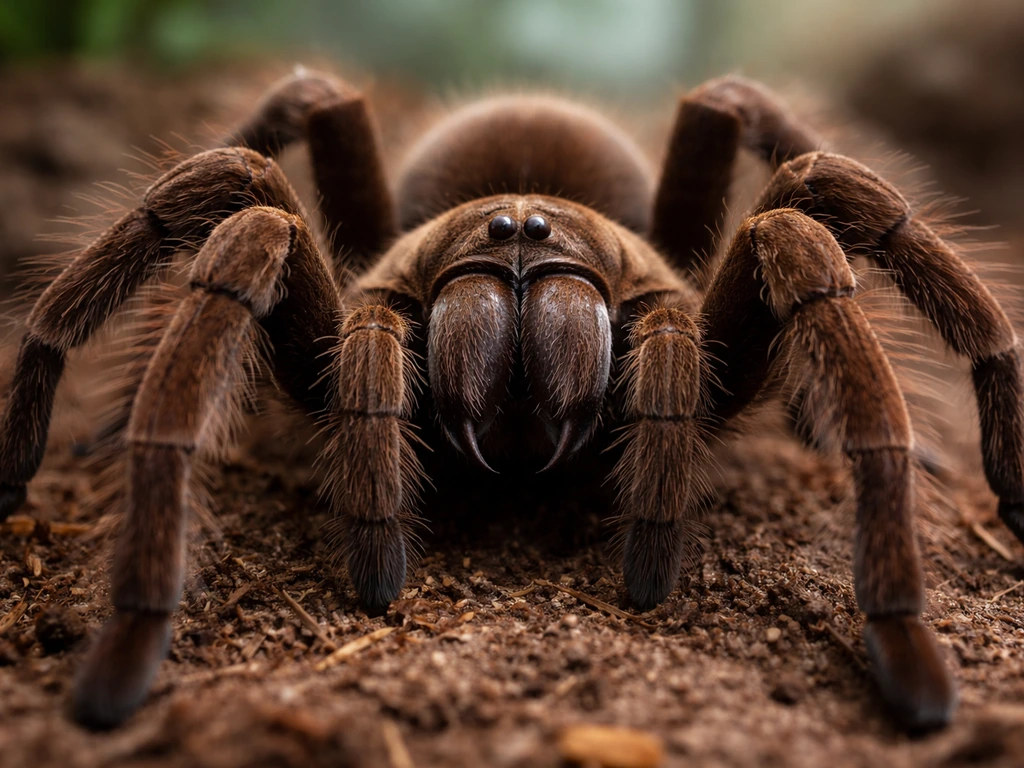
Bird-eating tarantulas live primarily in the tropical and subtropical regions of South America, with the most famous species, the goliath bird-eater (Theraphosa blondi), found in the rainforests of Venezuela, Brazil, Guyana, Suriname, and French Guiana. Other species that carry the 'bird-eating' label in the pet trade come from different continents entirely, including parts of Africa and Asia. If you're a backyard birder in North America or Europe wondering whether one of these spiders could show up near your feeders, the honest answer is almost certainly no, unless you're in a very specific tropical zone or you're keeping one as a pet.
Where Do Bird-Eating Tarantulas Live? Range and Habitats

Maya Bennett
1 Jun 2026
What 'bird-eating' actually means (and why the label is all over the place)
The term 'bird-eating tarantula' is not a single, tidy species name. It's a common name, and common names in the tarantula world are notoriously unreliable. Major tarantula trade and education references point out that these names are often created by animal traders to make spiders sound more dramatic and marketable, not to accurately describe behavior or classification. You'll find the 'bird-eating' label applied to Theraphosa blondi (the goliath bird-eater), Theraphosa stirmi (the burgundy bird-eater), Theraphosa apophysis (the pinkfoot goliath), and sometimes to entirely unrelated large species sold under loose common names at reptile expos.
This matters practically because each of those species lives in a different place, behaves differently, and has a different size ceiling. When someone asks 'where do bird-eating tarantulas live,' the answer genuinely depends on which spider is wearing that label. The Theraphosa genus is the most commonly meant, so that's where most of this article focuses, but keep in mind you may be looking at something quite different if you found a spider described as a 'bird-eater' at a pet shop or market.
Where in the world these tarantulas actually live

The core 'bird-eating' species are creatures of the tropics. Theraphosa blondi, the goliath bird-eater, sticks to the humid lowland rainforests of northern South America. Think dense, warm, wet jungle, not dry savanna, not temperate woodland, not anywhere with frost. The climate zones they occupy are typically equatorial or humid subtropical, with year-round warmth, very high humidity (often 80–90%), and consistent rainfall. They don't migrate and they don't adapt to cold.
| Species | Common Name | Native Region | Climate Zone |
|---|---|---|---|
| Theraphosa blondi | Goliath bird-eater | Venezuela, Brazil, Guyana, Suriname, French Guiana | Humid tropical rainforest |
| Theraphosa stirmi | Burgundy bird-eater | Guyana, northern Brazil | Humid tropical rainforest |
| Theraphosa apophysis | Pinkfoot goliath | Venezuela, northwestern Brazil | Humid tropical rainforest |
| Hysterocrates gigas | Cameroon red baboon (sometimes called bird-eater) | West and Central Africa | Tropical rainforest |
| Selenocosmia species | Asian bird-eating tarantulas | Southeast Asia, Australia | Tropical to subtropical |
If you're in the United States, Canada, the UK, or most of Europe, none of these spiders live wild anywhere near you. The only tarantulas you'll encounter outside in North America belong to genera like Aphonopelma, which are found in the American Southwest and are much smaller, slower, and less dramatic than any 'bird-eater' species.
The specific habitats they use day-to-day
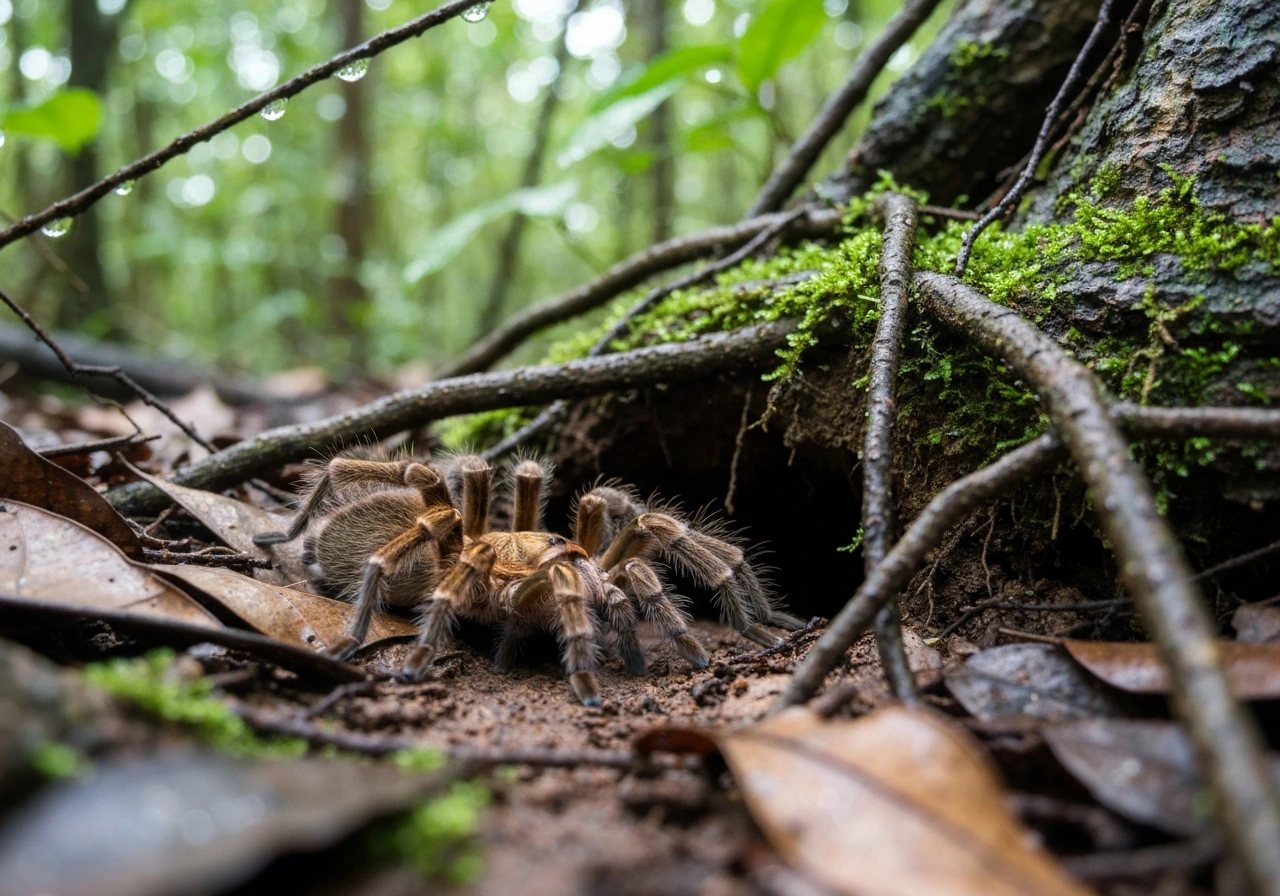
Knowing the country isn't enough, knowing how these spiders actually use their environment helps you understand both why they're rarely seen and why they're almost never a threat to birds at a feeder. Goliath bird-eaters are primarily terrestrial burrowers. Britannica also notes that the goliath birdeater primarily feeds on insects, earthworms, frogs, and toads, and can take small mammals, reptiles, and occasionally small birds and bird eggs. They dig or take over existing burrows in soft rainforest soil, often under leaf litter, roots, or rocks. The burrow is their base of operations: they ambush prey that wanders near the entrance rather than roaming widely.
- Burrows dug into soft, moist soil at the base of trees or under root systems
- Dense leaf litter on the rainforest floor, which provides cover and moisture
- Edges between forest and clearings, where prey movement tends to be higher
- Riverbanks and floodplain margins with consistently damp ground
- Occasionally found near human settlements in rural tropical areas, especially where soil disturbance has created new burrowing opportunities
They are almost never found in open grassland, dry scrub, or urban environments with manicured lawns. They need that combination of warmth, moisture, and loose organic soil. This is why, even within their native range, locals may rarely see them, they stay underground or under cover during the day and hunt at dusk and night.
Where you might actually encounter one near people
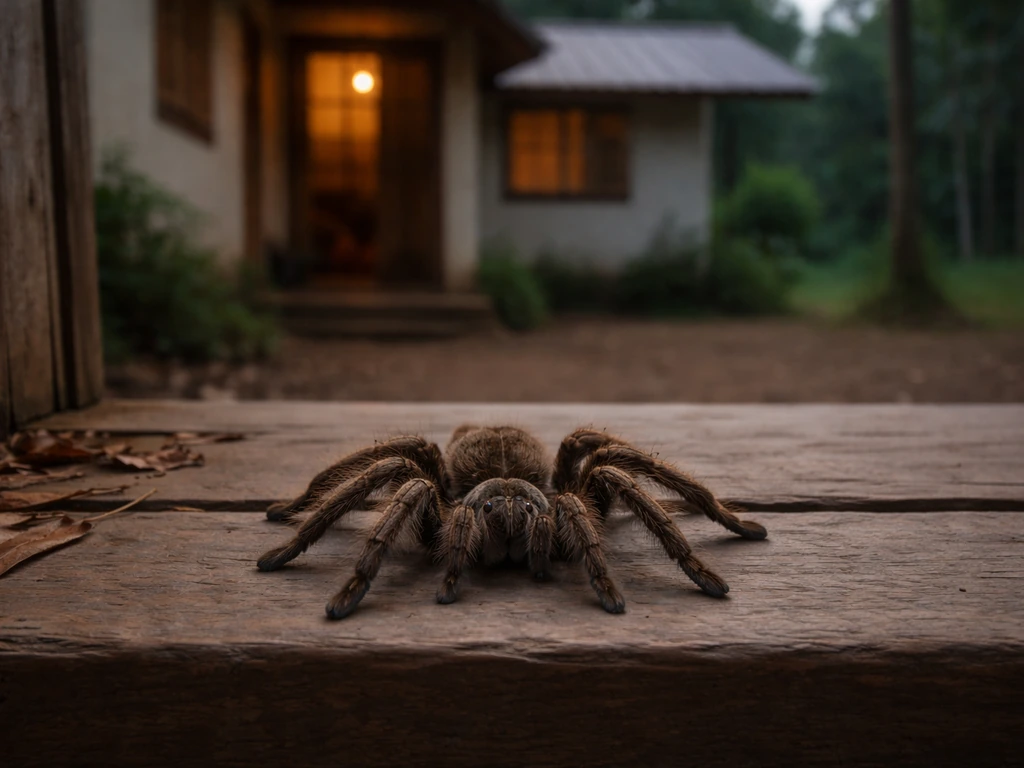
Within South America's tropical zones, people do occasionally find these tarantulas near homes, particularly in rural or semi-rural settings adjacent to forest. They show up in gardens with dense mulch or compost piles, under outdoor furniture left on soil, inside sheds near forested areas, and sometimes near structures where the ground stays consistently moist. In northern Brazil, Guyana, and Venezuela, local residents report encounters in vegetable gardens and near chicken coops (attracted by the activity of small prey, not the birds themselves).
For backyard birders specifically: if you're running a bird feeder and you live outside the tropics, a bird-eating tarantula is not coming for your feeder. The spider is simply not there. If you're in a tropical zone within the species' range, the more relevant concern is that your feeder setup might attract small prey animals (insects, frogs, small lizards) that in turn could attract a passing tarantula at night. The spider isn't interested in the seeds or the birds, it's following the food chain further down. Keeping the area around your feeder tidy, without piles of rotting seed or debris that attract insects and rodents, reduces any indirect draw.
How to tell a bird-eating tarantula from lookalike spiders
If you find a large, hairy spider and want to know whether it could be a bird-eating tarantula, a few quick checks will usually tell you. True Theraphosa species are the largest spiders in the world by mass, adults have a leg span of up to 28–30 cm (about 11–12 inches) and a body that's noticeably thick and heavy. The body color is typically dark brown to black, sometimes with reddish-brown hairs on the legs or abdomen. They move slowly and deliberately, not in the quick darting way of house spiders or wolf spiders.
- Size: adult bird-eaters are enormous — if it's smaller than your outstretched hand, it almost certainly isn't one
- Hairiness: densely covered in hair (setae), not just slightly fuzzy like some wolf spiders
- Color: deep brown to black body, sometimes with rusty-red or orange leg hairs
- Movement: slow and deliberate, not fast or jumpy
- Location: if you're not in tropical South America (or a small part of Africa or Asia for other species), it's something else
- Stridulation: Theraphosa species rub leg hairs together to produce a hissing sound when threatened — a distinctive warning sign
Common lookalikes in North America include wolf spiders (Lycosidae), which are fast, lean, and much smaller, and fishing spiders (Dolomedes), which are large but live near water and have a distinctly flattened body. Neither is a tarantula. In the American Southwest, Aphonopelma species are true tarantulas but max out around 5–6 cm body length and are much less robust than any Theraphosa. If you're outside the tropics and you've found a large hairy spider, a local extension office, iNaturalist app submission, or regional arachnology group can confirm the ID quickly.
Do they really eat birds? The honest answer
Despite the name, bird-eating tarantulas eat birds rarely if at all in normal circumstances. Britannica describes the goliath bird-eater as primarily feeding on insects, earthworms, frogs, and toads. The Smithsonian National Zoo is equally direct, stating that these spiders 'don't eat birds frequently' and that the broader prey list includes invertebrates, mice, frogs, and lizards, with small birds as an occasional opportunistic item. The 'bird-eating' name came from an 18th-century engraving showing one eating a hummingbird, and the label stuck even though the behavior is rare.
Practically speaking, a tarantula's hunting strategy makes bird predation extremely unlikely at a typical feeder setup. If you want the details on whether do goliath bird eaters eat birds, the answer is still that it is extremely rare bird predation. These spiders sit and wait at the entrance to their burrow, they don't leap into the air, climb feeders, or chase mobile prey. A bird at a feeder is airborne, alert, and fast.
A healthy adult songbird is also large enough to be a genuine threat to a tarantula. The realistic prey at the bird-feeder ecosystem level is insects attracted to the seed, the occasional frog or mouse drawn in by dropped seed, and perhaps very small juvenile birds that have fallen to the ground and are unable to fly. That last scenario is genuinely possible but rare, and it's not a reason to remove feeders or panic, it's just biology.
What to do if you find one near your yard or pets
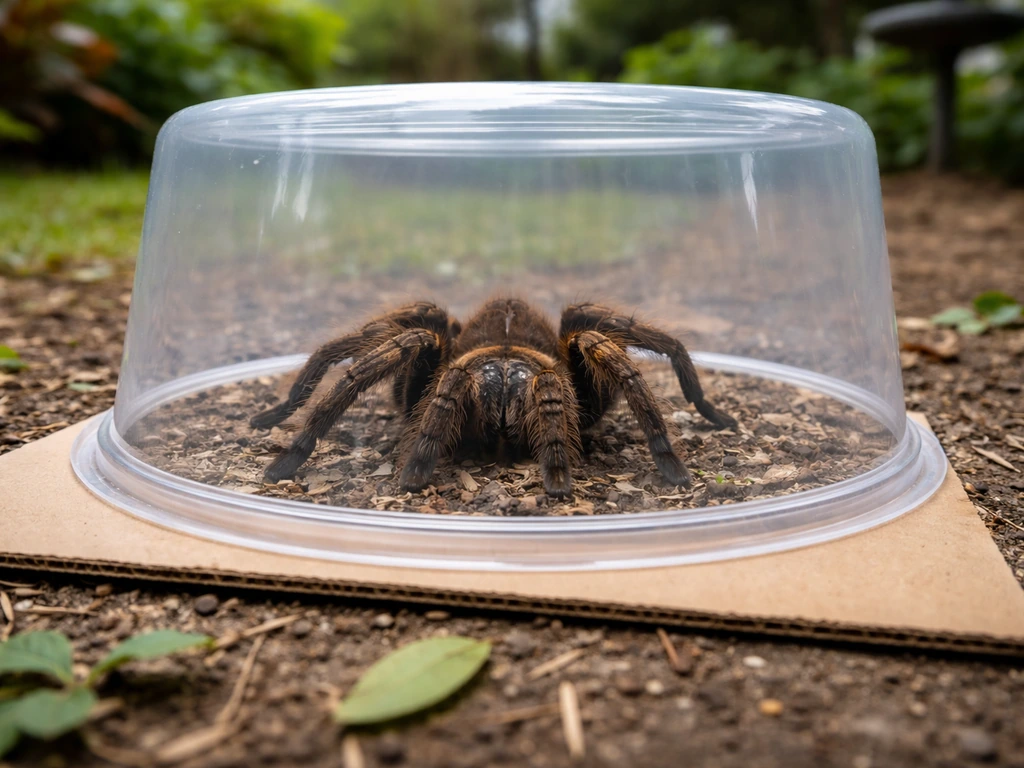
If you're in a tropical region and you've found what looks like a large tarantula near your home or bird-feeding area, the key rule is: don't handle it barehanded, but don't panic either. Theraphosa bites are medically comparable to a wasp sting for most healthy adults, painful but not dangerous. If you’re asking whether goliath bird-eaters are poisonous, the main concern is their bites and defensive urticating hairs rather than true venomous poisoning. More concerning are the urticating hairs these spiders flick from their abdomen when threatened, which can cause significant skin and eye irritation. Keep pets and children away until you've dealt with the situation.
- Don't touch the spider directly. Use a container and a stiff piece of cardboard to gently guide it into the container from a distance, or use long tongs if available.
- Wear eye protection if you're close to it — flicked urticating hairs are the main irritation risk.
- Relocate it to a brushy, wooded area away from foot traffic. These spiders are not aggressive and will retreat given the chance.
- Check your dog or cat for facial irritation if they've been nosing around the spider — urticating hairs on a pet's nose or eyes need veterinary attention if significant irritation develops.
- Reduce attractants around your feeder: clean up dropped seed promptly, avoid letting seed rot on the ground, and don't leave out food waste that attracts the insects and rodents that in turn attract tarantulas.
- If you're outside the tropics and found a large spider you can't identify, photograph it and submit to iNaturalist or contact a local extension service — do not assume it's a dangerous species before it's identified.
One practical feeder note: rotting or inappropriate bird food is a much bigger everyday risk than tarantulas. Spoiled seed, old suet, and bread scraps attract rodents and insects in large numbers, which is what indirectly creates conditions where any large opportunistic predator, tarantula or otherwise, might linger near a feeder area. Keeping your feeder setup clean and using appropriate seed for your region addresses most of those downstream risks at once.
Quick reference: bird-eating tarantula facts at a glance
| Feature | Detail |
|---|---|
| Most common species meant by 'bird-eater' | Theraphosa blondi (goliath bird-eater) |
| Native range | Northern South America (Venezuela, Brazil, Guyana, Suriname, French Guiana) |
| Climate needed | Humid tropical rainforest, warm year-round, high humidity |
| Typical habitat | Soil burrows in leaf litter and forest floor |
| Adult leg span | Up to 28–30 cm (about 11–12 inches) |
| Main prey | Insects, earthworms, frogs, toads, small mice and lizards |
| Do they eat birds? | Rarely — opportunistic only, not a regular behavior |
| Venom danger to humans | Low — comparable to a wasp sting; urticating hairs more problematic |
| Likely to appear at feeders in North America/Europe? | No — not native, cannot survive outside tropics |
If you're exploring this topic because you're curious about the broader world of bird-eating spiders, it's worth knowing that the goliath bird-eater and its close relatives like the Brazilian salmon pink bird-eating tarantula have overlapping but distinct ranges and behaviors. In most references, the Brazilian salmon pink bird-eater is associated with parts of Brazil in the Atlantic forest and nearby tropical habitats Brazilian salmon pink bird-eating tarantula. Similarly, questions about how big these spiders actually get and whether goliath bird-eaters really bite are worth digging into separately, since the size and venom questions tend to generate as much confusion as the naming does. If you are wondering about whether goliath bird-eaters bite, the short answer is that they do not seek people out, but a defensive bite is possible if the spider is handled or threatened goliath bird-eaters really bite.
FAQ
If I found a “bird-eating” tarantula on my property, does that mean it lives in my local area?
Not necessarily. Common names can be misleading, and escaped or released pet tarantulas can turn up far from their native range. The best next step is to confirm whether it matches a true Theraphosa (very large, heavy-bodied, dark and slow) and then contact a local arachnology group or extension office for ID, rather than assuming a wild population is present.
Where do bird-eating tarantulas live within their native regions, inside cities or more remote areas?
They are far more likely in humid, forest-adjacent ground than in manicured urban areas. Even within the tropics, they tend to stay under cover like leaf litter, roots, rocks, mulch, compost, or in burrows, so encounters are more common along semi-rural garden edges and forest-clearance zones than in downtown settings.
Do bird-eating tarantulas live near bird feeders at night?
Only indirectly. The feeder does not “attract birds for the spider,” instead it can attract insects and other small prey (or rodents that bring more insects), which increases the odds a tarantula may wander near the area. If you keep the ground under and around the feeder clean (no spilled seed, no rotting food), you reduce the food-chain pull.
Can a bird-eating tarantula climb onto a feeder or birdbath?
They usually rely on staying near a burrow entrance and ambushing prey that passes close by. They can still move around and may cross surfaces, but the typical hunting pattern does not involve climbing feeders or actively chasing birds, so the more realistic risk is encounters near ground-level prey rather than on the feeder.
What kind of habitat conditions make sightings more likely in the tropics?
Look for warm, consistently humid microhabitats with loose, organic soil. Dense mulch, compost piles, moist sheds, and areas with frequent rainfall or persistent dampness under leaf litter are common “hot spots,” because they suit both burrowing and the insects and worms the tarantula hunts.
How can I tell if it is a true Theraphosa (a “bird-eater”) versus other big spiders?
Theraphosa adults are among the heaviest tarantulas, with very thick bodies and a large leg span, plus slow, deliberate movement. Common North American lookalikes include wolf spiders (faster, leaner) and fishing spiders (more flattened, tied to water). If you are unsure, get a clear photo from above and beside, then submit it to a local expert for confirmation.
Do they migrate or change range with seasons?
They do not behave like seasonal migrants, and they avoid cold. Their distribution is tied more to stable tropical humidity and temperature than to weather shifts, so you generally will not see a “seasonal arrival” in places that are not already suitable year-round.
If I’m outside the tropics and see a large hairy tarantula, what should I do first?
First, do not handle it barehanded, then assume it could be a pet escape if it matches a Theraphosa look. Take note of where it was found (inside a home, near a shed, in a garden bed), and keep pets and kids away while you arrange identification rather than relying on the “bird-eater” label from informal descriptions.
If a “bird-eater” bites, is it medically dangerous?
For most healthy adults, it is usually comparable to a painful insect sting in severity, but the bigger immediate issue can be irritating urticating hairs that can cause significant skin and eye irritation. Rinse and avoid rubbing the area, and seek medical care promptly if there is eye exposure, severe allergic symptoms, or worsening pain.
Next Article
Are Goliath Bird-Eating Spiders Poisonous or Venomous?
Are goliath bird-eating spiders poisonous or venomous? Learn bite risk, symptoms, and safe handling tips for people and