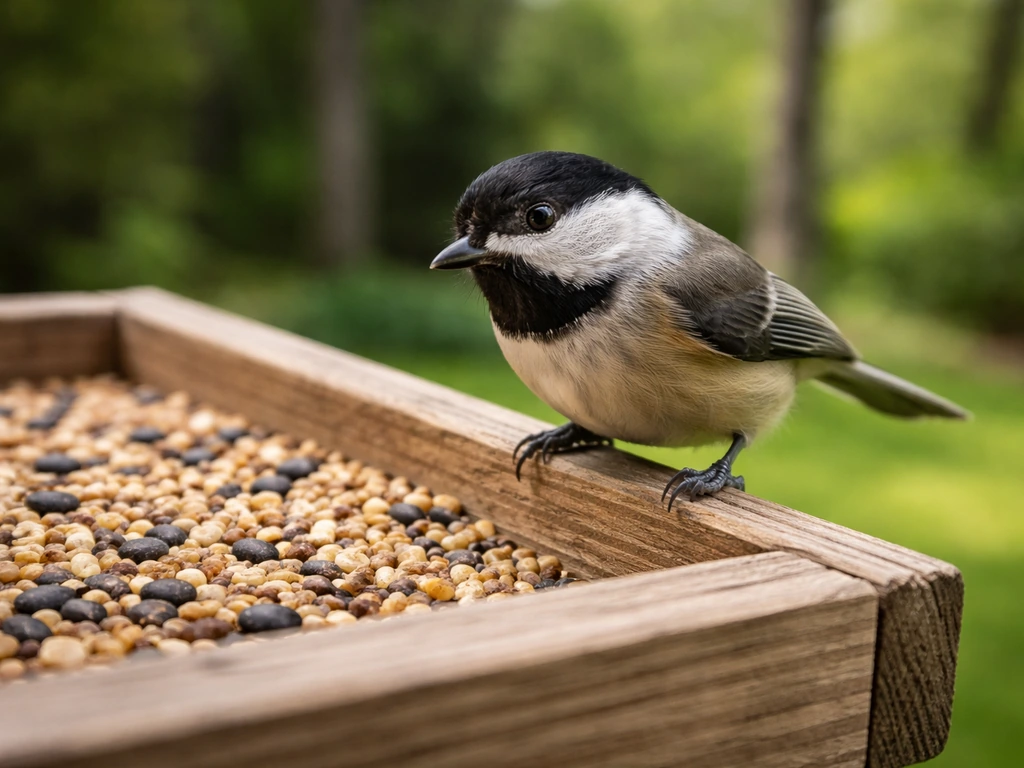
Several bird species deliberately swallow stones, pebbles, and even small metal objects as a normal part of digestion, not by accident. For a quick answer about which species eat rocks to digest food, see what bird eats rocks to digest food. Chickens, turkeys, ducks, geese, pigeons, ostriches, and many shorebirds all do it routinely. For a quick answer to which bird eats pebbles, see this concise guide. The stones sit inside the muscular gizzard and act as a built-in grinding mill, crushing seeds, grain husks, and insect exoskeletons that a bird's beak simply cannot break down on its own. Scavengers and raptors sometimes swallow bone fragments and, worryingly, small metal pieces too. Whether you keep backyard chickens, feed a parrot, or just want to protect wild birds visiting your garden feeders, understanding which species eat hard objects, why they do it, and where the line between normal behavior and a genuine health emergency sits is practical, important knowledge. If you wonder why a bird might swallow gravel or small stones, they act as gastroliths in the gizzard to grind hard seeds and insect shells, aiding digestion.
Which Bird Eats Stones and Pieces of Iron: Gastrolith Guide

Why some birds swallow stones, bones, and metal
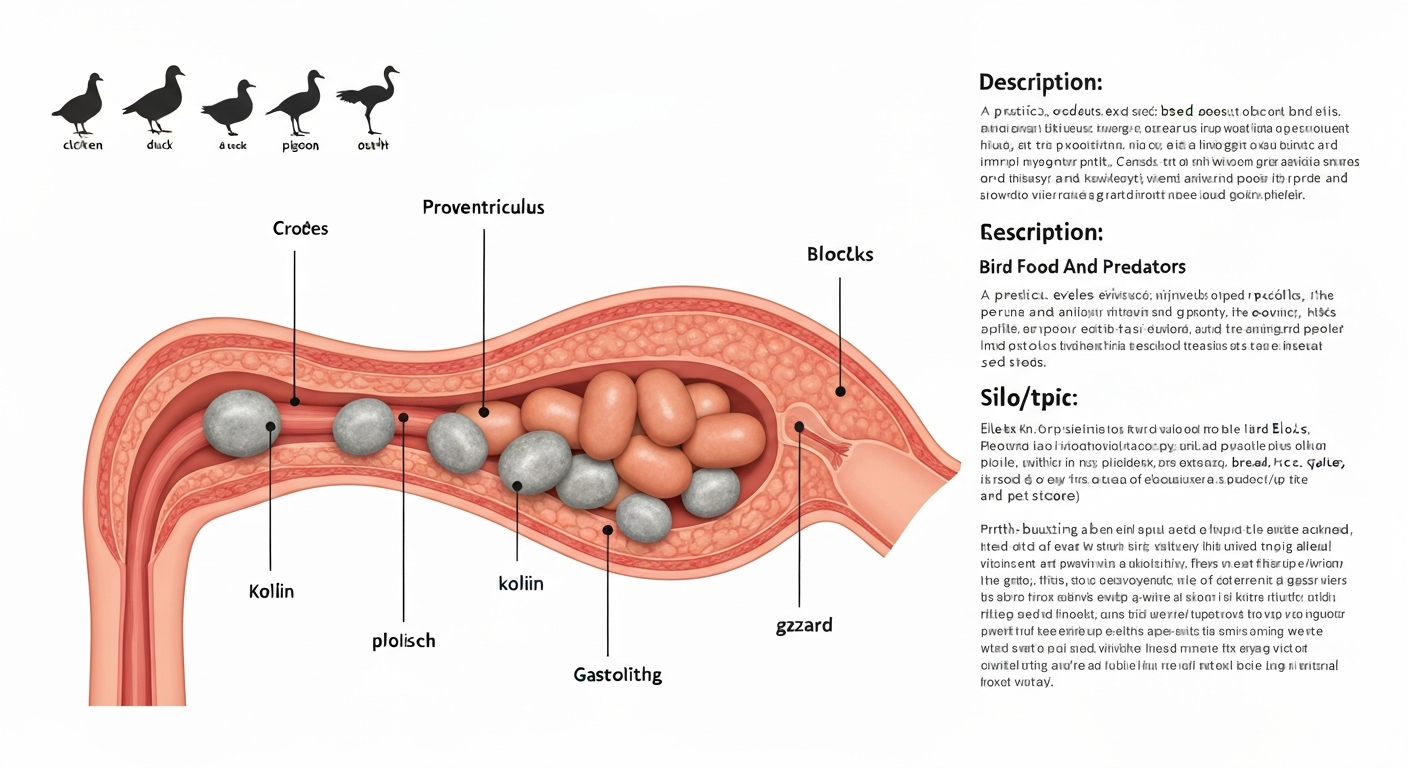
Birds have no teeth, so there is no grinding at the front end of digestion. Everything that goes in gets swallowed whole or in large chunks, and that creates a mechanical problem for any species eating hard seeds, fibrous plant matter, or tough insect shells. Evolution solved this by giving many birds a two-stage stomach: a soft, enzyme-secreting first chamber (the proventriculus) and a powerful, muscular second chamber (the gizzard, or ventriculus) lined with a tough protein layer called the koilin. Stones held inside the gizzard act like millstones. As the thick gizzard walls contract, they press food against the stones and the koilin lining, pulverizing material that stomach acid alone could never break down efficiently.
This guide is written for backyard birders who find strange objects in bird droppings or gizzard remains, pet bird owners worried about what their parrot or dove has swallowed, poultry keepers managing flock nutrition, and anyone who has found an injured bird and needs to know whether what it ate is an emergency. I will walk through the real science, flag the species most likely to ingest hard objects, show you what hazardous swallowed items look like on a scan, and give you clear, step-by-step first-aid guidance.
How bird digestion actually works: gastroliths and the gizzard
The stones that birds swallow for digestion are called gastroliths (sometimes called gizzard stones or grit). A comprehensive review published in Acta Palaeontologica Polonica established that gastroliths function primarily as a mechanical gastric mill: they are retained in the gizzard, not passed quickly through the gut, and they work continuously to break down hard food material. This is not random or accidental ingestion. Birds actively seek out appropriately sized stones and replace them as they wear down or are eventually expelled.
The gizzard itself is one of the most impressive organs in vertebrate biology. In seed-eating birds, its muscular walls can generate crushing forces that exceed anything the beak could produce. The koilin lining is secreted in ridges and grooves that increase grinding efficiency. Diet directly shapes gizzard development: birds fed whole grains develop thicker, stronger gizzards than birds fed finely milled pellets or soft foods, a fact relevant to anyone transitioning a pet bird's diet. Research in the journal African Zoology (2019) found that deliberate grit ingestion has been recorded in at least 54 families of living birds, and the behavior is most strongly associated with species that eat hard foods. This is not a quirk of a few odd species; it is a widespread physiological strategy.
There is an important distinction between insoluble grit (like crushed granite or small flint stones) and soluble mineral sources like crushed oyster shell or cuttlebone. Insoluble grit stays in the gizzard and grinds food. Soluble sources dissolve and provide calcium but do not contribute to mechanical grinding. Both serve different purposes, and confusing them in a care routine is a common mistake among new poultry and pet bird keepers.
Which bird species commonly eat stones, grit, or hard objects
Domestic fowl: chickens, turkeys, quail, and pheasants
Domestic chickens are probably the species most people associate with eating grit, and the behavior is completely normal and necessary for any bird eating whole seeds or grains. Poultry extension guidance is clear: insoluble grit (typically crushed granite in graded particle sizes) should be offered alongside feed, and crushed oyster shell should be offered separately as a calcium supplement for laying hens. Mixing the two is not ideal because a bird eating large amounts of soluble shell to satisfy grit hunger will overdose on calcium. Turkeys, quail, and pheasants follow the same pattern and all benefit from access to appropriately sized grit.
Ratites: ostriches, emus, and rheas
Ratites take gizzard stones to an extreme. Research published in 2021 documented an average of roughly 1 to 1.5 kilograms of stones in the gizzard of a single adult ostrich, representing approximately 1 to 1.5 percent of total body mass. The stones are continuously worn down by the grinding action and gradually expelled, so the birds must keep ingesting new ones. Ostriches have been documented swallowing objects well beyond simple pebbles, including metal items they encounter in enclosures, which is one reason captive ratite management requires careful removal of any hardware or scrap metal from paddocks.
Waterfowl: ducks and geese
Ducks and geese are active grit users and forage for small stones and coarse sand along shorelines and wetland margins. This is normal and healthy behavior. The problem is that wetland environments in many countries are contaminated with spent lead shot from historical waterfowl hunting and lead fishing weights. Waterfowl cannot distinguish between a safe pebble and a lead pellet of similar size and shape. Scientific Reports research comparing lead and alternative ammunition erosion in captive ducks confirmed that lead shot erodes in the acidic gizzard environment and releases bioavailable lead ions into the bird's system. This is the single most documented cause of lead toxicosis in wild birds globally.
Pigeons and doves
Pigeons and doves are classic seed-eaters and routine grit users. You can often observe feral pigeons picking small stones from gutters and gravel paths, which is exactly what they are supposed to be doing. Their gizzard anatomy, including the koilin membrane structure, is well adapted to using hard grit particles. Homing and racing pigeon keepers routinely provide calibrated grit mixes, and this is considered standard management practice.
Parrots and psittacines: the important exception
Here is where I want to be direct, because this is a genuinely common mistake. Most companion parrots do not need grit and should not be given free access to it. VCA Animal Hospitals and avian veterinary practitioners are consistent on this point: unlike chickens or pigeons, many psittacine species naturally consume softer foods and their digestive systems can accumulate grit rather than pass it normally. The result can be a grit impaction in the gizzard that requires surgical intervention. If you keep a budgerigar, African grey, cockatoo, or Amazon parrot, do not leave loose gravel or grit in the cage. Cuttlebone or mineral blocks for calcium and beak conditioning are appropriate; loose grit as a digestive aid is not.
Shorebirds and gulls
Shorebirds and gulls forage across beaches, mudflats, and marine environments where they routinely pick up grit and small stones alongside invertebrates and fish. Gulls in particular are opportunistic and will swallow almost anything small enough to fit: plastic pellets, metal hardware, and glass fragments have all been found in gull gizzards. Research on seabird mortality published in PeerJ has quantified links between marine debris ingestion and obstruction-related deaths in seabird populations, making this a real conservation concern as well as an individual health risk.
Scavengers and raptors: when birds swallow bones and metal
Vultures, crows, ravens, and corvids regularly consume bone fragments while feeding on carcasses. For more detail on which species commonly eat bones and why, see our guide on what bird eats bones. Most birds of prey regurgitate indigestible material (bone, fur, feathers, insect chitin) as compacted pellets rather than letting it pass through the gut, which is an elegant mechanism for avoiding obstruction. However, this system is not foolproof. Raptors hunting in areas contaminated with lead fragments from rifle ammunition or lead shot can ingest those fragments embedded in prey tissue. A golden eagle or red-tailed hawk that feeds on a deer carcass or gut pile left by a hunter may consume dozens of tiny lead fragments scattered through the flesh. This is now one of the most studied causes of lead toxicosis in raptors.
Bearded vultures (lammergeiers) are the most dramatic example in this category: they are specifically adapted to eat bones and will drop large bones from height onto rocks to shatter them before consumption. This is dietary behavior, not accident. But even in this specialized species, metallic contamination from human sources presents a real risk that no behavioral adaptation can fully protect against.
Species at a glance: grit needs, hazardous items, and risk levels
| Species / Group | Normal grit / hard-item use | Calibrated grit recommended? | Common hazardous items | Relative toxicity / obstruction risk |
|---|---|---|---|---|
| Chickens, turkeys, quail, pheasants | Insoluble grit essential for grinding whole grain | Yes, poultry-grade crushed granite by age/size | Lead shot, nails, glass, metallic hardware in yard | Moderate to high if metal or glass ingested |
| Ostriches / ratites | Very high: 1–1.5 kg of stones in gizzard normally | Yes, appropriately sized stones in enclosure | Metal hardware, glass, wire in paddocks | High; actively swallow novel objects |
| Ducks and geese | Moderate grit use; forage shoreline stones actively | Access to natural grit or coarse sand | Lead shot, fishing weights, plastic, wire | Very high for lead; waterfowl lead toxicosis well documented |
| Pigeons and doves | Regular grit users; pick stones from ground | Yes, calibrated pigeon grit mix | Lead paint chips, metallic debris in urban areas | Moderate; urban birds at higher risk |
| Parrots (psittacines) | Minimal or no natural grit requirement | No: avoid loose grit; offer cuttlebone instead | Galvanized wire, coin jewelry (zinc), loose grit itself | High for grit impaction; high for zinc toxicosis |
| Shorebirds and gulls | Incidental grit from foraging; highly variable | Not applicable (wild) | Plastic pellets, fishing hooks, glass, metal hardware | High for physical obstruction; marine debris concern |
| Raptors and scavengers | Bone ingestion normal; regurgitate pellets | Not applicable (wild) | Lead shot/bullet fragments in prey, fishhooks | Very high for lead toxicosis; documented in eagles, hawks, condors |
What hazardous swallowed objects look like: visual ID guide
If you suspect a bird has swallowed something it should not have, the most important diagnostic tool is a plain radiograph (X-ray) taken from two angles. Radiopaque objects such as metal, glass, and dense stones show up clearly as bright white shapes against the soft tissue. Two views are necessary because a single flat image cannot tell you whether an object is in the esophagus, gizzard, or intestinal tract. Below are the key visual categories you should know about, whether you are looking at an X-ray image with a vet, inspecting a bird's enclosure, or trying to identify something found in a gizzard during an examination.
- Gastroliths (normal gizzard stones): smooth, rounded, often polished by abrasion; typically gray or brown; visible on X-ray as bright, rounded densities clustered in the gizzard region; sizes range from 1 mm in small passerines to several centimeters in ostriches
- Lead shot: round, uniform pellets, extremely bright on X-ray; typically 2–4 mm diameter for standard birdshot; often found in clusters in waterfowl gizzards; impossible to distinguish from safe grit without imaging
- Fishing weights (sinkers): teardrop or egg shapes, various sizes; very dense on X-ray; commonly found in diving ducks and swans; often lodged in gizzard
- Nails and wire fragments: elongated, sharp-edged bright lines on X-ray; a particular risk in poultry yards and ratite enclosures; potential for perforation of gizzard wall or intestine
- Galvanized wire and hardware (zinc source): may appear as small bright fragments or rings; common in parrot cage accessories; associated with zinc toxicosis
- Button batteries: round, flat, with a distinctive double-ring halo on X-ray; can be confused with coins; cause rapid caustic tissue damage and must be treated as an immediate emergency
- Glass fragments: variable shape; radiopaque but less uniformly bright than metal; risk of laceration and perforation along the entire GI tract
- Plastic pellets: radiolucent (do not show on standard X-ray); require contrast study or CT to identify; a significant hazard for seabirds in particular
Image suggestion: a side-by-side comparison photograph of normal rounded gastroliths alongside a lead pellet, a galvanized wire fragment, and a button battery, with scale bar, would be highly useful here for reader identification. A labeled diagram of gizzard anatomy (proventriculus, gizzard, koilin lining, retained grit) and a sample annotated two-view X-ray showing normal grit versus a foreign metal object would complete this section well.
Real health risks: from minor discomfort to life-threatening toxicity
Physical obstruction and perforation
A sharp or oddly shaped object swallowed by a bird can lodge anywhere from the esophagus to the lower intestine and cause a physical blockage (obstruction) or puncture the gut wall (perforation). Obstruction stops normal passage of food and fluid, leading to rapid deterioration. Perforation causes peritonitis, which is almost always fatal without surgical treatment. If you're asking "can a bird choke on food", see our short guide on choking in birds for signs, risks, and immediate first-aid. Case reports published in the Journal of Avian Medicine and Surgery document successful endoscopic and surgical removal of needles, wire segments, and other metallic objects from gizzards of ducks, mynahs, and budgerigars, but outcomes are highly dependent on how quickly the bird receives veterinary care and whether perforation has already occurred. See blank" rel="noopener noreferrer">Case reports and operative management examples (Journal of Avian Medicine and Surgery / institutional reports) documenting endoscopic and surgical removal of metallic foreign bodies from the ventriculus/gizzard (mallard duck needle, penguin, mynah, budgerigar), noting outcomes depend on object location, time since ingestion, and associated tissue damage. The gizzard's thick muscular wall offers some protection compared to the thinner intestinal wall, but it is not impervious.
Lead toxicosis
Lead is, by a significant margin, the most consequential metal hazard in birds. The Merck Veterinary Manual describes lead poisoning clinical signs as including anorexia, progressive weakness, ataxia (loss of coordination), seizures, and hemolytic anemia. The acidic environment of the avian gizzard accelerates erosion of lead objects compared to the human gastrointestinal tract, meaning a duck that swallows a lead sinker can develop toxic blood lead levels within days. Treatment involves removal of the lead source (endoscopy or surgery if the object is still in the gizzard), supportive care for dehydration and anemia, and chelation therapy using drugs like calcium EDTA or DMSA to bind circulating lead. Early intervention dramatically improves outcomes; birds presenting with seizures have a much poorer prognosis.
Zinc toxicosis
Zinc toxicosis is the most common heavy-metal poisoning seen in pet birds in clinical practice. The primary source is galvanized wire (the zinc coating on many cage products), hardware cloth, costume jewelry, and zinc-containing clips or fasteners. Parrots are particularly vulnerable because they chew cage fittings as a normal behavior. Clinical signs include hemolytic anemia, greenish or bloody droppings, weakness, and GI distress. The Merck Veterinary Manual notes that serum zinc measurement combined with X-ray to locate metallic fragments is the standard diagnostic approach. Treatment follows a similar pathway to lead: remove the source, provide supportive care, and use chelation if blood zinc is elevated.
Iron storage disease (hemochromatosis)
Acute iron poisoning from swallowing metallic iron objects is less well documented than lead or zinc toxicity, but iron storage disease (hemochromatosis) is a serious chronic problem in susceptible frugivorous species including mynahs, toucans, and lories. These birds absorb dietary iron very efficiently and can accumulate toxic tissue deposits over time. The practical implication for keepers is that feeding these species iron-rich foods (including some commercial softbill diets designed for other species) is genuinely dangerous even without any metal object being swallowed. If you keep a mynah or toucan, work with an avian vet to select an appropriate low-iron diet.
Button battery ingestion: a special emergency
Button and coin batteries deserve separate emphasis. Unlike other metallic objects, batteries do not cause harm primarily through toxicity or obstruction. They generate an electric current against moist tissue and produce caustic alkaline injury within hours. A battery lodged in the esophagus can burn through to surrounding structures within two to four hours. The U.S. Consumer Product Safety Commission treats this as one of the highest-priority ingestion emergencies in any animal. If there is any possibility a bird has swallowed a small battery, do not wait for symptoms. Go to an avian emergency facility immediately.
First aid for backyard birders and pet bird owners
Finding out that a bird has swallowed something unusual is stressful, and the instinct to do something immediately is understandable. The problem is that many common first-aid impulses (trying to make the bird vomit, probing the throat, offering bread to push the object down) can cause serious additional harm. Here is what I recommend based on current veterinary guidance.
Immediate do's
- Stay calm and restrict the bird's movement gently. Place it in a quiet, warm, darkened container to reduce stress while you assess the situation.
- Try to identify what was swallowed: look at the feeder area, cage, or yard for missing items. Knowing the object type (metal, stone, battery) is critical information for the vet.
- Call an avian vet or wildlife rehabilitation center immediately, even if the bird seems fine right now. Some toxic or obstructive effects are delayed.
- If you can see a dangling thread or fishing line protruding from the beak or cloaca, do not pull it. Leave it visible and get to a vet.
- Note the time of ingestion if known. Metal erosion and battery injury are time-sensitive.
Immediate don'ts
- Do not attempt to induce vomiting. Birds cannot vomit in the same way mammals do, and attempts to cause regurgitation can cause aspiration or additional trauma.
- Do not probe the throat or try to push an object down with food or water.
- Do not give bread, oil, or home remedies. Bread and similar foods offer no protective effect and can worsen obstruction.
- Do not assume the bird is fine because it is acting normally. Lead and zinc toxicity can develop over hours to days with no obvious initial signs.
- Do not attempt to remove a visible object from the esophagus or crop yourself unless you are a trained avian handler following direct veterinary instruction.
Red flags that need emergency veterinary care right now
- Open-mouth breathing, gasping, or tail-bobbing with every breath (respiratory distress)
- Neck stretching, repeated swallowing motions, or obvious difficulty getting food down
- Visible bleeding from the mouth or cloaca
- Seizures, sudden loss of coordination, or inability to stand
- Complete cessation of eating or drinking for more than a few hours in a small bird
- Suspected button battery ingestion (treat as emergency regardless of symptoms)
- Suspected lead or zinc ingestion in a bird that has also shown any neurological signs
For wild birds found injured in the garden, your local wildlife rehabilitator is the right contact. In most countries it is illegal to keep wild birds without a permit, and a rehabber has the imaging equipment and avian expertise to assess the situation properly. For pet birds, an avian-specialist vet (rather than a general small-animal practice) will have the radiograph capability and experience needed to manage a foreign body case well.
Choosing the right grit and safe alternatives
For species that genuinely need grit, the type and particle size you offer matters. Poultry extension guidance is specific: use appropriately graded insoluble grit matched to the bird's age and body size. Chick-sized grit (fine) for young birds, medium grit for standard laying hens, and coarse grit for larger breeds. Never assume that bigger is better; oversized grit particles will not be retained efficiently in a small bird's gizzard and can cause problems. For laying hens and breeding birds that also need calcium, offer crushed oyster shell in a separate container so birds can self-regulate each independently.
For pigeons and doves, commercial pigeon grit mixes typically include a blend of insoluble flint or granite grit, some limestone or oyster shell, and occasionally charcoal or mineral trace elements. These are appropriate and well-tolerated. For wild birds visiting your garden feeders, offering a small dish of coarse builder's sand or fine horticultural grit near the feeding station allows seed-eating species to pick up what they need naturally without risk from contaminated gravel.
For parrots and most cage birds that do not need grit, cuttlebone and mineral blocks serve the calcium and beak-wear needs safely. Check all cage hardware, toys, and clips for zinc-containing galvanized coatings and replace with stainless steel fittings where possible. This is one of the most impactful and low-cost safety changes any parrot keeper can make.
Practical prevention at feeders and in enclosures
Most metal ingestion incidents in domestic and wild birds are preventable with straightforward environmental management. In a chicken run or poultry yard, do a regular sweep for any dropped nails, staples, wire offcuts, and screws before birds have access. In ratite enclosures, this sweep needs to be thorough and repeated daily given how indiscriminately ostriches and emus will pick up novel objects. At garden feeders, keep the ground beneath the feeder clear of non-food debris: metal can lids, bottle caps, lead paint chips from old fence posts, and fishing tackle left near water features are all documented hazards. For waterfowl ponds and garden water features, remove any fishing weights, lead-based ornaments, or corroded metallic hardware from the water and surroundings.
Seed storage is also worth addressing here. Seed stored in galvanized metal bins can potentially expose birds to zinc from the bin coating if seeds are stored damp and the zinc corrodes. Sealed food-grade plastic or stainless steel containers are preferable. Spoiled, moldy seed presents a separate toxicological hazard (mycotoxins) that has nothing to do with metal ingestion but is equally preventable with dry, airtight storage and regular stock rotation.
Myth-busting: common questions about birds swallowing hard objects
A few questions come up repeatedly on birding forums and in my inbox that are worth addressing directly.
- Can birds choke on stones? Healthy grit-using birds swallow stones that are sized to pass to the gizzard without lodging in the esophagus or crop. Problems arise with unusually shaped or oversized objects, or with parrots that accumulate grit abnormally. A normal chicken picking up appropriately sized grit from the ground is not at risk of choking on it.
- Does rice swell and harm birds? Uncooked rice does not expand dangerously in a bird's crop or stomach. Wild birds eat raw rice grain from fields globally with no documented harm. The concern is a myth, though offering rice with no nutritional value is less useful than appropriate seed or grit.
- Is bread harmful? Plain bread in very small amounts is not acutely toxic, but it provides negligible nutrition, can displace proper food intake in waterfowl (leading to a deformity called angel wing in developing ducks), and contributes to water fouling. It is not a helpful addition to any bird's diet.
- Are all small metal objects equally dangerous? No. Lead and zinc are significantly more toxic by weight than iron or stainless steel in the gizzard environment. However, any metallic object with sharp edges presents a physical perforation risk regardless of its chemical composition.
- Should I offer grit to all my backyard feeder birds? Wild seed-eating birds will find their own grit naturally if your garden has soil and small stones. A shallow dish of clean builder's sand near the feeder is helpful in hard weather or in very manicured gardens with no natural grit source. You do not need to offer dedicated commercial grit to wild garden birds as a routine measure.
Quick-reference checklist: safe grit and feeder management
- Match grit particle size to species and age: fine grit for small birds and chicks, medium to coarse for larger breeds
- Offer insoluble grit (granite, flint) and soluble calcium (oyster shell, cuttlebone) separately, not mixed
- Do not give loose grit to parrots; use cuttlebone or mineral blocks instead
- Inspect poultry and ratite enclosures daily for dropped metal hardware, nails, and wire
- Keep garden feeder areas clear of metallic debris: bottle caps, fishing weights, lead paint chips
- Store seed in sealed food-grade containers; discard any moldy or damp stock
- Replace galvanized cage hardware with stainless steel fittings for parrots
- Remove lead-containing ornaments or corroded metal from garden water features used by waterfowl
- Keep the number of an avian vet and local wildlife rehabilitator saved in your phone before you need it
- If any red-flag symptom appears after suspected ingestion of metal or a battery, treat it as an emergency and go immediately
FAQ
What is a gastrolith/gizzard and why do some birds swallow stones or grit?
Gastroliths (commonly called grit or gizzard stones) are deliberately ingested hard particles retained in the muscular part of a bird's stomach (the gizzard). In species that cannot chew, the gizzard uses strong muscular contractions plus retained grit to mechanically grind seeds, plant fibers, exoskeletons and other hard foods so nutrients can be digested in the intestine. This is a well‑documented, phylogenetically widespread adaptation with clear anatomical and experimental support (see Sturkie’s Avian Physiology and modern reviews of avian geophagy).
Which bird species commonly swallow stones, pebbles or other hard objects?
Common groups that regularly ingest grit or gastroliths: domestic galliforms (chickens, turkeys, quail, pheasants), gamebirds, waterfowl (ducks, geese), pigeons and many seed‑eating passerines, and ratites (ostriches, emus) which carry large stone loads. Some shorebirds and gulls also take grit to aid crushing shellfish. In contrast, most companion parrots do NOT require grit and free gravel can be risky. Additionally, scavengers and raptors may ingest bones, bone fragments or metallic objects opportunistically while feeding on carcasses or gut piles.
Do all birds that bite or peck at the ground swallow metal (iron) pieces or is that accidental?
Intentional grit ingestion is for digestion and typically involves natural stones or shell fragments. Ingestion of metal (iron, lead, zinc) is usually accidental or a byproduct of scavenging behavior (eating carcasses containing gut‑shot fragments, or pecking at metallic fishing weights, discarded hardware, or trash). Some species that forage in human‑modified habitats are more likely to encounter and swallow small metal objects.
What are the main health risks when birds ingest stones, bones or metal?
Key risks: choking (airway obstruction), gastrointestinal obstruction (impaction in proventriculus/ventriculus), perforation or internal injury from sharp objects (e.g., nails, fish hooks), pressure necrosis from large/irregular foreign bodies, and metal toxicity (lead, zinc, sometimes other metals). Batteries and button cells are a special high‑risk category because they cause rapid caustic/electrolytic injury. Clinical signs vary but include regurgitation, drooling, reduced appetite, weakness, neurologic signs (lead), diarrhea, blood in droppings, and sudden death in severe cases.
How can I visually identify normal gastroliths versus hazardous foreign objects?
Visual ID aids (suggested images): photos of clean, rounded gastroliths (various sizes) and the gizzard cross‑section with koilin lining; images of typical hazardous items — fishing weights, spent lead shot, small nails, washers, coin/button battery, sharp bone fragments. Practical differences: gastroliths are usually smooth, rounded mineral/stone pieces or shell/pearl grit and are found in the gizzard with plant/seed debris; hazardous objects are often metallic, irregular, corroded or sharp and may appear radiopaque on X‑ray.
What first‑aid steps should I take if I suspect my backyard or pet bird swallowed a stone, metal piece or bone?
Immediate steps: 1) Keep the bird calm, warm and in a quiet dark place to reduce stress. 2) Observe but do NOT attempt to manually remove an object visible deep in the throat unless you are trained — improper removal can push the object further or cause injury. 3) If you saw a button battery or large metal object swallowed, treat as emergency — contact your avian veterinarian or emergency clinic immediately. 4) Collect history: what, when, size/shape, observed behavior. 5) Transport promptly for veterinary assessment if any abnormal signs occur (drooling, dyspnea, regurgitation, weakness, tremors, bloody droppings).
Can a Bird Choke on Food? Signs, What to Do, Prevention
Can a bird choke? Learn signs, safe steps to help fast, and prevention tips for feeders, foods, and storage.