Yes, most backyard birds can eat banana safely as an occasional treat. It's not toxic, it's easy to digest in small amounts, and plenty of fruit-loving species will happily take it from a feeder platform. The catch is that banana is high in sugar, goes soft and moldy fast in warm weather, and can attract insects and rodents if you're not careful about how much you put out and how quickly you clean it up.
Can Bird Eat Banana? Safety, How Much, and Best Ways to Feed

Maya Bennett
29 May 2026
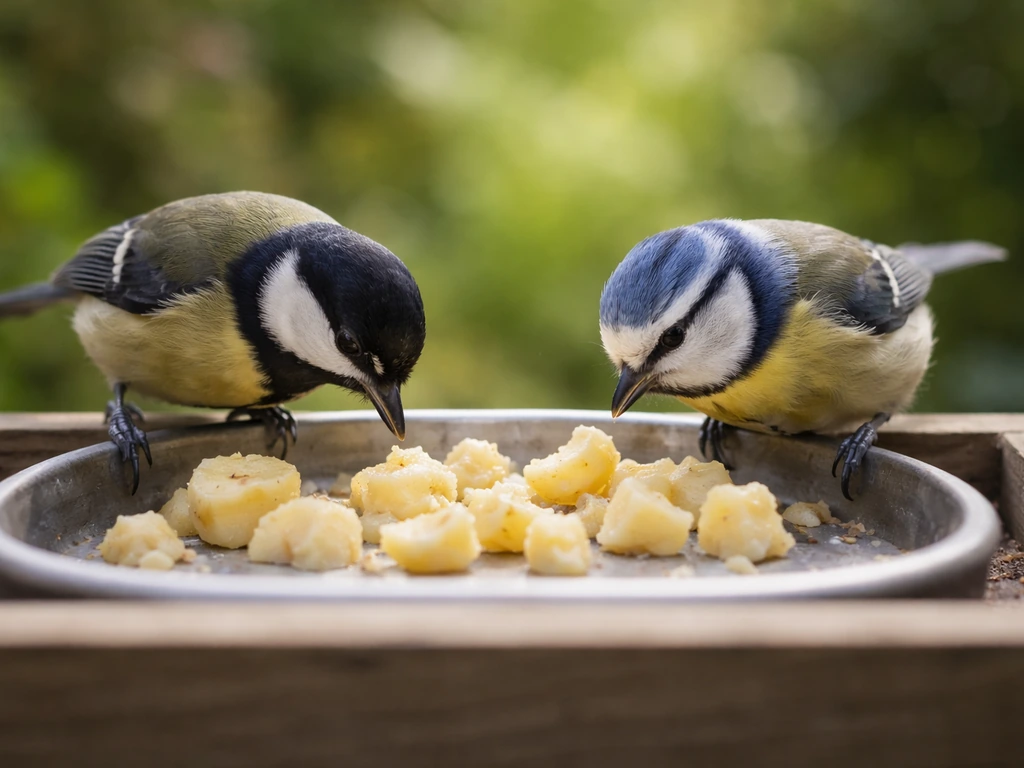
Can birds eat banana? The direct answer (and when to skip it)
Banana is safe for most birds in small quantities. It's soft, easy to eat, provides quick energy from natural sugars, and contains potassium and B vitamins. That said, 'safe' doesn't mean 'ideal' or 'unlimited.' Banana should be treated the same way you'd treat any sugary fruit at the feeder: a small piece, offered fresh, removed before it spoils. If it's sitting out on a hot afternoon and starting to brown and ooze, take it down. The Tufts Wildlife Clinic's general rule applies here perfectly: if it's too old for you to eat, it's too old for a bird.
Skip banana (or go very sparingly) in these situations: if you're already putting out a lot of other fruit at the same time, if your feeder area has had a pest problem recently, if it's a very hot and humid day with no shade over your platform feeder, or if you're feeding baby birds under human care. In the last case, stick to species-appropriate foods and get guidance from a licensed wildlife rehabber.
Which birds will actually eat banana at your feeder
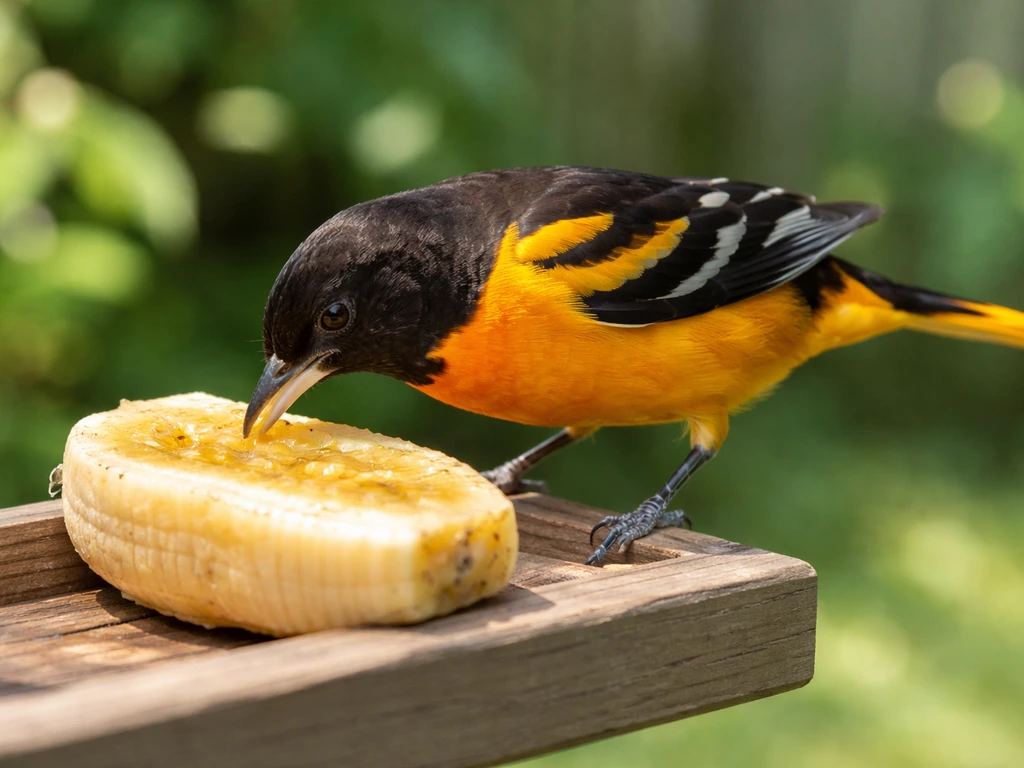
Not every bird that visits your yard is going to bother with banana. Seed-focused birds like sparrows and juncos will mostly ignore it. The birds most likely to go for it are fruit-eating and omnivorous species. Baltimore Orioles are the classic example: Mass Audubon specifically calls them out as especially fond of fruit, and they'll take banana from a platform or spike feeder without hesitation. Beyond orioles, the following birds are reliable banana takers in North American backyards.
- Baltimore Orioles and other oriole species
- Gray Catbirds
- Northern Mockingbirds
- Brown Thrashers
- American Robins
- Cedar Waxwings
- House Finches (occasionally, especially ripe fruit)
- Woodpeckers (particularly Red-bellied Woodpeckers)
- European Starlings (will eat almost anything soft)
Catbirds, thrashers, and mockingbirds are especially worth targeting with fruit offerings since they're big fans of soft, fleshy fruits year-round. The U.S. Fish and Wildlife Service notes these species as natural fruit eaters, so banana fits naturally into what they're already looking for. If you're in a warmer climate or the tropics, a much wider range of species will take fruit, including tanagers and parakeets.
How to offer banana: fresh, dried, with peel or without
Fresh vs. dried banana
Fresh banana is the better choice for most situations. It's soft, birds can eat it easily, and it hasn't been processed with added sugar or preservatives. Dried banana chips can work, but check the label carefully. Most commercial dried banana chips are fried in oil and coated with sugar, which makes them a worse option than fresh. If you use dried banana, look for unsweetened, unsulfured dried banana with no additives, and break pieces small enough that a bird can manage them without struggling.
Peel or no peel?
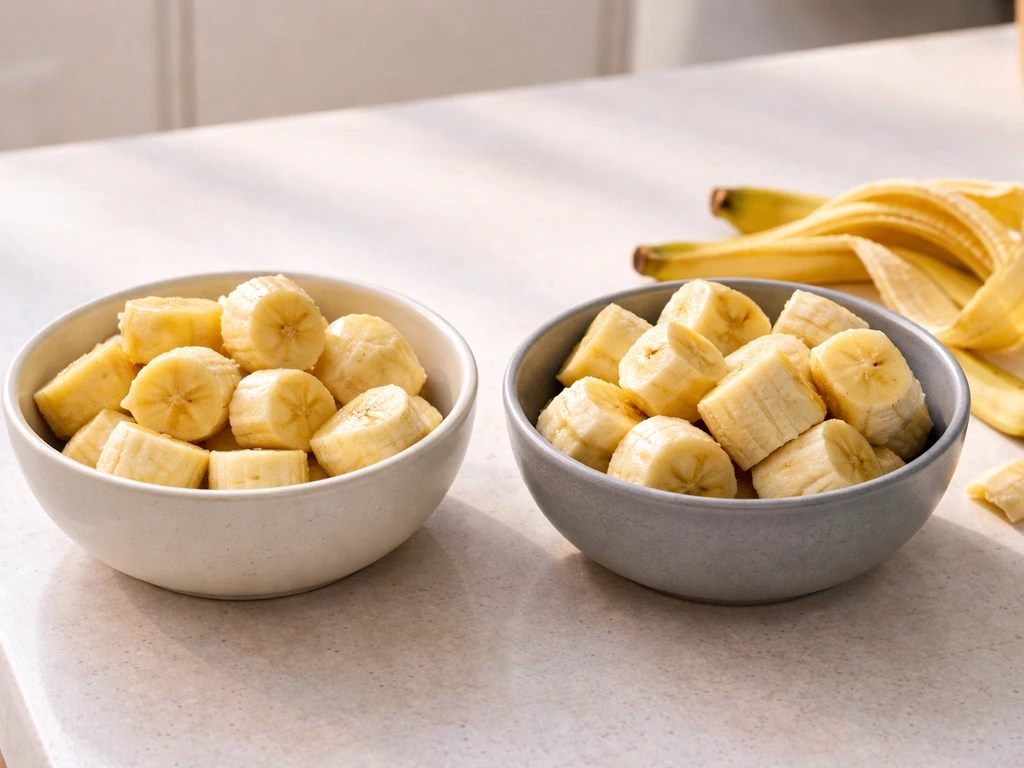
Remove the peel before offering banana to birds. The peel itself isn't toxic, but it's tough, not very digestible, and some banana peels carry pesticide residue on the surface if the fruit wasn't organically grown. The soft fruit inside is what birds are after anyway, so peel it and cut it up. If you want to use the peel as a natural insect attractor (some gardeners do this to draw fruit flies for insectivorous birds), you can lay it face-up away from the main feeder, but don't leave it near a food station where it'll just rot and attract pests.
Serving size and presentation
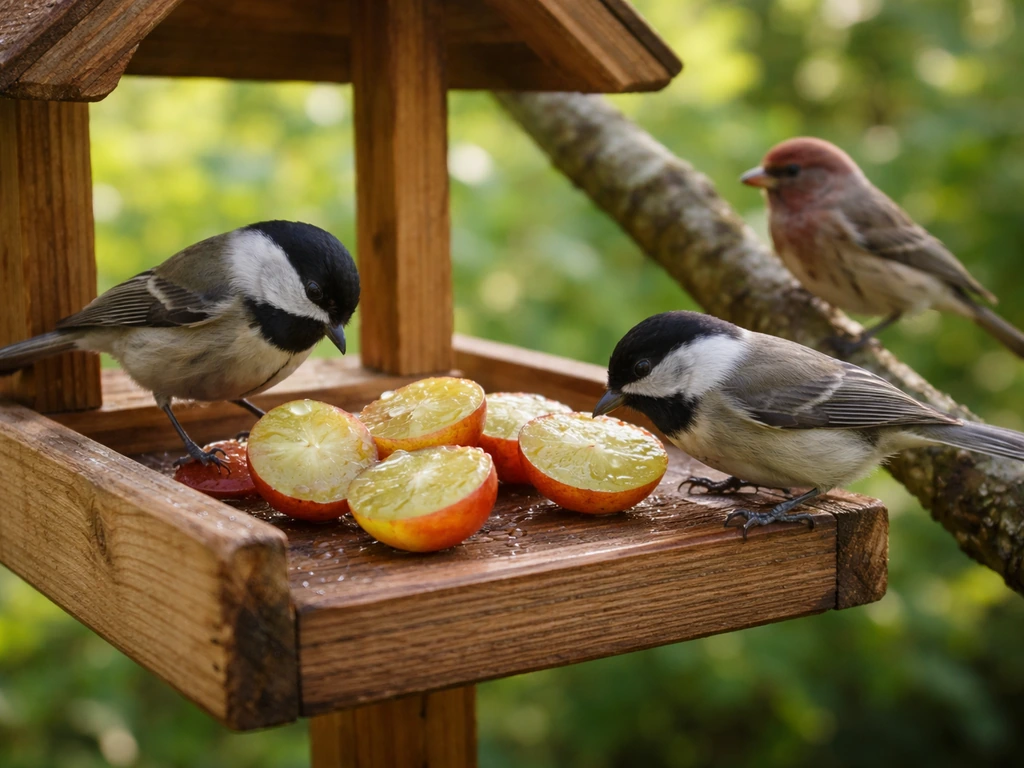
Cut banana into small pieces, roughly half-inch to one-inch chunks. Smaller is safer: it reduces any choking risk and means the pieces get eaten quickly before they can spoil. Place banana on a flat platform feeder or an oriole spike/dish feeder rather than in a tube or hopper, where it will just make a mess and be impossible to clean properly. A small dish or tray feeder works well. Only put out a tablespoon or two at a time per feeding session, especially in warm weather.
How much banana and how often to feed it
Banana is a treat, not a staple. You can use the same general approach to fresh fruit when deciding whether a bird can eat watermelon, but moderation and cleanliness matter just as much can bird eat watermelon. Think of it the same way you'd think about offering fruit in general: it supplements a bird's diet, it doesn't replace it. A wild bird's diet is built around seeds, insects, and native berries depending on species and season.
Banana doesn't provide complete protein or the fat content birds need for energy during migration or cold weather. Keep banana to no more than 10 to 15 percent of what you're putting out in total, and offer it a few times a week at most rather than every single day.
There's also a behavioral consideration worth taking seriously. Agencies like Mass.gov caution that regular supplemental feeding can cause birds to rely on human-provided food instead of foraging naturally. That doesn't mean you should never feed birds fruit, but it's a reminder that variety and moderation keep birds healthier long-term. Rotate what you're offering: some days seed, some days mealworms for your insect eaters, and occasionally a small piece of fruit like banana as a bonus.
Risks worth knowing about: sugar, choking, pests, and mold
Sugar load
Banana is naturally sweet, and a ripe banana has more sugar than most other fruits you might offer at a feeder. This isn't a crisis in small amounts, but it becomes a problem if banana becomes a daily staple. Birds that eat too much sugar and not enough protein or fat can end up with nutritional imbalances over time, particularly in captive or semi-captive situations. For wild feeder birds that are only getting a bite or two alongside everything else they're finding in the wild, the sugar risk is low. Still, overripe bananas with very high sugar content are best avoided or offered only in tiny pieces.
Choking and piece size
Soft fresh banana cut into small pieces is not a significant choking risk for most birds. The concern would be putting out large chunks for small birds, or using thick dried banana slices that are hard and difficult to break apart. Stick to small, soft pieces and you're fine.
Mold and spoilage
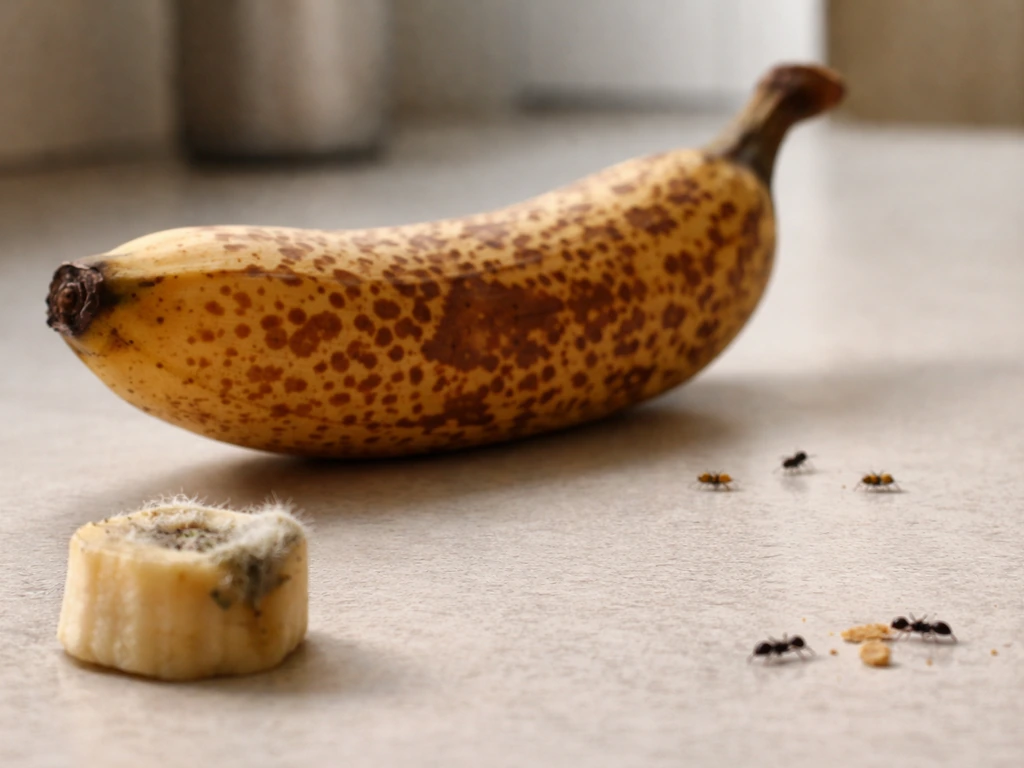
This is the biggest practical risk with banana. Banana goes soft, brown, and then moldy very quickly in warm weather, especially in direct sun. Mold on fruit can be harmful to birds, and All About Birds specifically warns that moldy or spoiled food is unhealthy for birds and also for any pets that might access the feeder area. The Tufts rule of thumb is worth repeating: if you wouldn't eat it, don't put it out. In practice, that means checking your fruit feeder every couple of hours in summer heat and removing anything that's gone brown and mushy. Don't offer banana during a heat wave unless you can monitor it closely.
Pests: insects and rodents
Sweet, soft fruit is a magnet for fruit flies, wasps, ants, and rodents. All of these can become a real problem around a feeder. Fruit flies are mostly a nuisance, but ants and wasps can drive birds away from the feeder entirely. Rodents are a bigger concern because they carry disease and attract predators to the feeder area, which creates risk for ground-feeding birds.
The National Wildlife Federation recommends using ant guards on feeder poles as a standard precaution. Position your banana feeder away from dense cover where rodents can hide, and never leave soft fruit out overnight. Tufts also notes that poorly managed feeding stations can create 'nuisance' wildlife situations by drawing animals that wouldn't otherwise concentrate in one spot.
Feeder hygiene and cleanup after offering fruit
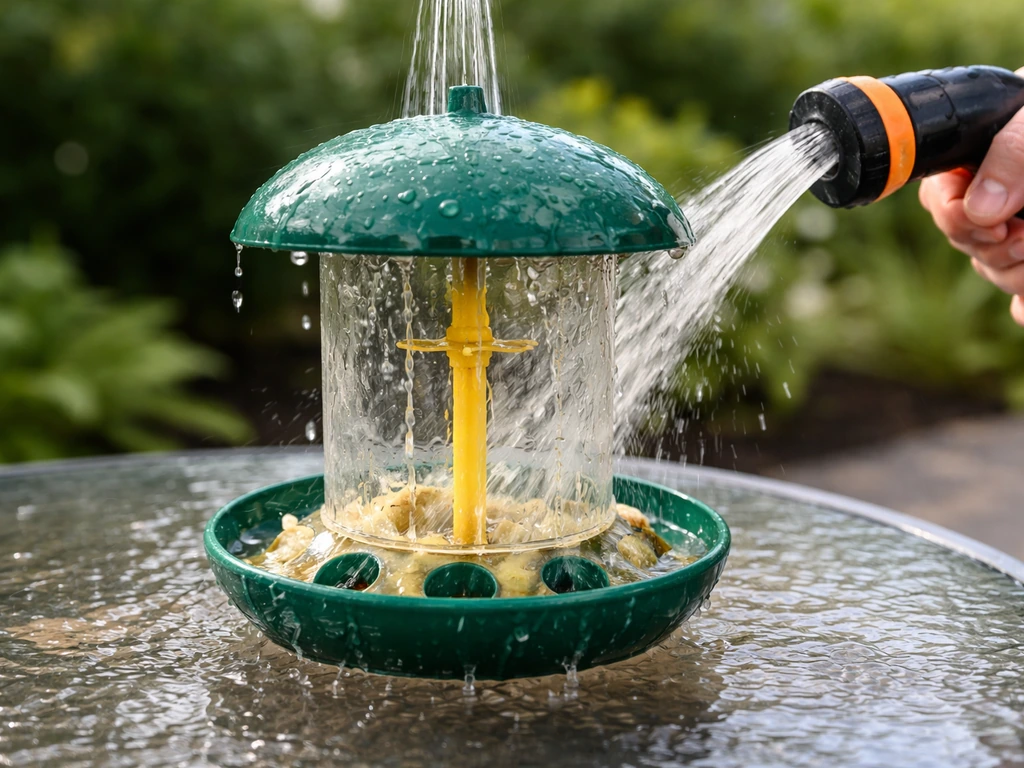
Fruit feeders need more frequent cleaning than seed feeders because soft fruit leaves sticky residue and bacteria multiply faster in warm conditions. The U.S. Fish and Wildlife Service cites the Cornell Lab's recommendation to clean feeders at least once every two weeks as a baseline, but with fruit, especially in summer, you should be cleaning the platform or dish after every use or at minimum every two to three days. Virginia DWR notes that sugar-water feeders need cleaning every two to five days depending on temperature, and the same logic applies to fruit feeders.
For the actual cleaning process, the standard recommended approach from multiple sources including Cornell Lab, Audubon, Project FeederWatch, Clemson HGIC, and Mississippi State Extension is consistent: use a solution of one part bleach to nine parts water. Soak feeder parts for ten minutes, scrub off any debris, then rinse thoroughly with clean water and allow to dry completely before refilling. This 10% bleach solution has been shown to kill salmonella and other pathogens that can accumulate on feeders. Don't skip the thorough rinse step. Bleach residue is harmful to birds.
- Remove any remaining banana and dispose of it in a sealed bin, not open compost near the feeder.
- Rinse the platform or dish with hot water to remove sticky residue.
- Wash with warm soapy water and a stiff brush.
- Soak in a 1: 9 bleach-to-water solution for 10 minutes.
- Rinse thoroughly with clean water until no bleach smell remains.
- Allow to air dry completely before putting food back out.
- Wipe down the feeder pole and any surrounding area that caught drips.
If you have dogs or outdoor cats that can access your yard, this cleanup routine matters even more. All About Birds explicitly flags that spoiled food at feeders is a health risk for outside pets, not just birds. A dog that sniffs around a sticky, moldy feeder platform is getting exposure to the same pathogens you're trying to prevent in your birds.
Better fruit options and what to feed different bird types
Banana is a decent option, but it's not the most practical or nutritious fruit you can offer at a feeder. Several other fruits hold up better in heat, attract a wider range of species, and spoil more slowly. Here's how banana compares to other common fruit options.
| Fruit | Best for | Spoilage speed | Pest risk | Notes |
|---|---|---|---|---|
| Banana (fresh) | Orioles, catbirds, thrashers, robins | Fast (hours in heat) | High (attracts fruit flies, ants) | Cut small, remove quickly, peel first |
| Grapes (halved) | Robins, waxwings, mockingbirds | Moderate | Moderate | Halve to prevent rolling off feeder |
| Watermelon (cubed) | Orioles, tanagers, woodpeckers | Fast | High | Great in summer heat; clean up same day |
| Blueberries | Thrushes, waxwings, mockingbirds | Moderate | Low-moderate | One of the best all-around fruit options |
| Apple slices | Robins, woodpeckers, waxwings | Moderate-slow | Moderate | Skins can be left on; cores removed |
| Raisins (soaked) | Robins, catbirds, bluebirds | Slow | Low | Soak in water first to soften; no added sugar varieties only |
If you're feeding primarily insect-eating birds like bluebirds or wrens, mealworms are a far better treat than any fruit, including banana. Fruit sugars don't provide much for birds that are built around protein from insects. For seed-focused birds like sparrows, finches, and chickadees, skip the fruit entirely and focus on high-quality seed mixes and occasional suet. Banana is best aimed at the fruit-loving species listed above, and even for them it works better as one item in a rotation rather than the main attraction.
It's also worth noting that bread, which is another common 'can birds eat this' question, is a much worse option than banana. Banana at least has real nutritional value in small amounts. Other human foods like cheese or processed snacks are similarly low on the list of things worth offering. But if you're wondering can bird eat cheese, it's best to choose safer options and avoid frequent dairy treats. When in doubt, stick to fresh, unsweetened, unprocessed fruits and let birds' natural foraging fill in the rest. If you're wondering about other fruits, grapes are the kind of food people often ask about, but they need to be handled very carefully fresh, unsweetened, unprocessed fruits.
Quick decision checklist before you put banana out
- Is it fresh, ripe but not overripe, and free of mold? If not, skip it.
- Have you peeled it and cut it into small (half-inch to one-inch) pieces?
- Is it going on a platform or dish feeder you can easily clean, not a tube or hopper?
- Are you putting out only a small amount (a tablespoon or two)?
- Can you check back in a few hours to remove what hasn't been eaten?
- Is it a cool enough day that fruit won't turn in under two hours in direct sun? If it's very hot, place the feeder in shade.
- Do you have a cleaning plan for the feeder after the session?
- Is banana just one item in the mix, not the only food you're offering?
If you can check all of those boxes, go ahead and put out a small piece of banana. The birds that want it will find it quickly, and you'll be doing it in a way that keeps the feeder healthy and your yard free of the pest and mold problems that make fruit feeding go wrong.
FAQ
Can a bird eat banana peel, and is it safer than eating the fruit?
Birds can technically chew peel, but it is tough and less digestible than the banana flesh. If you do offer peel, remove it from the main feeding area so it does not rot there, and avoid using peel from fruit that may have pesticide residue, especially if it is not organic.
Is overripe banana okay for birds, or should I avoid it?
Avoid very overripe banana that is very soft and leaking, because it tends to spoil quickly and attracts insects. If you use it, cut the pieces small and remove them promptly after feeding, and never leave it out in direct sun or overnight.
How much banana can I put out without causing problems like pests and mold?
Start with a tablespoon or two per session, and do not increase the amount if you see fruit flies, ants, or wasps gathering. The goal is for birds to finish the fruit quickly, so you can remove leftovers before they brown and mush.
Can I leave banana out overnight?
No, do not leave soft fruit out overnight. Warm conditions speed spoilage and increase mold risk, and leaving it can also attract rodents and predators that concentrate around the feeder area.
What is the best way to offer banana if I want to reduce choking risk?
Offer small, soft pieces (about half-inch to one-inch) and do not use thick dried slices that are hard to break apart. Smaller pieces lower the chance of a small bird struggling and help the fruit get eaten before it spoils.
Are there birds that should not get banana, or birds I should avoid feeding it to?
In general, banana is best reserved for fruit-eating and omnivorous species. Seed-focused birds often ignore it, so offering banana as a primary food there can create cleanup and pest issues without much benefit. If you are feeding baby birds under human care, do not rely on banana, use species-appropriate guidance from a licensed rehabber.
Can I use frozen banana instead of fresh?
It is not ideal. Thawed banana turns mushy, and it can spoil faster once exposed, especially if it warms up at the feeder. If you try it, thaw fully, drain excess liquid, serve tiny pieces, and remove immediately after feeding.
Do I need to clean the feeder more often with banana than with seed?
Yes. Fruit feeders generally need more frequent cleaning because sugar residue and warm conditions accelerate bacterial growth. With banana, plan to empty and scrub the tray or platform after every use in warm weather, and at least every two to three days otherwise.
Can my pets get sick from bird feeders with banana?
Yes, spoiled fruit can expose pets to the same pathogens you are trying to prevent. Keep dogs and cats from accessing the feeder area, and remove any brown, sticky, or moldy banana right away, then clean the surrounding area too if it got smeared.
Will banana attract more pests like rats or raccoons?
It can, especially if fruit is left out too long. Place the feeder away from dense cover, use pole guards for ants when appropriate, and stick to short feeding windows. Consistent cleanup is what prevents nuisance wildlife from repeatedly returning.