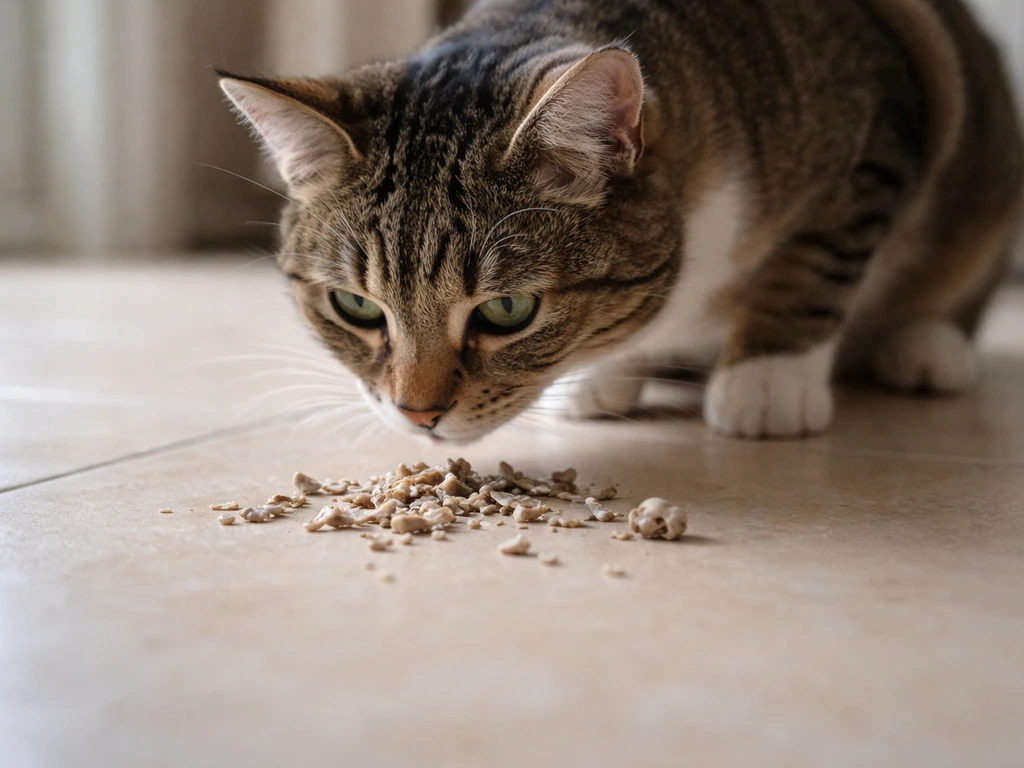
Yes, a cat can eat a whole bird, and outdoor cats do it more often than most owners realize. Small birds like sparrows, finches, and warblers can be consumed almost entirely, especially if the cat carries the prey to a sheltered spot. That said, whole consumption is actually less common than partial eating, playing with the carcass, or abandoning it after the kill. Whether your cat brought home a limp sparrow from the yard, caught a bird that flew into the house, or you are worried about your pet parrot sharing a room with your cat, the core concerns are the same: real health risks to the cat, real harm to bird populations, and a clear set of steps you can take right now.
Can a Cat Eat a Whole Bird? Risks, First Aid, Prevention

Maya Bennett
16 Jul 2026
Why cats hunt birds in the first place
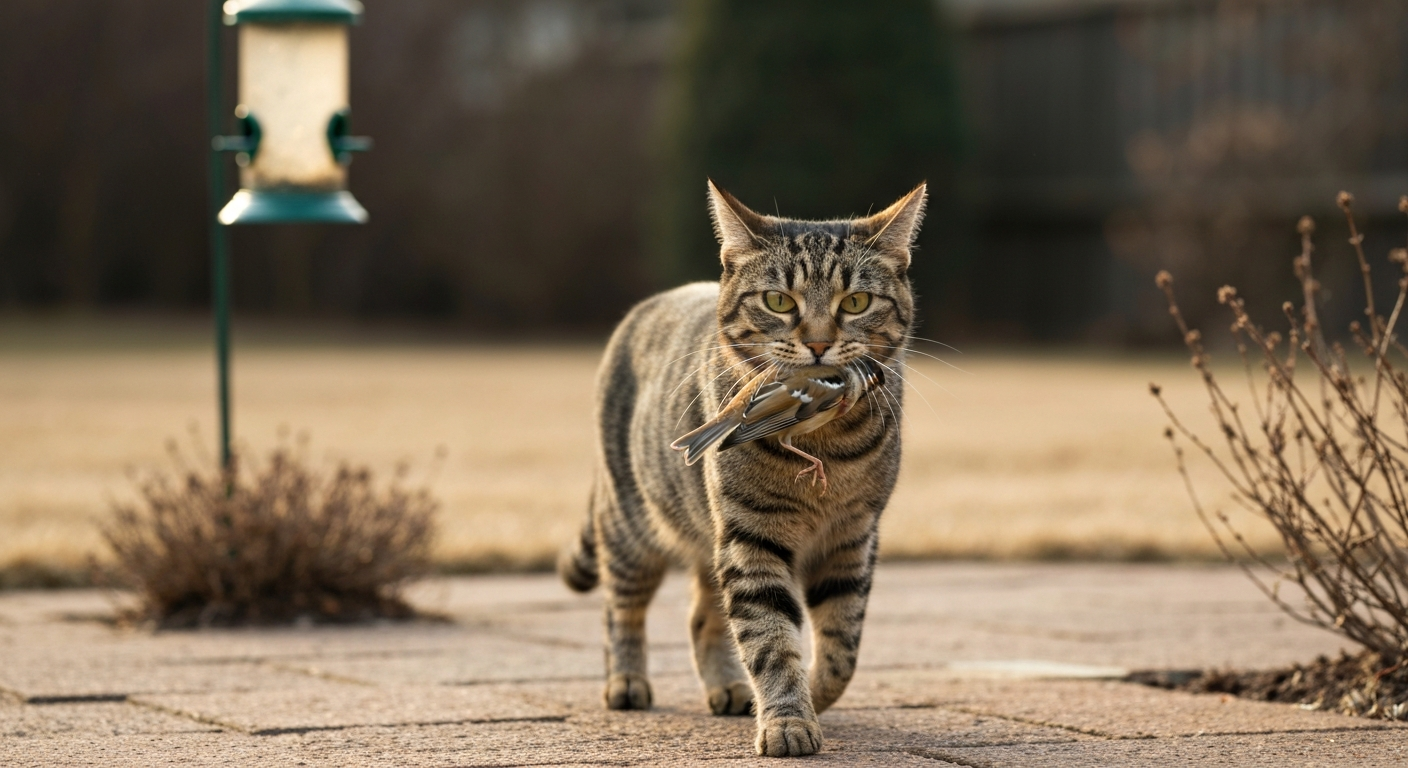
Hunting is not a hunger response in domestic cats; it is a hard-wired instinct that runs independently of how recently the cat was fed. The stalk-pounce-kill sequence is a fixed behavioral pattern that kittens inherit and then refine by watching their mothers handle prey. A cat that is well-fed at home will still chase and kill a bird at the feeder because the drive to hunt and the drive to eat are controlled by separate neurological systems. This is why the old advice about keeping a cat well-fed to stop predation simply does not work.
What you typically see follows a predictable sequence: the cat stalks slowly, compresses the body close to the ground, rushes or pounces, and delivers a killing bite to the back of the prey's neck or spine. After the kill, many cats carry the bird to a sheltered, comfortable spot before beginning to eat, or they spend time 'playing' with the carcass by batting and releasing it repeatedly. This play behavior is not cruelty; it is a prey-handling pattern that hones motor skills. Some cats eat everything. Others kill and walk away. Most land somewhere in between.
What parts of a bird cats actually eat
When a cat does eat a bird, it usually starts at the head or anterior end of the body. On a small bird like a house sparrow, a determined cat can consume the head, chest, and most of the body within minutes, leaving only a scattering of feathers and sometimes the larger wing feathers or feet. Larger birds are a different story; cats tear off chunks rather than swallowing whole, and larger prey is often abandoned after partial consumption.
Eggs are targeted too, especially at ground-level nests or accessible nest boxes. A cat investigating a feeder area may raid a nest and eat or puncture the eggs. For more on whether cats eat bird eggs and how to protect nests, see do cats eat bird eggs. Feathers often get ingested incidentally during eating rather than being sought out deliberately. Do cats eat bird feathers? Yes, they commonly ingest feathers incidentally while feeding, and swallowing large volumes can contribute to clumping or partial obstruction. Bones are consumed along with tissue on small birds, meaning hollow avian bones end up in the cat's digestive tract more often than owners expect. The practical takeaway: if your cat caught a bird, assume some portion of the bird, including bones, feathers, and organs, went down with it. For more on whether cats eat bird bones and the associated risks, see do cats eat bird bones.
Health risks to your cat after eating a bird
Eating a wild bird exposes a cat to a meaningful list of hazards. None of them are guaranteed, but several are serious enough that you should not just shrug and move on. Here is what the evidence actually shows.
Bacterial infections
Salmonella is the most commonly cited risk, and for good reason. Avian tissues and wild birds are recognized reservoirs for Salmonella spp. A cat that eats an infected bird can develop salmonellosis, with signs appearing within 12 to 72 hours. Even cats that do not show symptoms can shed the bacteria in their feces for weeks, creating a household hygiene risk, particularly for young children, elderly people, or anyone immunocompromised.
Pasteurella multocida is the other major bacterial concern. This bacterium colonizes the oral cavity and respiratory tract of many wild birds. It can infect cats through bites or scratches during the hunt, or through contact with infected tissues during eating. Case reports document Pasteurella multocida infections in people and animals after bird scratches or handling, including the case report “Friend Turned Foe: Pasteurella multocida Bacteremia Following a Scratch by an Adopted Pekin Duck, case report (SAGE).” Friend Turned Foe: Pasteurella multocida Bacteremia Following a Scratch by an Adopted Pekin Duck — case report (SAGE). In cats, Pasteurella can produce rapid and severe wound infections, abscesses, pneumonia, or systemic disease. Onset is often within 24 hours of exposure, which is fast enough to demand attention.
Parasites
Toxoplasma gondii is acquired by cats eating infected intermediate hosts, and wild birds are among the documented intermediate hosts. Cats can acquire Toxoplasma gondii by eating infected wild birds and rodents; keeping cats indoors and avoiding feeding raw meat reduces feline infection and subsequent environmental oocyst shedding (CDC guidance: cats and toxoplasmosis, preventing congenital toxoplasmosis / CDC materials) CDC guidance: cats and toxoplasmosis — preventing congenital toxoplasmosis / CDC materials. Cats are the definitive host for Toxoplasma, meaning infection causes oocyst shedding in feces with real public-health implications. Intestinal worms, including roundworms and tapeworms, can also be acquired from eating infected birds or the parasites those birds carry.
Viral exposure
Experimental studies have shown that cats can be infected with West Nile virus through ingestion of infected birds. While clinical disease in cats from West Nile infection is uncommon, the route of transmission is real, and it is one reason that eating wild birds is not a risk-free activity for cats in areas where WNV circulates in bird populations.
Secondary poisoning from toxins and treated birds
This is the risk that catches most owners off guard. If a bird has ingested a pesticide or rodenticide-killed rodent before being caught by your cat, your cat can absorb those toxins secondhand. Anticoagulant rodenticides like brodifacoum persist in prey carcasses and have caused documented secondary poisoning in cats and other predators. Signs of anticoagulant poisoning (unusual bleeding, bruising, bloody stool or urine, extreme lethargy) may not appear for several days after exposure. If your neighborhood uses rodenticide bait stations, this risk is real and worth taking seriously.
Physical hazards: bones, choking, and obstruction
Avian bones are hollow and splinter differently from mammalian bones. When consumed, bone fragments can lodge in the oral cavity, pierce the esophagus, or cause gastrointestinal obstruction or perforation further down the tract. Feathers swallowed in bulk can form a bezoar-like mass. Small bones can become foreign bodies requiring endoscopic or surgical removal. A cat that is gagging, repeatedly retching, drooling excessively, or showing signs of abdominal pain after eating a bird needs veterinary evaluation, not watchful waiting.
Signs to watch for after your cat eats a bird
Some cats eat birds and show no ill effects whatsoever. But you need to monitor for the following, and act quickly if you see them. Mild, short-lived GI upset (a single vomit, brief loose stool) is usually self-limiting. Everything below that threshold warrants at minimum a call to your vet.
| Sign or Symptom | Likely Concern | Action |
|---|---|---|
| Repeated vomiting or retching | Bone/feather obstruction, infection, toxin | Call vet promptly; go to emergency if persistent |
| Bloody vomit or diarrhea | GI injury, obstruction, or perforation | Emergency vet immediately |
| Difficulty breathing or open-mouth breathing | Aspiration, chest injury, Pasteurella pneumonia | Emergency vet immediately |
| Unusual bruising, bleeding from gums, bloody urine/stool | Secondary rodenticide poisoning | Emergency vet immediately |
| Severe lethargy or collapse | Sepsis, toxin, severe obstruction | Emergency vet immediately |
| Drooling, pawing at mouth, difficulty swallowing | Bone lodged in throat or oral cavity | Emergency vet promptly |
| Mild single vomit, normal behavior after | Minor GI upset | Monitor at home for 24 hours; call vet if worsening |
| Diarrhea without blood, still eating and alert | Possible Salmonella or mild GI irritation | Monitor; call vet if persists beyond 24 hours or cat deteriorates |
| No symptoms at all | Possible subclinical infection or parasite exposure | Monitor for 48 to 72 hours; schedule vet check if concerned |
What to do immediately if your cat eats or injures a bird
Act methodically and do not panic. Your actions in the next 30 minutes will give you far better information to work with if a vet visit becomes necessary.
- Separate the cat from the bird carcass or injured bird right away. Do not let the cat continue eating or playing with it.
- Do not handle the dead bird with bare hands. Use disposable gloves, a plastic bag inverted over your hand, or a folded piece of cardboard to move it.
- Photograph the carcass before disposal: full-body shot, any visible injuries, and if possible a size reference. Note the species if you can identify it. This helps your vet assess risk and helps a wildlife rehabber if the bird is still alive.
- If the bird is alive and injured, place it gently in a ventilated cardboard box lined with a soft cloth. Keep it in a quiet, warm, dark space and contact a licensed wildlife rehabilitator as soon as possible. Do not offer food or water; improper feeding can cause aspiration or further harm.
- Seal the carcass of a dead bird in a double plastic bag and dispose of it in an outdoor bin. If you live in an area with reported avian flu activity, check current local guidance on disposal before handling.
- Wash your hands thoroughly with soap and water for at least 20 seconds. Wipe down any surfaces the bird or your cat's mouth contacted.
- Check your cat's mouth, paws, and face for cuts, punctures, or embedded feathers or bone fragments. A quick visual check can reveal injuries that need veterinary attention.
- Write down the time the incident happened, the approximate size of the bird eaten, whether it was fully or partially consumed, and any symptoms the cat shows. This timeline is the single most useful thing you can bring to a vet.
If you are unsure whether the bird came from an area where rodenticides are used (neighbor bait stations, agricultural land, pest control-managed buildings), mention this to your vet explicitly. Secondary anticoagulant poisoning can look like nothing for 3 to 5 days before becoming a crisis, so early communication matters.
If your cat ate only feathers, or only eggs
Feathers only
A small number of swallowed feathers will usually pass through without incident, similar to grass or fur. The concern arises when a cat has ingested a large volume of feathers, since these can potentially clump and create a partial obstruction. Watch for repeated retching, gagging, or loss of appetite over the following 24 to 48 hours. A single vomit that brings up feathers and is followed by normal behavior is generally not an emergency. For related guidance on whether cats play with bird feathers and how feather ingestion affects risk, see can cats play with bird feathers. If vomiting is repeated or the cat stops eating, call your vet.
Eggs only
Raw bird eggs are not acutely toxic to cats, but they are not without risk either. Raw egg whites contain avidin, which can interfere with biotin absorption if eaten in large or frequent amounts, though eating a wild bird egg or two once is unlikely to cause this problem. The bigger concern is Salmonella contamination of the egg contents or shell, especially with wild bird eggs. Monitor your cat for the same GI signs described above and call your vet if symptoms develop or persist beyond 24 hours.
When to call the vet and what to tell them
Call your veterinarian or an emergency animal clinic immediately if you observe bloody vomit or diarrhea, difficulty breathing, unusual bleeding or bruising, extreme lethargy, collapse, or inability to swallow. These are not wait-and-see situations. For less severe signs (mild vomiting, soft stool, slight lethargy), call during normal hours but do not delay by more than a few hours if symptoms progress.
When you call, have the following information ready: the approximate time your cat ate or interacted with the bird, the size and type of bird if known, whether it was fully or partially eaten, whether feathers or bones were visibly consumed, the cat's current symptoms and when they started, any known pesticide or rodenticide use in the area, and your cat's age, weight, and any pre-existing health conditions. Photos of the carcass are genuinely useful; vets and wildlife rehabbers can sometimes identify species or confirm cause of death from a good photograph.
If the bird was alive when your cat caught it and was injured but escaped or you have it contained, contact a licensed wildlife rehabilitator. They need to know the species if possible, the type of injury, when it happened, and how the bird is behaving. In many countries and US states, keeping a wild bird without a rehabilitation license is illegal, so getting it to a professional quickly is both the ethical and the legal path.
Risks to birds and what cats actually do at feeders and nests
Free-ranging domestic cats in the United States are estimated to kill between 1.3 and 4 billion birds per year. Unowned, feral cats account for the majority of this mortality, but owned pet cats with outdoor access contribute meaningfully. Feeder areas are particularly dangerous for birds because they concentrate prey in predictable locations with limited escape routes. Cats that learn feeder locations will return repeatedly, and the bird population near that feeder can change noticeably within a season.
Nest predation is a separate and often underappreciated problem. A cat that locates a ground nest or low nest box may not just kill a nesting bird; it will eat or destroy the eggs and any nestlings present. This is one reason cats roaming near known nesting habitat, especially during spring and early summer, cause disproportionate population-level damage. Identifying whether a disturbed nest was attacked by a cat versus another predator (raccoon, corvid, or snake) can matter for how you respond: cat predation typically leaves a scattering of adult feathers with a killing bite pattern at the base of the skull, while corvids often remove eggs cleanly and snakes leave no physical trace.
How to reduce predation without giving up having a cat
Keeping cats indoors or providing supervised outdoor access through a cat enclosure (commonly called a catio) is the single most effective intervention. Indoor-only cats cannot kill wild birds, and the evidence consistently shows that indoor cats also live significantly longer than free-roaming cats. Supervised leash walks are a practical middle ground for cats that have learned to enjoy them.
If full containment is not possible, evidence-based deterrent devices make a real difference. Brightly colored collar covers (the Birdsbesafe collar cover) and pounce-protection bibs (the CatBib) have both been tested in controlled field trials. The CatBib reduced birds brought home by approximately 81% in one controlled trial. Birdsbesafe collar covers showed reductions ranging from around 40% to over 90% depending on season and bird type, with the strongest effect on colorful, visually-oriented birds during daylight hours. Standard bells perform less consistently in trials, though they may help to some degree. Combining a bright collar cover with supervised outdoor time is a practical compromise for many households.
Feeder placement and habitat adjustments
Place feeders at least 1.8 meters (6 feet) off the ground and at least 3 meters (10 feet) from dense shrubs, fences, or other structures a cat could use as a launch point. Baffles on feeder poles help. Avoid ground-feeding setups entirely if cats roam your yard. Clearing low cover within about 3 to 4 meters of the feeder removes the ambush habitat cats rely on, while leaving taller shrubs further away gives birds somewhere to flee and rest. Storing seed in sealed containers and cleaning up spilled seed reduces the scent trail that attracts not just birds but also rodents, which in turn attract cats and other predators.
If you have a pet bird: what the risk actually looks like
A domestic cat sharing a home with a pet bird is a genuinely high-risk combination, even when the cat appears indifferent or the bird appears bold and assertive. The cat's predatory instinct can activate unpredictably, triggered by wing flutter, sudden movement, or vocalization. A cat does not need to deliver a killing bite to cause fatal injury to a pet bird; even a minor scratch or bite from a cat introduces Pasteurella and other bacteria directly into the bird's bloodstream, and small birds can die from septicemia within hours. The risks of a cat attacking and eating a pet bird are real and are not reduced by familiarity alone. Physical separation (a cat-proof aviary, a room the cat cannot access) is the only reliable safeguard. For more on the likelihood and warning signs of a cat harming a companion bird, see will my cat eat my bird.
Myth-busting: common wrong assumptions about cats eating birds
- Myth: A well-fed cat won't hunt. False. Hunting is driven by instinct, not hunger. Satiated cats kill birds regularly.
- Myth: Bird bones are always dangerous to cats. Partially true but nuanced. Small birds eaten whole carry lower acute bone risk than large cooked bones, but hollow avian bones can still splinter and cause obstruction; it is a real risk, not a guaranteed catastrophe.
- Myth: If the cat shows no symptoms within an hour, it is fine. False. Bacterial infection, parasite transmission, and secondary poisoning from rodenticides may not show signs for 12 hours to several days.
- Myth: Cats that eat birds are getting natural nutrition. Misleading. Wild birds can carry pathogens, parasites, and chemical residues that create net health risk, not benefit, compared to a complete commercial diet.
- Myth: Bells on cat collars effectively prevent bird killing. Oversimplified. Studies show bells alone are inconsistent deterrents; brightly colored collar covers and pounce-protection bibs have stronger evidence behind them.
- Myth: Only stray cats cause bird population problems. False. Owned pet cats with outdoor access contribute to the billions of birds killed annually in the US, even if unowned cats cause the majority of mortality.
- Myth: A cat and a pet bird can safely coexist unsupervised if they 'get along.' False. Even a single scratch or bite from a cat can kill a small bird from Pasteurella septicemia within hours.
Quick risk reference: what to expect by what was eaten
| What the cat ate | Main risks | Typical onset of symptoms | Home monitoring OK? | Vet contact recommended? |
|---|---|---|---|---|
| Whole small bird (sparrow, finch, etc.) | Salmonella, Pasteurella, Toxoplasma, bone obstruction, feather impaction, secondary toxin | 12 to 72 hours (infection); days (toxin) | Only if cat is fully asymptomatic and alert | Yes, within 24 hours; immediately if any warning signs |
| Partial bird (head and chest consumed) | Same as above; slightly lower bone/obstruction risk depending on what was eaten | 12 to 72 hours | Only if fully asymptomatic | Yes, within 24 hours |
| Feathers only (small number) | Minor GI irritation, possible impaction if large volume | Minutes to hours if obstruction develops | Yes, for 24 to 48 hours if behavior is normal | Call if vomiting repeats or cat stops eating |
| Bird eggs (wild) | Salmonella, minor biotin interference if large amounts | 12 to 48 hours | Yes, if behavior is normal after ingestion | Call if GI signs develop or persist |
| Bird bones (from larger bird or scavenged carcass) | Obstruction, perforation, oral injury, aspiration of fragments | Minutes to hours | Only if no gagging or distress at all | Yes, call vet promptly; emergency if gagging or distress |
Hygiene, legal considerations, and handling dead birds safely
Never handle a dead wild bird with bare hands. Beyond the bacterial risks already covered, wild birds can carry avian influenza strains, and during active outbreak periods your local health authority or wildlife agency may have specific disposal instructions. In normal circumstances, double-bag the carcass in sealed plastic bags and place it in an outdoor bin. Wash hands with soap for at least 20 seconds and disinfect any tools used.
In the United States, almost all native wild bird species are protected under the Migratory Bird Treaty Act. You cannot legally keep a wild bird, even temporarily, without the appropriate rehabilitation permit. If your cat injures a bird and it is still alive, your legal and ethical responsibility is to get it to a licensed wildlife rehabilitator as quickly as possible. Your local animal control office, veterinary clinic, or a quick search for your state's wildlife agency can direct you to the nearest licensed rehabber.
Clusters of dead birds in a neighborhood, or a bird that appears sick rather than injured, should be reported to your state or local wildlife agency rather than handled privately. This matters particularly during periods of heightened avian disease surveillance. A cat eating multiple dead or dying birds in a short period is a situation worth flagging to both your vet and your local wildlife authority.
FAQ
Can a cat eat a whole bird?
Short answer: Yes — cats can and sometimes do eat entire small birds, but more commonly they kill and partially consume prey, carry it away, or ‘play’ with it. Whether a cat eats a whole bird depends on bird size, the cat’s hunger and experience, and the context (outdoor hunter, indoor cat that catches a wild bird, or attack on a pet bird). Small songbirds and nestlings are most likely to be consumed whole; larger birds are usually torn apart and eaten in pieces.
Why do cats hunt birds and what parts do they typically eat?
Cats are obligate carnivores with strong predatory instincts. Hunting is motivated by instinct, play, or learned behavior (including maternal teaching). Typical outcomes: - Small prey: may be killed and eaten whole or started at the head and consumed rapidly. - Larger prey: torn apart; muscle and organs are preferred. - Eggs: readily eaten if accessible. - Feathers: often plucked and discarded or used during play; ingestion of some feathers can occur but large amounts may cause hairball/obstruction. - Bones: small avian bones are sometimes swallowed but can splinter and cause injury; ingestion frequency varies but is a known clinical risk.
How often do cats actually eat the birds they kill versus just killing them?
Field and behavioral studies show cats frequently kill without fully consuming prey. Many pet and free‑ranging cats kill for hunting practice or play and bring prey home; only a fraction of kills are entirely eaten. Estimates vary by study, season, and individual cat, but partial consumption is common enough that using 'prey brought home' underestimates total predation.
What health risks can a cat face after eating a bird?
Key risks include: - Bacterial infection (Pasteurella, Salmonella and others) from contaminated tissues or bite wounds. - Parasites (Toxoplasma gondii, various worms) acquired from infected birds. - Viral exposure (rare examples include West Nile in some contexts). - Secondary poisoning from rodenticides or pesticides present in the bird. - Mechanical injuries: oral lacerations, choking, esophageal obstruction, intestinal impaction or perforation from bones or feather masses. - Signs to watch for within 24–72 hours: vomiting, diarrhea (possibly bloody), lethargy, fever, drooling, difficulty breathing, coughing, swelling or pain in the mouth/neck, pale gums or unexplained bleeding (possible anticoagulant poisoning). Seek prompt veterinary care for severe or progressive signs.
If my cat ate only feathers, is that dangerous?
Small amounts of feathers are usually passed or vomited as a hairball; however, large feather masses can form a compacted foreign body causing vomiting, anorexia or intestinal blockage. Monitor your cat for repeated vomiting, decreased appetite, straining, abdominal pain or lethargy and contact your vet if these occur.
What should I do immediately if my cat brings home or eats a wild bird?
Immediate steps: - Safely separate the cat from the bird and keep your cat indoors and under observation. - If the bird is alive and injured, avoid handling it with bare hands; call a licensed wildlife rehabilitator or local wildlife authority for guidance. - If the bird is dead and you want it tested or documented, use gloves, place it in a sealed bag, refrigerate (not freeze) and contact local wildlife or public‑health contacts. - Note what your cat ate (whole bird, parts, feathers, eggs) and any contact with dead tissues—this helps the vet assess risks. - Clean your cat’s mouth gently if there are visible wounds; for bite wounds or punctures, seek veterinary care: bite‑associated infections can progress quickly. - Watch your cat closely for 24–72 hours for symptoms listed above.
Next Article
Do Cats Eat Bird Bones? Risks, Safety, and Prevention Tips
Can cats eat bird bones? Learn risks of sharp fragments, choking, and what to do if your cat gets a bird.