Cats can and do eat bird feathers, but feathers are not digestible. A small amount will usually pass through or get vomited up without serious harm, but feathers can also bunch together and cause a gastrointestinal blockage or get lodged in the esophagus, which is a genuine emergency. If your cat just chewed on a feather and seems fine right now, there's no need to panic, but there are clear warning signs you should watch for over the next 24 to 48 hours, and a short list of situations where you go straight to the vet. If your cat can get sick from eating a bird, it is usually because feathers or bird material can cause choking or a gastrointestinal blockage chewed on a feather.
Do Cats Eat Bird Feathers? Risks, Symptoms, and What to Do

Maya Bennett
18 Jun 2026
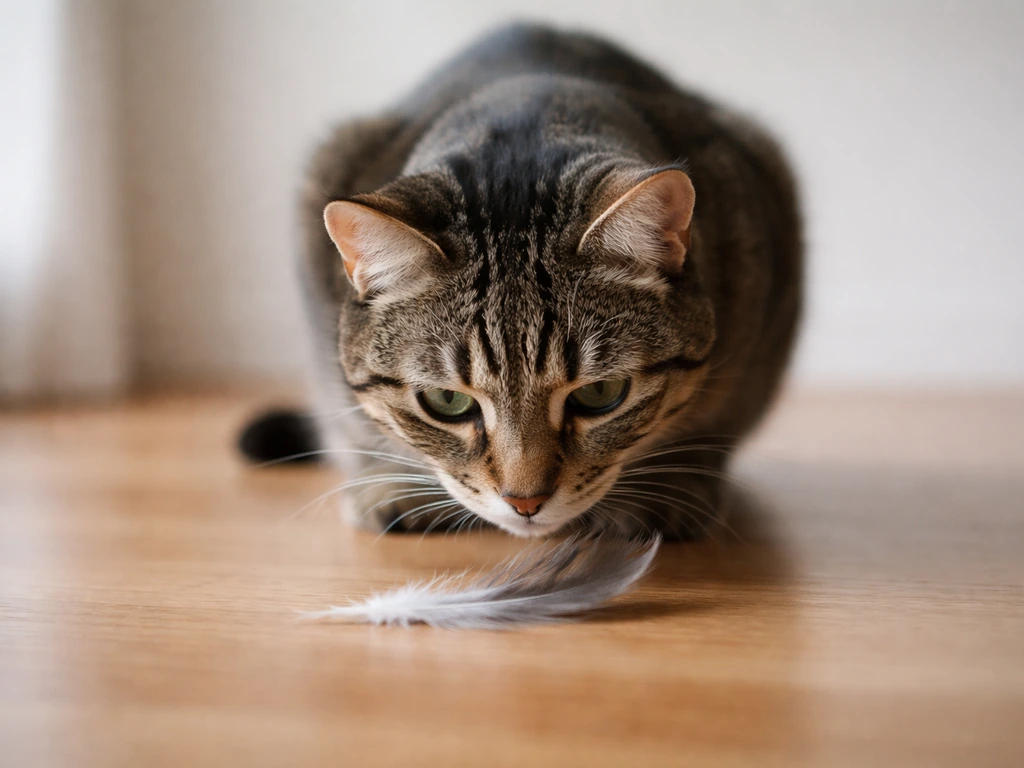
Can cats eat bird feathers
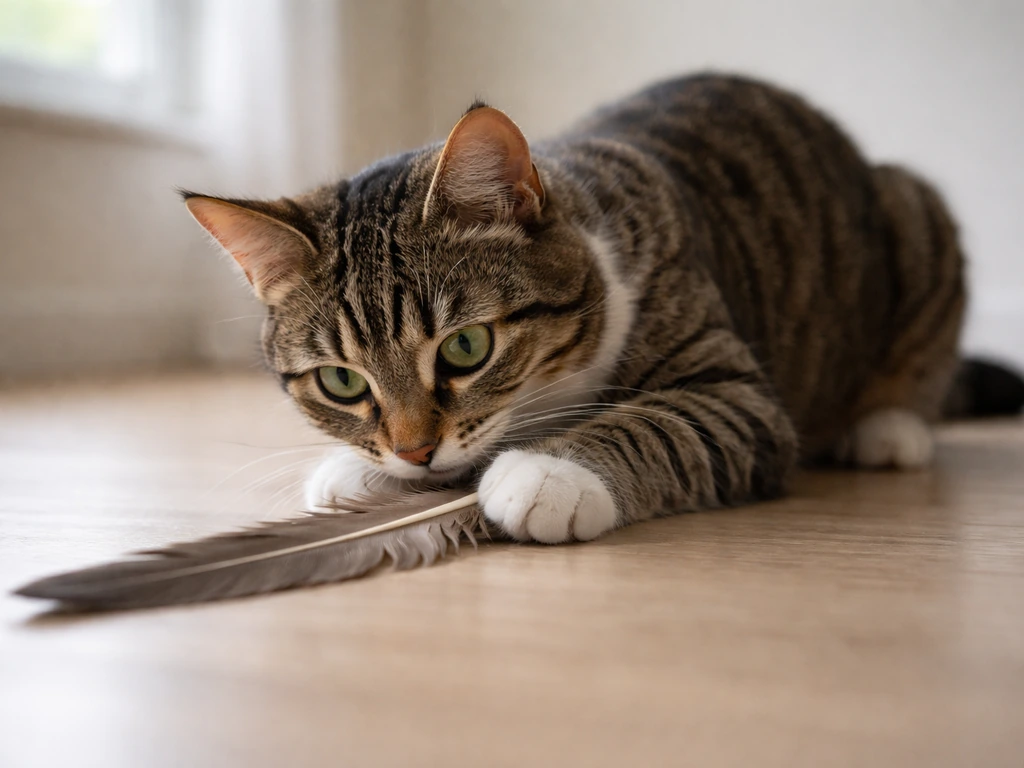
Cats are obligate carnivores and natural hunters, so grabbing a feather, chewing it, or swallowing part of one is completely in line with their instincts. A cat that's been hunting near your backyard feeder, found a feather on the ground, or caught a bird isn't doing anything unusual. The problem is that "natural behavior" doesn't mean "safe outcome." Feathers are made of keratin, the same protein that makes up hair and nails, and a cat's digestive system has no enzymes to break that down efficiently.
Most of the time, a cat that swallows one or two feathers will either vomit them back up or pass them through the stool within a day or two. Do cats also eat bird bones, and do those cause the same kinds of risks (choking and GI obstruction)? Owners commonly report finding foreign material in vomit or feces after their cat has been outside. That's the best-case outcome. The concern is when a cat eats a significant amount of feather material, swallows a larger feather whole, or has a habit of eating non-food items. Some cats develop a compulsive pattern called pica, where they repeatedly ingest indigestible material, and that raises the odds of a serious obstruction considerably.
Can cats digest feathers and what happens if they do
No, cats cannot digest feathers in any meaningful way. The keratin structure in feathers resists the stomach acid and digestive enzymes that break down meat and bone. What typically happens is one of a few scenarios: the feather irritates the stomach lining and triggers vomiting, it passes through the entire GI tract and comes out in stool (possibly causing some irritation along the way), or it accumulates with other indigestible material and starts to form a mass that the gut can't move.
The third scenario is the one that creates real trouble. Indigestible, fibrous material like feathers, hair, and bone fragments can mix together in the intestines and create a dense, firm obstruction. This is the same mechanism behind hairball-related constipation, but with feathers involved the material can be bulkier and less predictable in how it moves. A partial obstruction may still let fluids pass while blocking solid food, which means your cat might eat and drink a little but continue to deteriorate slowly. A full obstruction stops everything and becomes life-threatening quickly.
Health risks: choking, GI blockage, vomiting and diarrhea
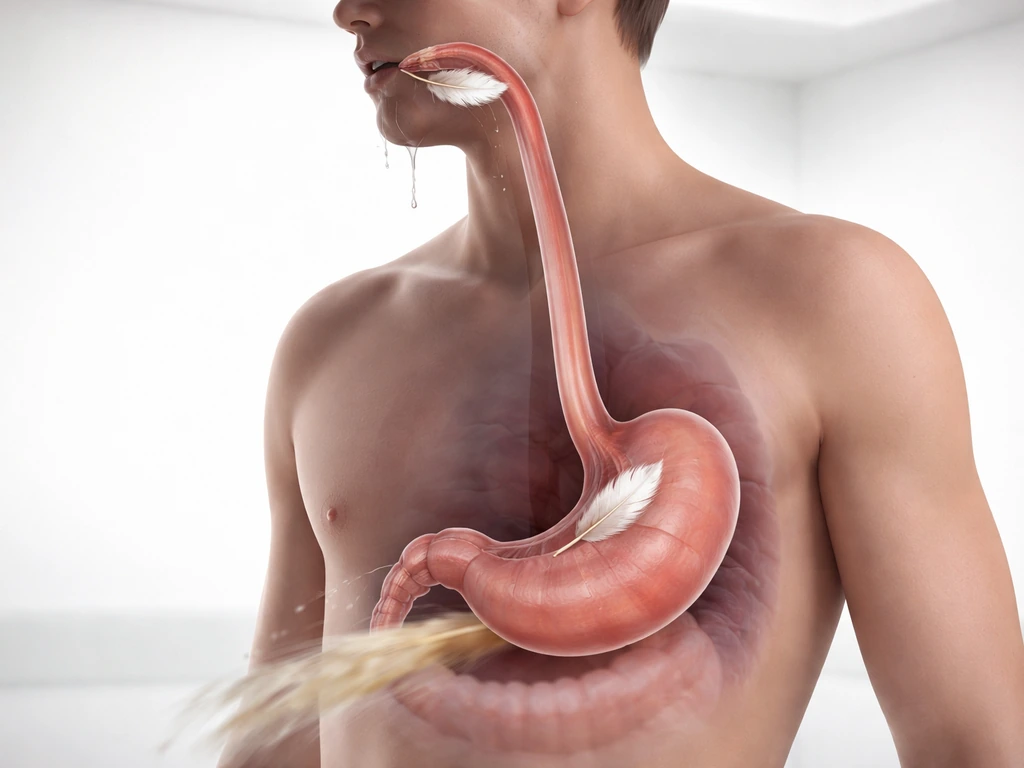
The most immediate risk is choking or esophageal lodging. A longer feather that gets swallowed can catch in the esophagus before it even reaches the stomach, causing drooling, repeated swallowing attempts, gagging, regurgitation, and difficulty eating or drinking. This is treated as a blank" rel="noopener noreferrer">medical emergency because a partial esophageal obstruction may need endoscopy or, in severe cases, surgery, especially if there's any perforation or tissue damage.
If the feather makes it past the esophagus, the next concern is GI obstruction in the stomach or intestines. The clinical signs here are different and can develop more gradually: vomiting, reduced appetite or full anorexia, lethargy, diarrhea, abdominal pain, and in serious cases fever, dehydration, or shock. Untreated intestinal blockages can cause pressure damage to the intestinal wall, leading to tissue death and rupture, which is a surgical emergency with a much worse prognosis the longer it's left.
On the milder end, a cat that eats a small amount of feather may just have an irritated gut for a day or two, with loose stools, one or two vomiting episodes, and a temporarily reduced appetite. That's uncomfortable but not usually dangerous. The key is knowing when you're looking at mild irritation versus the early signs of something worse.
| Risk | What it looks like | Urgency |
|---|---|---|
| Esophageal lodging | Drooling, gagging, repeated swallowing, regurgitation, trouble breathing | Go to emergency vet immediately |
| GI obstruction (stomach/intestine) | Persistent vomiting, complete loss of appetite, lethargy, abdominal pain or swelling, no stool | Urgent vet visit same day |
| Constipation/partial blockage | Straining to defecate, little or no stool, mild lethargy | Call vet within hours |
| Mild GI irritation | One or two vomiting episodes, loose stool, slight appetite dip, resolves in 24 hours | Monitor closely at home |
| No symptoms | Cat is eating, drinking, acting normally, passes feather in stool | Watch and confirm it passes |
When to call a vet and red flags after feather exposure
The 24 to 48 hours after your cat eats feathers is the window where you need to pay close attention. If your question is whether a cat can eat a whole bird, that is even more risky than swallowing a few feathers because there is a higher chance of choking and a GI obstruction can a cat eat a whole bird. Here's a simple framework: if any of the red-flag symptoms below appear, don't wait to see if they improve on their own. Foreign body obstructions can lead to rapid deterioration, and every hour of delay matters once an obstruction is established.
- Go to an emergency vet immediately if your cat is gagging, drooling heavily, showing repeated attempts to swallow, having trouble breathing, or cannot keep water down
- Call your vet urgently (same day) if your cat has vomited more than twice, stopped eating entirely, seems lethargic or painful when you touch the abdomen, or has a visibly swollen belly
- Call your vet within a few hours if your cat is straining to defecate with little or no result, or seems constipated after a known feather ingestion
- Monitor closely at home if your cat had one or two vomiting episodes but is otherwise alert, drinking, and shows normal behavior — watch every few hours and check that stool passes within 24 to 48 hours
- If you're unsure, call your vet and describe what happened — they can help you triage over the phone
One thing worth noting: if your cat caught and ate a bird (not just a loose feather), the risks are broader. A whole bird ingestion brings in bones, which have their own obstruction risks, and potential exposure to parasites, bacteria like Salmonella, and in the current avian flu environment, pathogens from wild bird populations. Those situations are worth a vet call on their own, separate from the feather question.
What to do instead: safe backyard setup to reduce access

Prevention is easier than treatment, and the good news is that a few adjustments to your backyard feeder setup and how your cat accesses the yard can dramatically reduce the odds of this happening again. Since cats may be tempted to mouth bird feathers, limiting their access to feeder areas can prevent risky ingestion and choking. The core goal is keeping your cat away from areas where feathers, bird remains, and bird droppings accumulate.
- Mount feeders high and away from surfaces a cat can jump from. A pole-mounted feeder with a baffle at least 5 feet off the ground and 10 feet from any fence or deck is harder for a cat to access. More importantly, it keeps the ground zone under the feeder, where birds land and feathers drop, as a cat patrol zone you can manage.
- Clean up under feeders regularly. Feathers, hulls, and bird droppings on the ground are an invitation for a cat to investigate and chew. If feathers are gone before your cat finds them, the problem is largely solved.
- Supervise outdoor time. If your cat goes outside, try to do it in sessions you're watching, especially early morning and late afternoon when birds are most active at feeders.
- Consider a catio or enclosed outdoor run. A purpose-built outdoor cat enclosure lets your cat experience the outdoors, including bird-watching, without being able to reach the feeder zone or pick up feathers and bird remains from the ground.
- Use physical barriers around feeder stations. A low fence or thorny shrub border around the feeder area can deter casual cat entry without being elaborate or expensive.
- If your cat has a history of eating non-food items (pica), talk to your vet about behavioral strategies in addition to physical barriers, since pica cats will actively seek out indigestible material.
Feathers on feeders and the ground: cleaning and contamination
From a backyard birder's perspective, feathers and bird remains around feeders aren't just a cat-safety issue. If your worry is more about bird food than feathers, you might also wonder do cats eat bird eggs as a related question when dealing with feeder area risks. They're also a contamination concern for the birds themselves. Feathers left to accumulate under feeders can carry bacteria, mold from damp conditions, and in rare but real scenarios, material from sick or dead birds. If a bird with avian influenza died near your feeder, feathers and droppings left on the ground represent a low but non-zero exposure risk for both pets and humans who handle them.
CDC guidance recommends keeping pets away from sick or dead wild birds, avoiding direct contact with dead birds yourself, and washing hands thoroughly after any contact with wildlife-related outdoor items. The same hygiene logic applies to feathers: don't let them accumulate, and don't let your cat treat the feeder area as a foraging zone.
Cleaning feeders and the area underneath them regularly is the right habit for multiple reasons. For the feeders themselves, a diluted bleach solution (roughly one part bleach to nine parts water) is a standard disinfection approach, and you should clean feeders away from kitchen or food-prep areas. For the ground beneath feeders, rake and remove accumulated seed hulls, droppings, and feathers at least weekly. This reduces pathogen buildup for the birds, removes a temptation for your cat, and is just good feeder hygiene overall.
- Remove feathers, hulls, and droppings from under feeders at least once a week
- Disinfect feeders with a diluted bleach solution and rinse thoroughly before refilling
- Clean feeders away from food-prep areas and wash your hands after handling outdoor bird equipment
- If you find a dead bird near your feeder, don't handle it bare-handed: use gloves or a bag, dispose of it, and clean the surrounding area
- Keep your cat out of the feeder cleanup zone while you're working in it, and until the area is dry after disinfection
- Store seed in sealed containers to avoid attracting rodents and other wildlife that could bring additional contamination risk into the feeder area
The bottom line is that feathers are a low-level but real hazard for cats, and most incidents will resolve without intervention. What matters is knowing the difference between mild irritation and a blockage developing, acting quickly on the red flags, and setting up your yard so the whole situation is less likely to happen in the first place. A clean feeder area, a supervised or enclosed cat, and a clear mental checklist of warning signs puts you in a good position.
FAQ
If my cat eats one feather and then acts normal, should I still contact a vet?
If the cat is fully normal, has no drooling, gagging, repeated swallowing, or vomiting, you can usually monitor at home for 24 to 48 hours. Contact a vet sooner if you cannot confirm how much was eaten, if the feather was long enough to be swallowed whole, or if your cat is prone to pica or hairball constipation.
What signs suggest the problem is in the esophagus versus farther down the GI tract?
Esophageal lodging often looks like drooling, repeated swallowing attempts, gagging or regurgitation, and difficulty eating or drinking soon after the incident. GI obstruction more often shows vomiting, reduced appetite progressing to anorexia, lethargy, abdominal pain, diarrhea, and dehydration, sometimes later rather than immediately.
My cat vomited after chewing a feather. Does that mean everything is fine?
Not automatically. Vomiting can happen even if the feather did not fully pass. If vomiting continues, the cat stops eating, you notice straining, you see blood, or there is no normal stool within 24 to 48 hours, treat it as possible foreign body trouble and seek vet guidance.
Should I try home remedies like inducing vomiting or giving something to “push it through”?
Do not try to induce vomiting or give common swallowable “helpers” without veterinary direction, because a lodged feather can worsen irritation or increase aspiration risk. If your vet recommends anything, follow their instructions based on whether the concern is esophageal versus intestinal.
How can I tell whether my cat actually swallowed the feather versus just chewed and dropped it?
Look for regurgitation or vomiting, check for the feather in vomit, and monitor stool for a day or two. If you saw only chewing but no visible piece afterward, assume a portion may have been swallowed, especially if the feather was long, soft, or easily grasped.
Is feather ingestion more dangerous for kittens or smaller cats?
Yes. Smaller cats can develop obstruction symptoms with less material because their intestinal lumen is narrower and they may dehydrate faster. If you have a kitten or a very small cat, a vet call is more appropriate even if symptoms are mild or you suspect more than a tiny amount.
What if the cat is a heavy hairball sufferer, does that change the risk?
It can. Cats that already have constipation or frequent hairball issues may be more likely to form blockages when additional fibrous material like feathers is added. If your cat has a history of hard stools, straining, or hairball-related constipation, escalate monitoring and consider a vet check earlier.
How should I prepare for the vet visit if I suspect a feather blockage?
Bring details on timing (how long since the feather was chewed), estimated amount (one feather versus multiple), and current symptoms (vomiting frequency, eating and drinking, stool/diarrhea, drooling, and behavior). If possible, bring a photo of the feather or the area where it was found, and note any pica tendencies.
Does eating a bird change the guidance compared with just eating feathers?
Yes. Eating a whole bird adds bones and increases the chance of choking and GI obstruction, plus it introduces broader infection risk from wild bird microbes and parasites. Even if your cat seems okay at first, a vet call is warranted because complications and fever can develop later.
What backyard changes reduce feather exposure the most?
Keep cats away from the feeder zone by using a physical barrier, feeding indoors or in a screened area, or placing feeders higher with a deterrent so cats cannot access the ground under them. Regularly raking and removing feathers, droppings, and seed hulls matters, because accumulating debris increases both temptation and contamination risk.
Next Articles
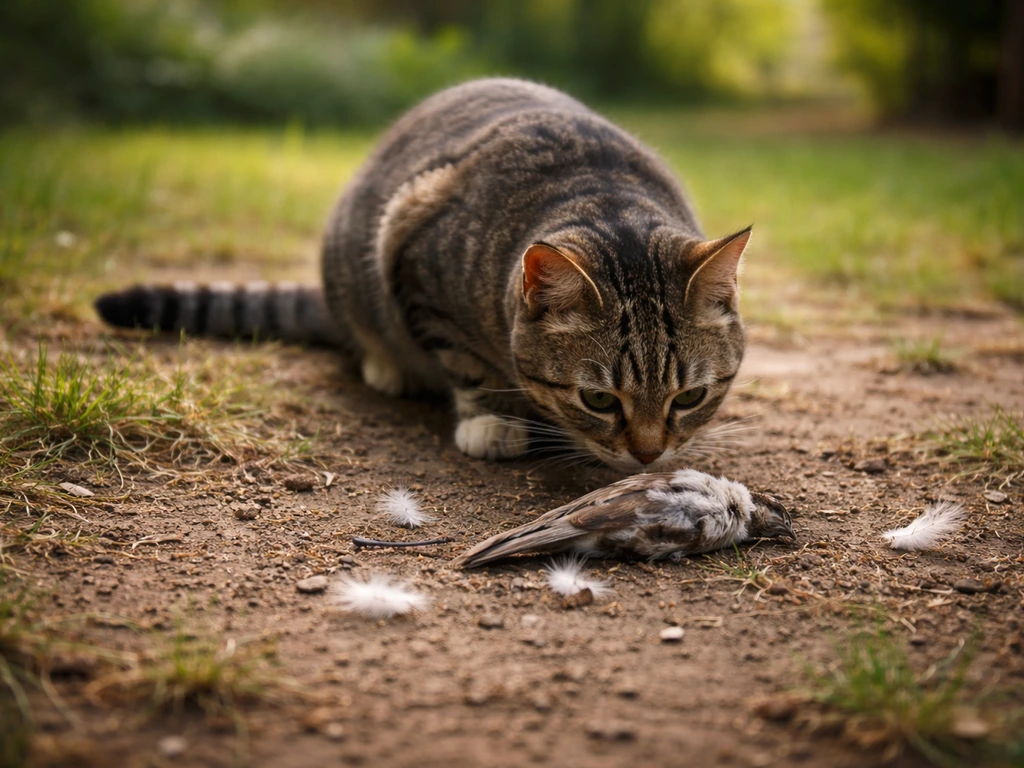
Can a Cat Get Sick From Eating a Bird? What to Do Now
Learn illness risks from cats eating birds or feathers, symptoms to watch, and exact steps for today and vet timing.
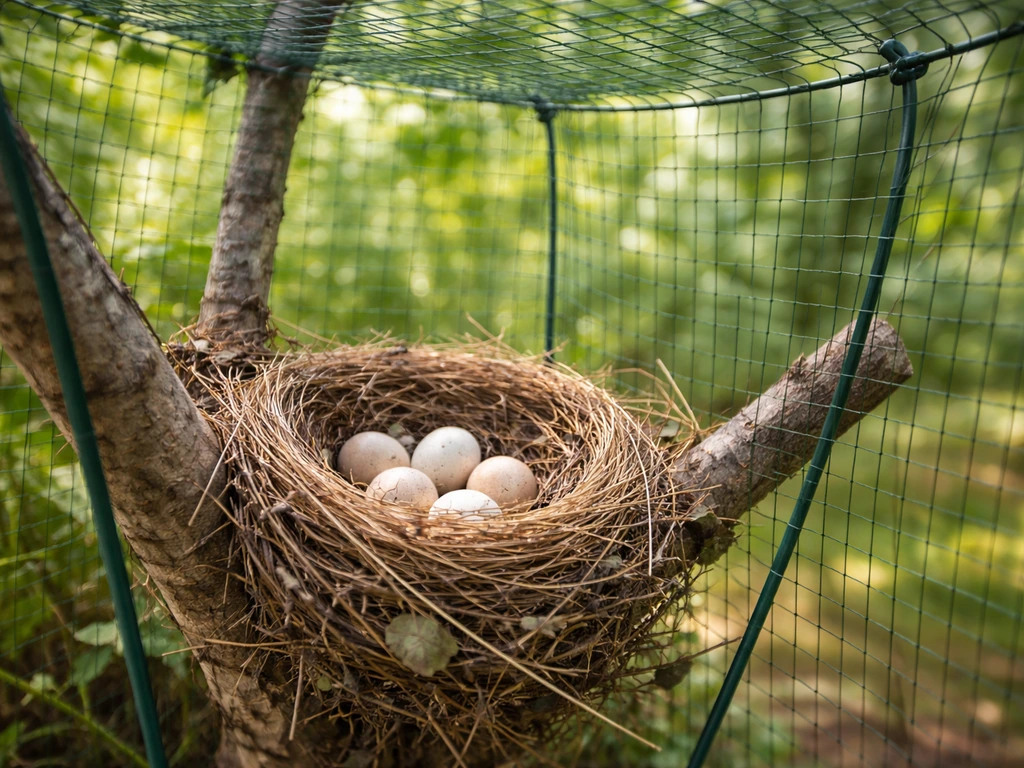
Do Cats Eat Bird Eggs? What to Know and How to Prevent
Do cats eat bird eggs? Learn when it happens and how to protect nests and feeders with practical cat-proof steps.
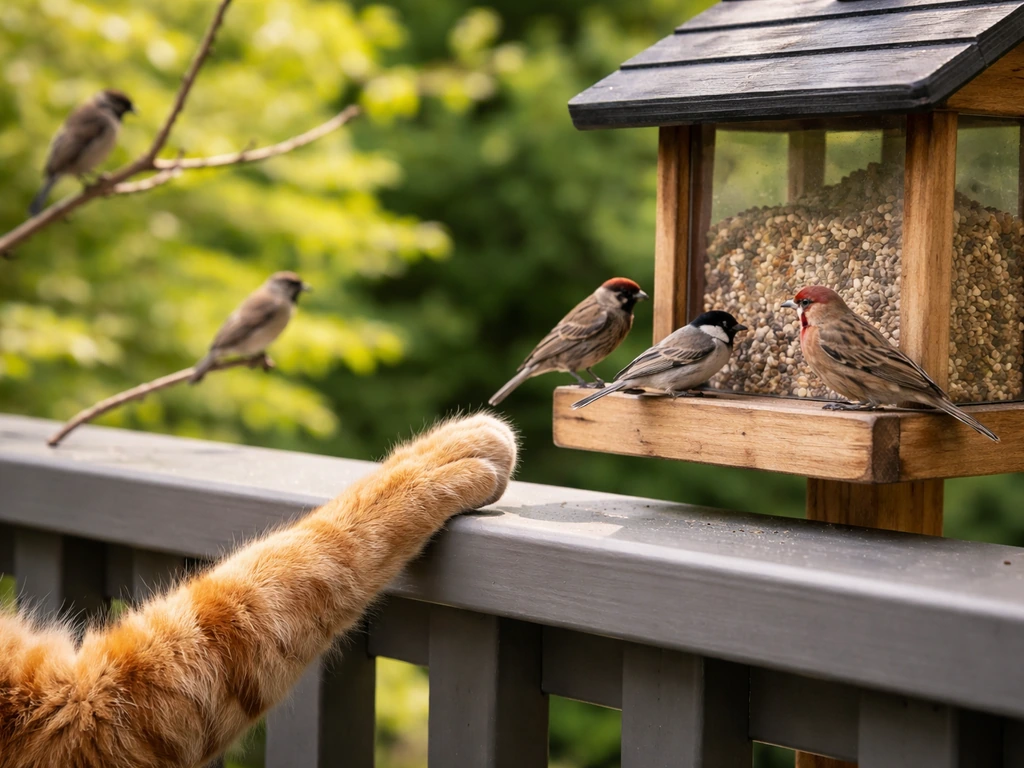
Do Cats Eat Birds? Can Cats Eat Bird Seed or Food?
Will cats eat birds or bird seed? Learn risks, myths, and safe steps to protect wildlife and pets.