
Yes, your cat will very likely try to kill your pet bird if given the chance, and there is a real possibility it will eat or partially eat it too. This is not a question of whether your cat is "mean" or badly trained. It is pure instinct. Even a cat that has lived alongside a bird for years can snap into full predatory mode in seconds. The good news is that with the right physical setup and a few firm rules, you can keep both animals safe.
Will My Cat Eat My Bird? Risk, Signs, and Safe Steps

Maya Bennett
19 Jun 2026
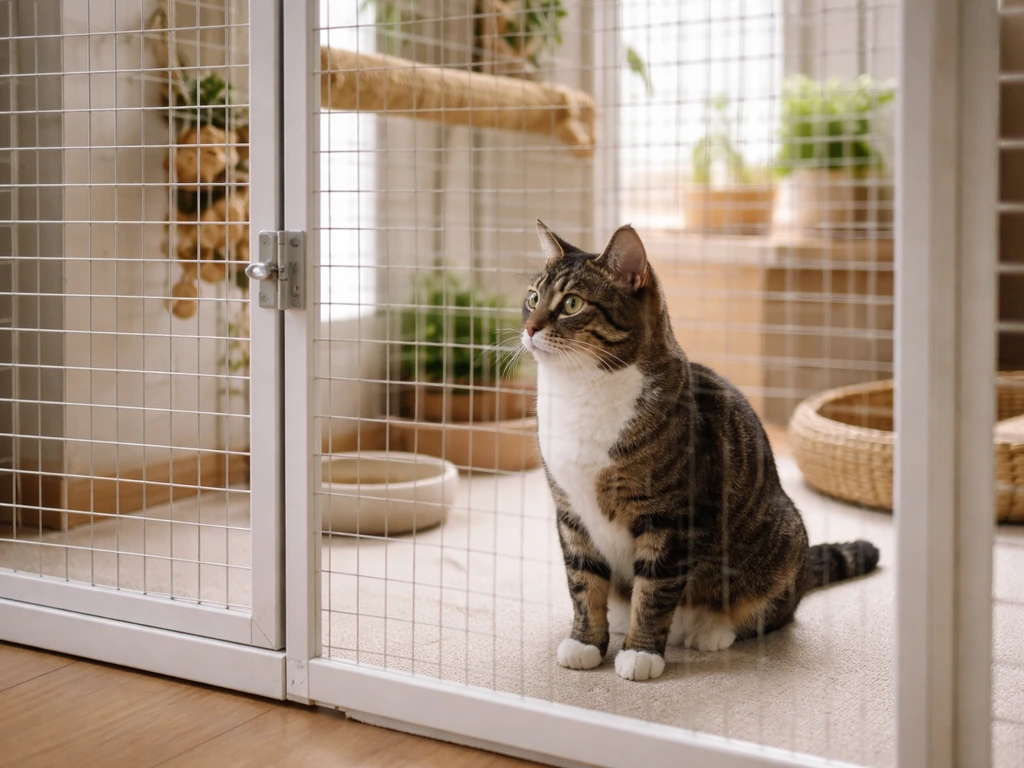
Can a cat eat a pet bird? Realistic risk and what "eat" means
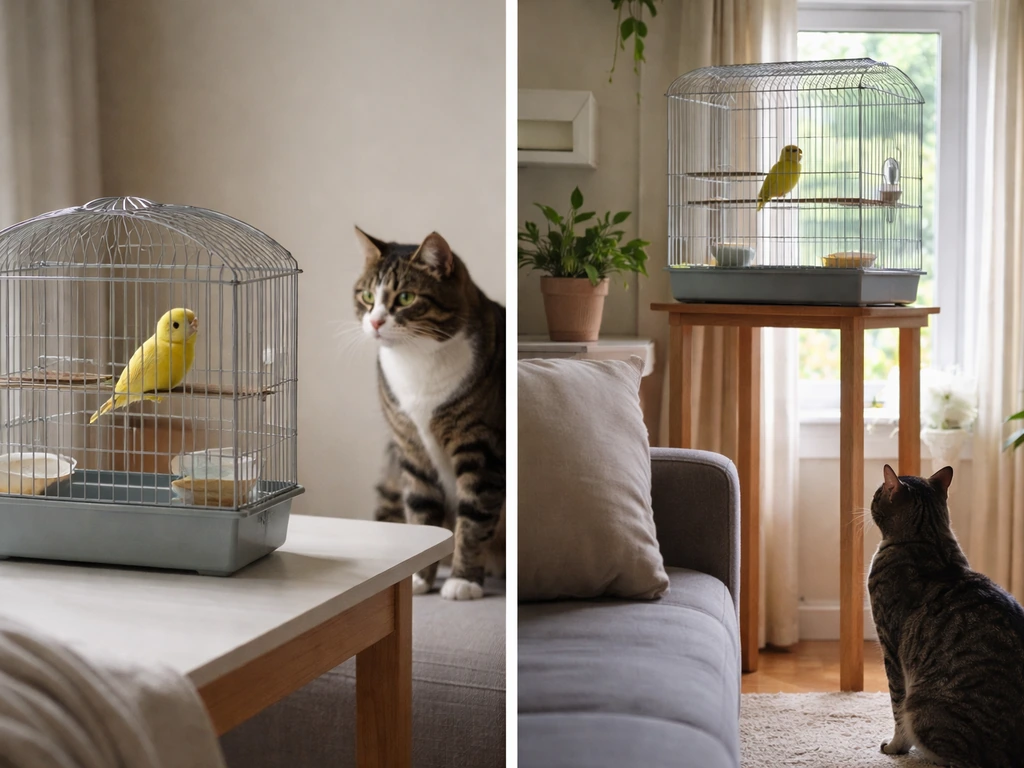
When people ask "will my cat eat my bird," they usually mean one of two things: will it kill the bird, or will it actually consume it? Both are possible. Cats are obligate carnivores and birds are natural prey. In the wild, domestic cats kill hundreds of millions of birds per year, and indoors the same drive applies when a bird is accessible. A cat that catches a pet bird may kill it through biting, shaking, or compression, and it may eat part or all of it afterward. Some cats kill and leave the body; others eat immediately. Neither outcome is safe for your bird.
It is also worth separating "eating" from "playing. Do cats sometimes eat bird feathers, too, or is it more about catching and injuring the bird eating. " A cat that bats at a cage, follows the bird with its eyes, or swipes at a perched bird is not playing in any harmless sense. The ASPCA notes that chase-and-attack behaviors directed at moving animals like birds are a serious warning sign, even when they originate from what looks like play. The motor patterns for predation and play are nearly identical in cats: stalking, crouching, pouncing. The only difference is the outcome. So do not reassure yourself because your cat "just wants to play." If the bird escapes the cage or the cat gets in, a playful swipe can still puncture skin and introduce bacteria that can kill a bird within hours.
How cats hunt pet birds: behaviors to watch for
Cats signal predatory intent through a very specific set of body language cues, and once you know them you cannot unsee them. Watch for these in the moments your cat is near the bird's enclosure or in the same room as a free-flying bird.
- Ears pitched forward and locked toward the bird, whiskers fanned forward in the same direction
- Tail twitching or lashing slowly at the tip while the body is otherwise very still
- A low, crouched "ready" posture with the hindquarters slightly raised or weight shifted to the back legs
- Intense, unblinking eye contact with the bird, often accompanied by chattering or chirping sounds
- Slow, deliberate creeping movement toward the cage or perch area
- Swatting at cage bars, jumping onto cage surfaces, or circling the enclosure repeatedly
Any one of these is enough to act on. Multiple signs together mean an attack is imminent. Cats can go from a crouched stare to a full pounce in a fraction of a second, so if you see these cues, physically remove the cat from the room immediately rather than just watching to see what happens. The ASPCA explicitly identifies stalking and chasing birds as part of dangerous feline aggression patterns, and PetMD notes that the tail twitch and poised pre-pounce position are direct precursors to a strike.
Safe separation plan: enclosure, room setup, and supervision rules
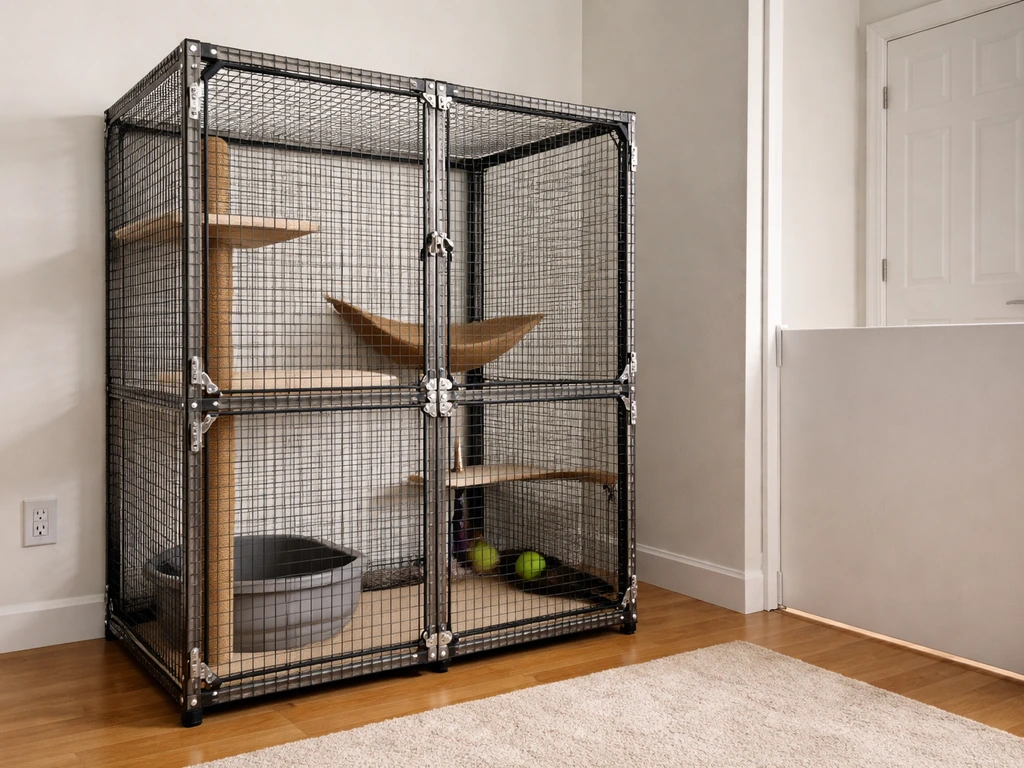
The only truly safe arrangement is complete physical separation. This means a cage the cat cannot open, tip, or break into, housed in a room the cat cannot access when you are not present. Here is what that looks like in practice.
Choosing the right enclosure
The RSPCA specifies that aviary wire must be strong enough to withstand chewing and clawing, rust-proof, and have mesh apertures small enough to prevent unwanted access. For a pet bird cage in a cat household, this means no plastic or thin wire bars that a determined cat can bend. The cage should have a secure latch that requires opposable thumbs to operate. Heavy-gauge welded wire is the right choice. The cage should also be positioned so that a cat cannot reach inside through gaps, and the base should be stable enough that a cat jumping onto it cannot knock it over.
Room setup and access control
Keep the bird in a dedicated room with a door that closes and latches securely. Cats are skilled at working lever-style door handles, so if yours does this, install a knob cover or a secondary latch. Purdue University's veterinary guidance recommends confining birds to their cage whenever the owner is not present to supervise directly, specifically to prevent injury from unplanned flight. A Purdue veterinary teaching resource recommends confining birds to their cage whenever the owner is not present to supervise directly, specifically to prevent injury from unplanned flight. Apply the same logic here: if you leave the house or the room, the cat is not in there.
Supervised interaction rules
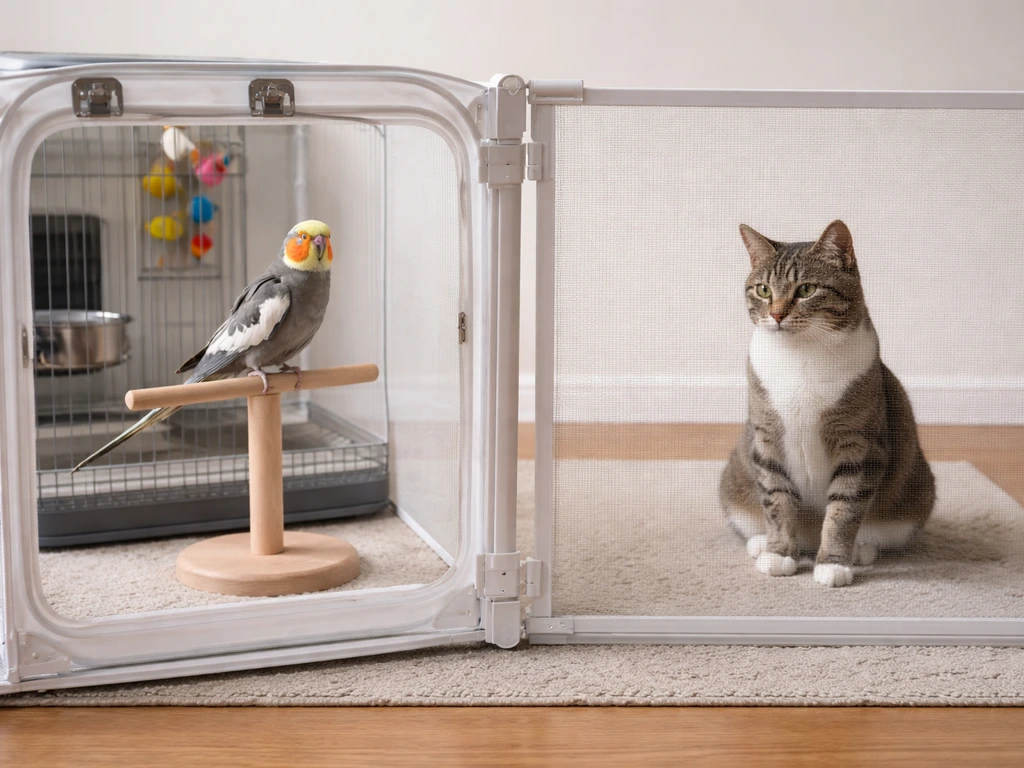
Some owners want to let their bird out of the cage for exercise while the cat is in the home. This can work, but only under very strict conditions. The cat must be in a completely separate, closed room before the bird comes out. Never rely on your cat being "calm" or on giving a verbal command to keep the cat away. A bird in flight triggers hard-wired pursuit reflexes that override any training. That same instinct is why questions like “can cats play with bird feathers” should be answered with caution, since feathers can still spark stalking behavior A bird in flight triggers hard-wired pursuit reflexes. Keep supervised out-of-cage time in a room where you can close and secure the door, confirm the cat is elsewhere, and stay present the entire time.
Indoor vs. outdoor risk and preventing escapes
Indoor pet birds face a controlled but real threat from a housecat. Outdoor birds, whether kept in an aviary or feeding at backyard feeders, face a much higher risk. Research published in Nature Communications confirms that outdoor cat access is a primary driver of bird predation mortality, and the numbers involved are substantial. A cat that goes outside is hunting, full stop.
If you keep an outdoor aviary, the structural requirements become even more critical. The RSPCA's enclosure guidance applies directly: strong wire gauge, secure fastenings, and a design that accounts for a cat putting its full weight against the sides. Consider a double-door entry system so that even if the outer door is left open momentarily, there is a second barrier before the bird is exposed. Overhead netting with an aperture around 3/4 inch or smaller, as described in UC ANR bird-control resources, can also reinforce the top of an enclosure against a cat dropping in from above.
For cats that go outdoors, belled collars are sometimes recommended and do reduce predation success in some studies, with one study in the Journal of Zoology showing reduced catch rates for birds. However, follow-up research has shown inconsistent results, and cats can learn to move without ringing the bell. A CatBib-style "pounce protector" device showed more reliable results in a Murdoch University study, reducing the proportion of cats successfully catching birds. Neither device eliminates risk entirely, but they are worth using as part of a layered approach. The safest option remains keeping the cat indoors.
Escape prevention is the other side of this equation. Make sure windows and doors in the bird's room have secure screens that cannot be pushed out. If your bird is large enough to open a cage door (parrots especially), add a secondary clip or lock. During any interaction, check for gaps between furniture and walls that a panicked bird could fly into and become trapped in a corner accessible to a cat.
What to do if a bite or capture happens: first aid and when to call a vet
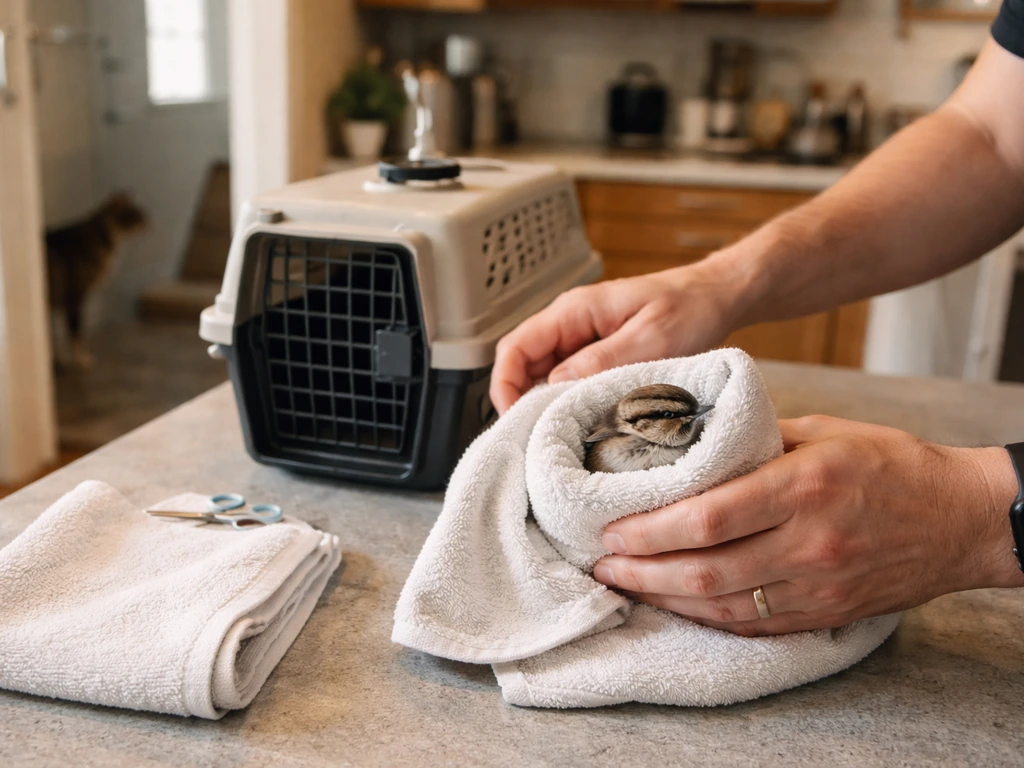
If your cat catches your bird, treat it as a medical emergency even if the bird looks completely fine. This is not an overreaction. Cat saliva carries Pasteurella multocida bacteria, which can cause rapid, fatal infection in birds. Eating a bird can also expose your cat to bacteria and parasites from the bird’s tissues, so keep the bird away and seek vet advice if you notice illness a cat get sick from eating a bird. A PubMed-cited report documents fatal P. multocida infections in bird patients following cat bites. The bacteria enter through puncture wounds that are often invisible under feathers. A bird that appears to be walking around normally after being caught can be dead within 24 to 48 hours from septicemia if not treated with antibiotics.
- Remove the cat from the area immediately and secure it in another room.
- Pick up the bird gently with a soft cloth or light towel. Minimize handling to reduce stress.
- Move the bird to a quiet, warm location away from noise and other pets. LafeberVet recommends a target temperature of around 85°F (29.4°C) for a stabilization environment, achievable by placing a heating pad set to low under one half of the carrier so the bird can move away from the heat if needed.
- Check for visible bleeding. If bleeding does not stop within 5 minutes, apply gentle pressure with a clean cloth and contact an avian vet immediately.
- Do not apply ointments, antiseptic sprays, or hydrogen peroxide to a bird's wounds without veterinary guidance.
- Call an avian vet or emergency animal hospital right away. Tell them specifically that the bird was caught by a cat. They will advise you on urgency and whether to come in immediately.
- If the wound is accessible, you can rinse it very gently with sterile saline solution while waiting, but do not delay getting to a vet in order to do this.
LafeberVet's avian first-aid guidance is explicit: seek veterinary attention immediately after a cat attack, even if the bird shows no obvious injury. The Merck Veterinary Manual's emergency stabilization guidance supports this, emphasizing that the first goal is stabilizing the bird in a quiet, low-stress environment before transport. Do not wait to see if the bird "seems okay." It will not tell you it is dying.
Feeder and seed safety around cats and backyard birds
If you have backyard bird feeders in addition to a pet bird, your cat introduces a specific set of hazards to the feeder environment too. If you are wondering about diet, do cats eat bird bones, it is still safer to assume cats can and will consume parts of their prey when they catch birds hunting near feeders. A cat that hunts near feeders can obviously prey on wild birds, but there are also secondary risks worth knowing.
First, seed storage. Virginia Department of Wildlife Resources recommends keeping extra seed in a metal, rodent-proof container stored inside a secure structure. This prevents spoilage, pest contamination, and access by cats who may disturb the feeding area. Moldy or damp seed is a disease risk: Pennsylvania Game Commission identifies bird feeders as a potential source of Aspergillus exposure, which causes aspergillosis in wild birds. A cat rummaging through a seed storage area or disturbing a feeder can accelerate contamination. Keep the feeder area clean, remove old seed regularly, and store supplies securely.
Second, rodenticide exposure. If you or a neighbor uses anticoagulant rodenticides near the yard to control pests attracted by seed, the USGS warns that non-target bird species can be exposed, and so can cats that eat affected prey. Do not use rodenticide baits anywhere near feeder areas. Virginia DWR also advises against using pesticides or herbicides near bird feeders for the same general reason: contamination risk to birds visiting the area.
Third, feeder placement. Position feeders high enough and far enough from fences, trees, and structures that a cat cannot use them as a launch point. A cat can leap roughly six feet vertically, so a feeder on a smooth pole at least five to six feet high with a cat baffle below the feeder platform is a reasonable baseline deterrent.
Myths and common misunderstandings about bird food and cat predation
A few very persistent myths get in the way of people taking this seriously. That myth is common too, so it helps to clarify what a cat can and cannot safely do with birds can a cat eat a whole bird. Here is what is actually true.
| Myth | Reality |
|---|---|
| My cat has lived with my bird for years without incident, so it is safe. | Predatory instinct does not go away. One trigger, like an escape or an unusual bird movement, can activate a chase response in any cat at any age. |
| A bell on the cat's collar will protect my bird. | Bells reduce predation success in some studies but are not reliable. Cats adapt over time, and a bell does nothing if the cat is already inside the enclosure or the bird is on the floor. |
| If my cat bites my bird and the bird seems fine, no vet visit is needed. | This is the most dangerous myth. Pasteurella multocida from a single bite puncture can kill a bird within 24 to 48 hours. Always go to the vet after any cat-bird contact. |
| Giving my cat more playtime will stop it from hunting the bird. | A Guardian-reported study found that play interventions reduced mammal kills more than bird kills, suggesting the bird-predation drive is particularly persistent and not reliably redirected by toys alone. |
| Wild birds at outdoor feeders are not at serious risk from my indoor/outdoor cat. | Free-ranging cats are documented in Nature Communications research as one of the leading human-associated causes of bird mortality. An outdoor cat near feeders is actively hunting. |
| Moldy seed only harms birds, not cats. | Aspergillus mold from contaminated feeders or stored seed is a risk to any animal that contacts it. Keep seed fresh, dry, and stored in sealed metal containers. |
The thread connecting all of these myths is the same: people underestimate how strong and persistent predatory drive is in domestic cats, and they overestimate how much behavioral training or accessories can substitute for physical separation. They cannot. The only reliable protection for your bird is a secure enclosure in a space your cat cannot enter unsupervised. Everything else is a useful supplement, not a replacement.
Your action checklist for today
- Audit your bird's cage right now: test every latch and check bar spacing and wire gauge. Replace anything a cat could force open or bend.
- Identify a dedicated room for your bird and confirm you can close and secure the door. If the cat can open it, add a secondary latch.
- Establish a firm rule: cat and bird are never in the same open space, ever. No exceptions for "just a minute."
- If your cat goes outdoors, look into a CatBib-style pounce protector and consider transitioning to fully indoor living.
- Move your bird feeders to poles with cat baffles and position them away from any structure a cat could climb.
- Store all seed in a sealed metal container inside a building. Check feeders weekly and remove old or damp seed.
- Save the number for an avian vet or the nearest 24-hour emergency animal hospital in your phone today, before an incident happens.
- If a cat-bird contact occurs, go to the vet immediately regardless of whether the bird looks injured.
FAQ
If my cat has never shown interest in my bird, does that mean it is safe?
Not necessarily. Predatory behavior can switch on instantly when the bird becomes accessible (for example, a cage door left open, a feathered bird escaping during cleaning, or a brief unsupervised moment). Assume risk is present whenever the cat can see, reach, or access the bird, even if the cat seems calm most days.
Can I stop the risk by clipping my bird’s wings or trimming feathers?
Wing trimming may reduce the bird’s ability to escape, but it does not prevent predatory behavior, and it can also increase danger if the cat can still reach, bite, or shake the bird. The safe approach is separation and secure housing, not relying on reduced flight.
My bird stays in a cage, but the cat sometimes sits nearby and stares. Is that just curiosity?
Staring is a meaningful cue when paired with other behaviors such as crouching, tail twitching, slow stalking steps, or fixation on cage movement. If you notice a change from relaxed lounging to targeted attention, treat it like a warning and remove the cat from the room right away.
What if my bird drops a feather or flutters near the cage, will the cat treat it like prey?
Yes. Movement, fluttering, and even a detached feather can trigger the same predatory pursuit patterns. Don’t rely on “it is just feathers” as a safety measure, especially if the bird is moving within reach or if debris collects where the cat can bat at it.
Is a cat-proof cage enough, or does the room setup matter too?
The room matters. Even with a solid cage, check for crawl points and reach-through opportunities, like gaps between furniture and walls, a bird perch positioned so it hangs over open space, or a cage placed where a cat can knock it sideways. Also ensure the room door is reliably latched when you step away.
My cat can open certain latches or understands door handles. What are practical fixes?
Use hardware the cat cannot manipulate, for example a secondary latch higher up, a cover over lever-style handles, or a magnetic/child-safety style lock that requires a specific action. Test the setup by leaving the room with the bird secured, and verify the cat cannot gain access within your typical absence time.
Can my cat and bird be together in the same room if I supervise closely?
Supervision helps, but it is not enough to treat the situation as “safe” because a sudden pounce can happen faster than you can intervene. If you do allow time together, keep the cat and bird in separate closed spaces with the door barriers in place, and maintain the cat’s access prevention the entire time you are not actively managing the situation.
If my cat catches my bird, should I wait to see if it is sick?
No. A cat attack should be treated as an emergency even when injuries are not obvious. Cat saliva can introduce infections that may become rapidly fatal, and puncture wounds can be hidden under feathers. Seek avian veterinary care immediately and keep the bird calm and low-stress until you are seen.
What should I do in the first minutes after a bite or scratch if I am rushing to the vet?
Keep the bird warm, quiet, and separated from the cat. Avoid attempting home cleaning or soaking unless your veterinarian instructs it. Transport promptly, and mention the cat contact details (bite, scratch, or suspected ingestion) so the vet can prioritize antibiotics and assessment for hidden punctures and shock.
Do belled collars, pounce devices, or sprays really eliminate the risk of cats hunting birds?
They can reduce the odds in some situations, but they do not eliminate risk. Cats can adjust behavior to bypass alarms, and pounce-prevention products are not fail-safe. Treat these as supplements only, and continue relying on keeping the cat indoors or maintaining rigorous physical barriers.
If I have backyard feeders, how do I reduce the chance my cat harms wild birds?
Make the feeder area harder to use as a launch point. Raise feeders high with a cat baffle, remove cover nearby (dense shrubs or easy climbing surfaces), and manage seed storage so the cat is not rewarded with access. Also avoid rodent poisons and pesticide use near feeders, since contaminated prey or residues can expose non-target birds and cats.
Is it possible my cat will only “kill and not eat,” so the bird might survive?
A bird can still die without being eaten. Biting and shaking can cause internal trauma, and punctures can become infection sites. Any successful catch should be treated as life-threatening until a veterinarian rules out injury and infection.
Next Articles
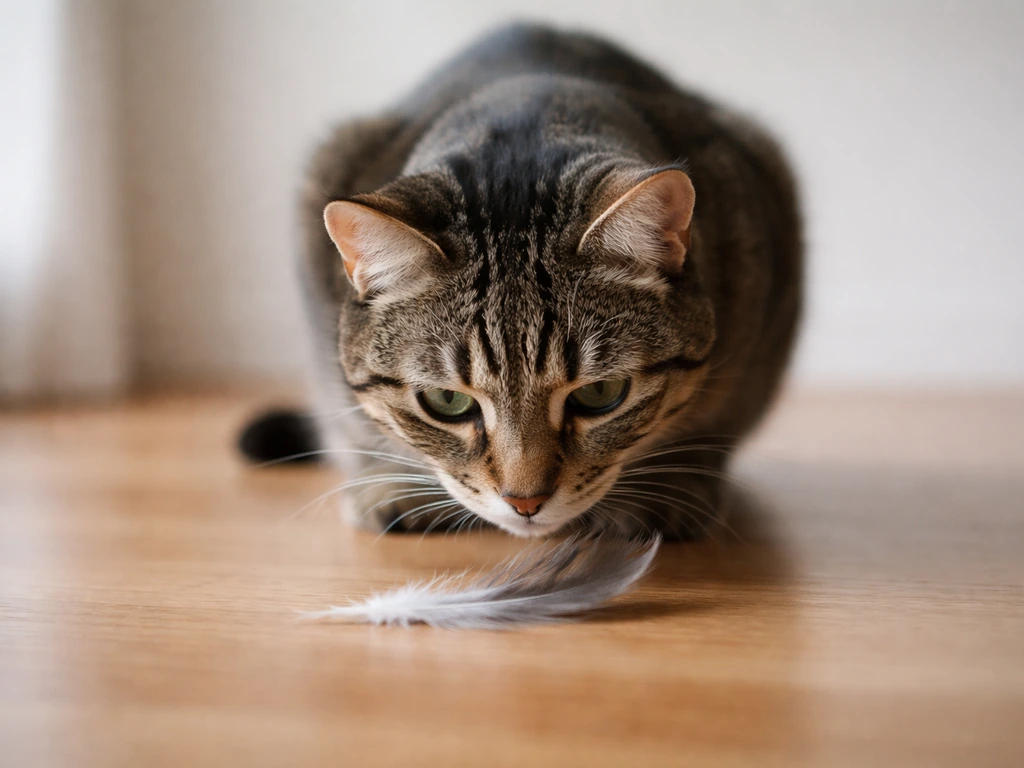
Do Cats Eat Bird Feathers? Risks, Symptoms, and What to Do
Can cats safely eat bird feathers? Learn risks like choking and gut blockage, symptoms, vet red flags, and prevention ti
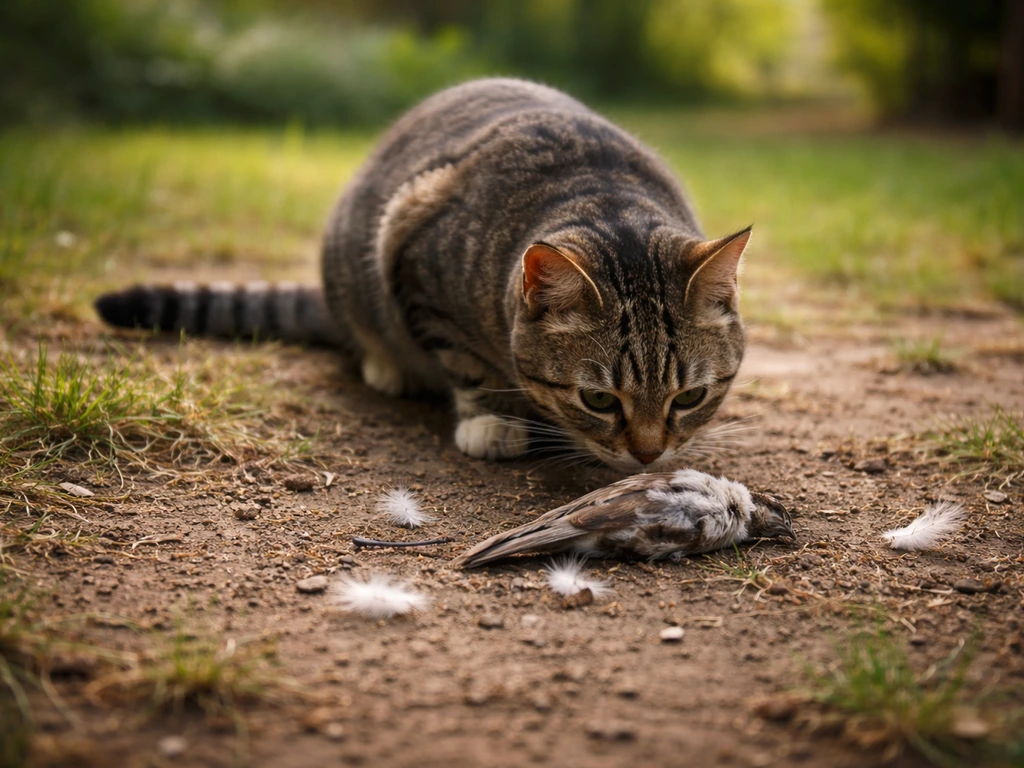
Can a Cat Get Sick From Eating a Bird? What to Do Now
Learn illness risks from cats eating birds or feathers, symptoms to watch, and exact steps for today and vet timing.
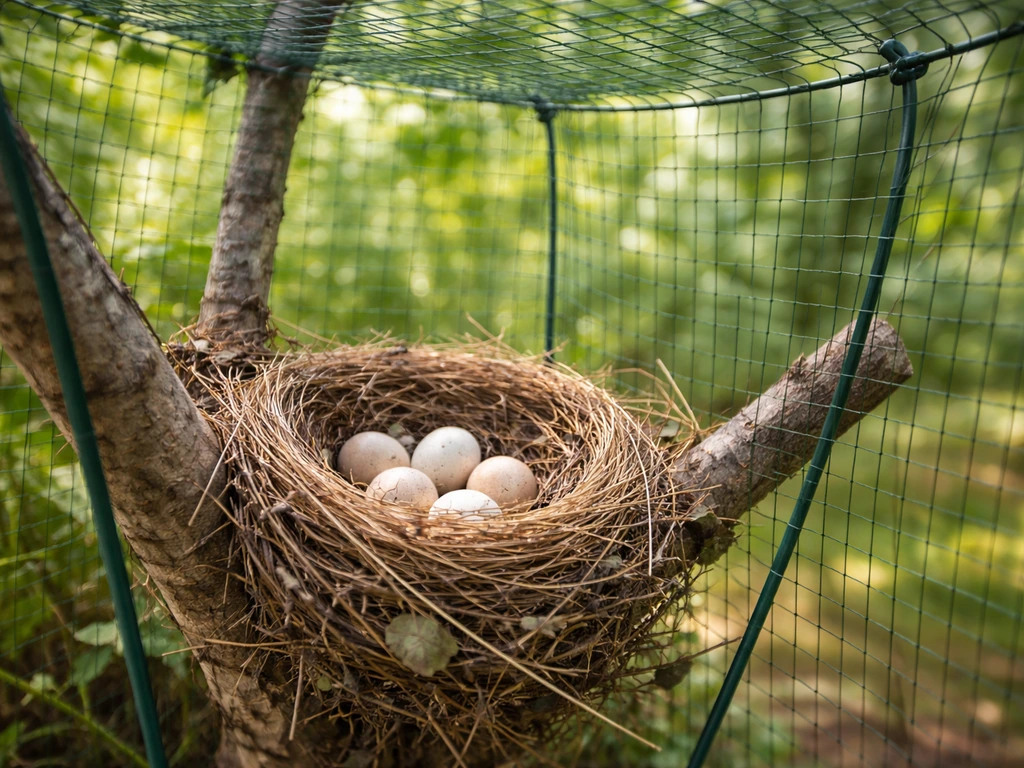
Do Cats Eat Bird Eggs? What to Know and How to Prevent
Do cats eat bird eggs? Learn when it happens and how to protect nests and feeders with practical cat-proof steps.